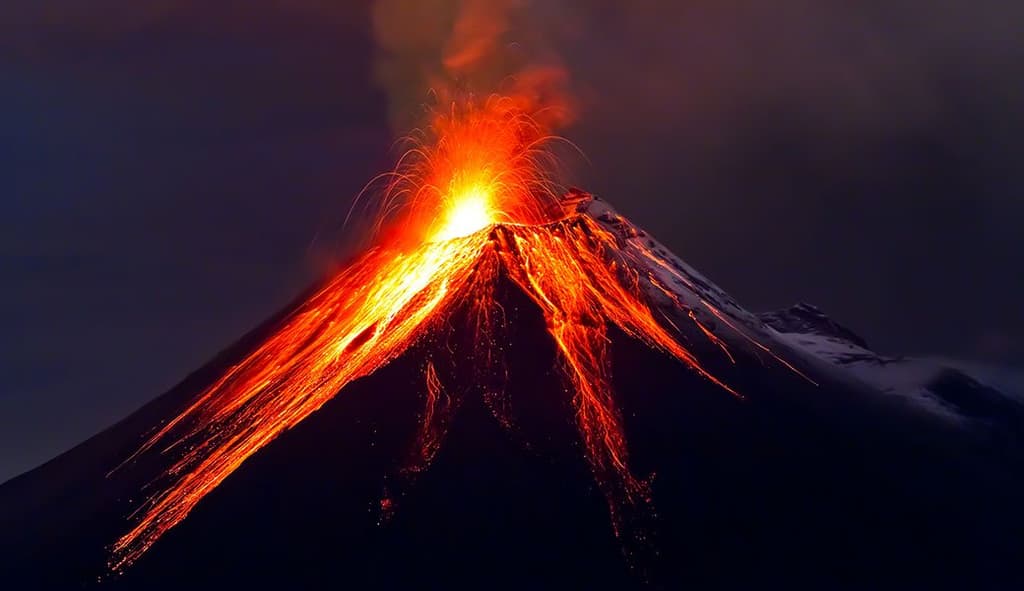
No confirmed VEI ≥4 eruptions have occurred in 2026 through mid-August, aligning with the market's strong preference for zero events. Smithsonian Global Volcanism Program reports dozens of active volcanoes with mostly lower-intensity or continuing eruptions, such as ongoing ash emissions at Sakurajima, without meeting the volume or plume-height thresholds for VEI 4 on the explosivity scale. These events remain statistically infrequent globally, occurring far less often than smaller eruptions, which explains the implied probabilities favoring zero or one outcome. USGS and international monitoring continue to track seismic and gas indicators that could signal escalation ahead of remaining 2026 data releases.
Resumen experimental generado por IA con datos de Polymarket. Esto no es asesoramiento de trading y no influye en cómo se resuelve este mercado. · Actualizado¿Cuántas erupciones volcánicas grandes (VEI ≥4) en 2026?
¿Cuántas erupciones volcánicas grandes (VEI ≥4) en 2026?
0 67%
1 20%
2 3.6%
5+ 1.0%
$1,156,055 Vol.
$1,156,055 Vol.
31 dic 2026
0
68%
1
20%
2
4%
3
1%
4
1%
5+
1%
0 67%
1 20%
2 3.6%
5+ 1.0%
$1,156,055 Vol.
$1,156,055 Vol.
31 dic 2026
0
$499,082 Vol.
68%
1
$273,918 Vol.
20%
2
$40,872 Vol.
4%
3
$31,654 Vol.
1%
4
$35,005 Vol.
1%
5+
$275,525 Vol.
1%
This market will resolve according to the number of natural volcanic eruptions with a Volcanic Explosivity Index (VEI) of 4 or higher between January 1 and December 31, 2026, 11:59 PM ET.
The primary resolution source will be the Smithsonian Institution Global Volcanism Program (GVP: https://volcano.si.edu/), specifically the cumulative figures for 2026 for VEI 4, VEI 5, and VEI 6 released on the page currently titled "Eruptions Avg 2000-2024 (N/T)" (https://volcano.si.edu/faq/index.cfm?question=eruptionsbyyear) as of March 31, 2027, 12 PM ET. Any prior updates will not be considered finalized.
If this dataset has not been updated to include all relevant events by March 31, 2027, or if the Smithsonian GVP becomes permanently unavailable, this market may resolve based on a consensus of credible scientific sources, including the U.S. Geological Survey (USGS), national or regional volcanic observatories, or credible reporting of a scientific consensus.
Note: Smithsonian Institution Global Volcanism Program databases, which include eruptions that reached the relevant threshold prior to this market’s timeframe (e.g., https://volcano.si.edu/faq/index.cfm?question=eruptionsbyyear&checkyear=2025), will not be considered.No confirmed VEI ≥4 eruptions have occurred in 2026 through mid-August, aligning with the market's strong preference for zero events. Smithsonian Global Volcanism Program reports dozens of active volcanoes with mostly lower-intensity or continuing eruptions, such as ongoing ash emissions at Sakurajima, without meeting the volume or plume-height thresholds for VEI 4 on the explosivity scale. These events remain statistically infrequent globally, occurring far less often than smaller eruptions, which explains the implied probabilities favoring zero or one outcome. USGS and international monitoring continue to track seismic and gas indicators that could signal escalation ahead of remaining 2026 data releases.
This market will resolve according to the number of natural volcanic eruptions with a Volcanic Explosivity Index (VEI) of 4 or higher between January 1 and December 31, 2026, 11:59 PM ET.
The primary resolution source will be the Smithsonian Institution Global Volcanism Program (GVP: https://volcano.si.edu/), specifically the cumulative figures for 2026 for VEI 4, VEI 5, and VEI 6 released on the page currently titled "Eruptions Avg 2000-2024 (N/T)" (https://volcano.si.edu/faq/index.cfm?question=eruptionsbyyear) as of March 31, 2027, 12 PM ET. Any prior updates will not be considered finalized.
If this dataset has not been updated to include all relevant events by March 31, 2027, or if the Smithsonian GVP becomes permanently unavailable, this market may resolve based on a consensus of credible scientific sources, including the U.S. Geological Survey (USGS), national or regional volcanic observatories, or credible reporting of a scientific consensus.
Note: Smithsonian Institution Global Volcanism Program databases, which include eruptions that reached the relevant threshold prior to this market’s timeframe (e.g., https://volcano.si.edu/faq/index.cfm?question=eruptionsbyyear&checkyear=2025), will not be considered.
The primary resolution source will be the Smithsonian Institution Global Volcanism Program (GVP: https://volcano.si.edu/), specifically the cumulative figures for 2026 for VEI 4, VEI 5, and VEI 6 released on the page currently titled "Eruptions Avg 2000-2024 (N/T)" (https://volcano.si.edu/faq/index.cfm?question=eruptionsbyyear) as of March 31, 2027, 12 PM ET. Any prior updates will not be considered finalized.
If this dataset has not been updated to include all relevant events by March 31, 2027, or if the Smithsonian GVP becomes permanently unavailable, this market may resolve based on a consensus of credible scientific sources, including the U.S. Geological Survey (USGS), national or regional volcanic observatories, or credible reporting of a scientific consensus.
Note: Smithsonian Institution Global Volcanism Program databases, which include eruptions that reached the relevant threshold prior to this market’s timeframe (e.g., https://volcano.si.edu/faq/index.cfm?question=eruptionsbyyear&checkyear=2025), will not be considered.
Mercado abierto: Jan 2, 2026, 1:48 PM ET
Volumen
$1,156,055Fecha de finalización
31 mar 2027Mercado abierto
Jan 2, 2026, 1:48 PM ETResolver
0x2F5e3684c...This market will resolve according to the number of natural volcanic eruptions with a Volcanic Explosivity Index (VEI) of 4 or higher between January 1 and December 31, 2026, 11:59 PM ET.
The primary resolution source will be the Smithsonian Institution Global Volcanism Program (GVP: https://volcano.si.edu/), specifically the cumulative figures for 2026 for VEI 4, VEI 5, and VEI 6 released on the page currently titled "Eruptions Avg 2000-2024 (N/T)" (https://volcano.si.edu/faq/index.cfm?question=eruptionsbyyear) as of March 31, 2027, 12 PM ET. Any prior updates will not be considered finalized.
If this dataset has not been updated to include all relevant events by March 31, 2027, or if the Smithsonian GVP becomes permanently unavailable, this market may resolve based on a consensus of credible scientific sources, including the U.S. Geological Survey (USGS), national or regional volcanic observatories, or credible reporting of a scientific consensus.
Note: Smithsonian Institution Global Volcanism Program databases, which include eruptions that reached the relevant threshold prior to this market’s timeframe (e.g., https://volcano.si.edu/faq/index.cfm?question=eruptionsbyyear&checkyear=2025), will not be considered.No confirmed VEI ≥4 eruptions have occurred in 2026 through mid-August, aligning with the market's strong preference for zero events. Smithsonian Global Volcanism Program reports dozens of active volcanoes with mostly lower-intensity or continuing eruptions, such as ongoing ash emissions at Sakurajima, without meeting the volume or plume-height thresholds for VEI 4 on the explosivity scale. These events remain statistically infrequent globally, occurring far less often than smaller eruptions, which explains the implied probabilities favoring zero or one outcome. USGS and international monitoring continue to track seismic and gas indicators that could signal escalation ahead of remaining 2026 data releases.
This market will resolve according to the number of natural volcanic eruptions with a Volcanic Explosivity Index (VEI) of 4 or higher between January 1 and December 31, 2026, 11:59 PM ET.
The primary resolution source will be the Smithsonian Institution Global Volcanism Program (GVP: https://volcano.si.edu/), specifically the cumulative figures for 2026 for VEI 4, VEI 5, and VEI 6 released on the page currently titled "Eruptions Avg 2000-2024 (N/T)" (https://volcano.si.edu/faq/index.cfm?question=eruptionsbyyear) as of March 31, 2027, 12 PM ET. Any prior updates will not be considered finalized.
If this dataset has not been updated to include all relevant events by March 31, 2027, or if the Smithsonian GVP becomes permanently unavailable, this market may resolve based on a consensus of credible scientific sources, including the U.S. Geological Survey (USGS), national or regional volcanic observatories, or credible reporting of a scientific consensus.
Note: Smithsonian Institution Global Volcanism Program databases, which include eruptions that reached the relevant threshold prior to this market’s timeframe (e.g., https://volcano.si.edu/faq/index.cfm?question=eruptionsbyyear&checkyear=2025), will not be considered.
The primary resolution source will be the Smithsonian Institution Global Volcanism Program (GVP: https://volcano.si.edu/), specifically the cumulative figures for 2026 for VEI 4, VEI 5, and VEI 6 released on the page currently titled "Eruptions Avg 2000-2024 (N/T)" (https://volcano.si.edu/faq/index.cfm?question=eruptionsbyyear) as of March 31, 2027, 12 PM ET. Any prior updates will not be considered finalized.
If this dataset has not been updated to include all relevant events by March 31, 2027, or if the Smithsonian GVP becomes permanently unavailable, this market may resolve based on a consensus of credible scientific sources, including the U.S. Geological Survey (USGS), national or regional volcanic observatories, or credible reporting of a scientific consensus.
Note: Smithsonian Institution Global Volcanism Program databases, which include eruptions that reached the relevant threshold prior to this market’s timeframe (e.g., https://volcano.si.edu/faq/index.cfm?question=eruptionsbyyear&checkyear=2025), will not be considered.
Volumen
$1,156,055Fecha de finalización
31 mar 2027Mercado abierto
Jan 2, 2026, 1:48 PM ETResolver
0x2F5e3684c...No confirmed VEI ≥4 eruptions have occurred in 2026 through mid-August, aligning with the market's strong preference for zero events. Smithsonian Global Volcanism Program reports dozens of active volcanoes with mostly lower-intensity or continuing eruptions, such as ongoing ash emissions at Sakurajima, without meeting the volume or plume-height thresholds for VEI 4 on the explosivity scale. These events remain statistically infrequent globally, occurring far less often than smaller eruptions, which explains the implied probabilities favoring zero or one outcome. USGS and international monitoring continue to track seismic and gas indicators that could signal escalation ahead of remaining 2026 data releases.
Resumen experimental generado por IA con datos de Polymarket. Esto no es asesoramiento de trading y no influye en cómo se resuelve este mercado. · Actualizado

Cuidado con los enlaces externos.
Cuidado con los enlaces externos.
Preguntas frecuentes