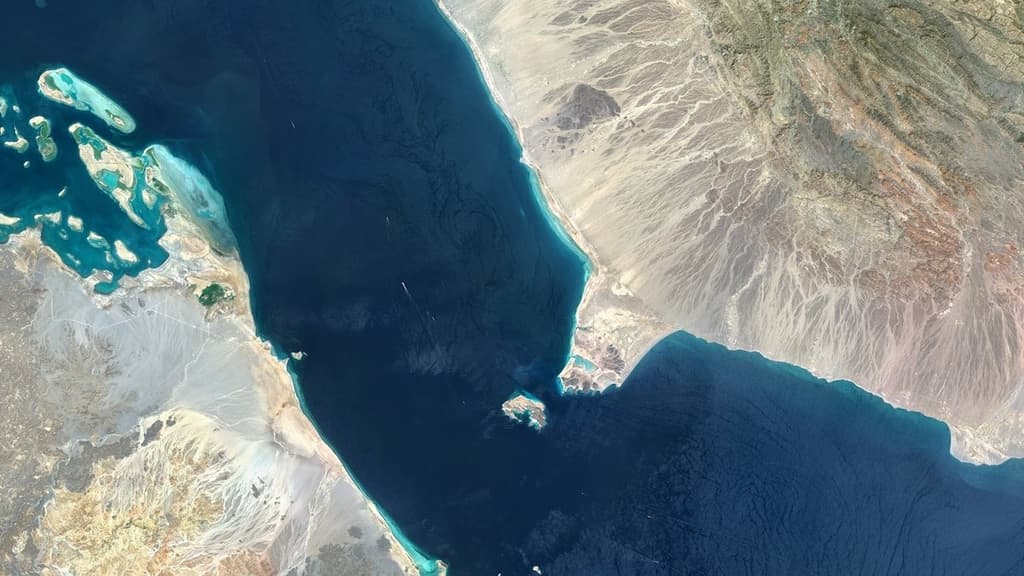
**Geopolitical escalation in the 2026 Iran conflict has intensified Houthi threats to disrupt or close the Bab el-Mandeb Strait, a key chokepoint handling roughly 4.2 million barrels per day of petroleum liquids in early 2025.** Renewed warnings in April–June 2026, including targeting Israeli-linked vessels, have prompted major carriers like Maersk to pause Red Sea transits, sustaining the shift of Asia-Europe traffic around the Cape of Good Hope and elevating insurance premiums and freight rates. Oil markets price in limited additional upside from Bab el-Mandeb risks given the larger Strait of Hormuz disruption, while shipping volumes through the Suez route remain suppressed versus pre-2024 levels. Trader consensus on Polymarket assigns low near-term probabilities to effective closure, reflecting naval patrols, vessel rerouting flexibility, and historical patterns of asymmetric but contained attacks since the October 2025 ceasefire. Key upcoming catalysts include further Iran-related diplomatic developments or Houthi operational signals that could alter risk premiums.
Eksperymentalne podsumowanie AI odwołujące się do danych Polymarket. To nie jest porada handlowa i nie ma wpływu na rozstrzyganie tego rynku. · ZaktualizowanoBab el-Mandeb Strait effectively closed by...?
Bab el-Mandeb Strait effectively closed by...?
$5,306,027 Wol.
June 22
<1%
June 30
<1%
September 30
9%
$5,306,027 Wol.
June 22
<1%
June 30
<1%
September 30
9%
This market will resolve as soon as IMF PortWatch publishes a 7-day moving average of transit calls for the Bab el-Mandeb Strait equal to or below 10, or once data has been published for the listed date and no such value has been published.
If no data has been published for the listed date within 14 calendar days (ET) after that date, this market will resolve based on the data published up to that point.
Revisions to previously published data points made before data has been published for the listed date will be considered; however, they will not disqualify a previously published data point from qualifying. Revisions made after data has been published for the listed date will not be considered.
The resolution source for this market will be IMF PortWatch, specifically the “Arrivals of Ships” data published for the Bab el-Mandeb Strait at https://portwatch.imf.org/pages/6b1814d64903461b98144a6cc25eb79c.
Rynek otwarty: May 5, 2026, 8:25 PM ET
Resolver
0x65070BE91...This market will resolve as soon as IMF PortWatch publishes a 7-day moving average of transit calls for the Bab el-Mandeb Strait equal to or below 10, or once data has been published for the listed date and no such value has been published.
If no data has been published for the listed date within 14 calendar days (ET) after that date, this market will resolve based on the data published up to that point.
Revisions to previously published data points made before data has been published for the listed date will be considered; however, they will not disqualify a previously published data point from qualifying. Revisions made after data has been published for the listed date will not be considered.
The resolution source for this market will be IMF PortWatch, specifically the “Arrivals of Ships” data published for the Bab el-Mandeb Strait at https://portwatch.imf.org/pages/6b1814d64903461b98144a6cc25eb79c.
Resolver
0x65070BE91...**Geopolitical escalation in the 2026 Iran conflict has intensified Houthi threats to disrupt or close the Bab el-Mandeb Strait, a key chokepoint handling roughly 4.2 million barrels per day of petroleum liquids in early 2025.** Renewed warnings in April–June 2026, including targeting Israeli-linked vessels, have prompted major carriers like Maersk to pause Red Sea transits, sustaining the shift of Asia-Europe traffic around the Cape of Good Hope and elevating insurance premiums and freight rates. Oil markets price in limited additional upside from Bab el-Mandeb risks given the larger Strait of Hormuz disruption, while shipping volumes through the Suez route remain suppressed versus pre-2024 levels. Trader consensus on Polymarket assigns low near-term probabilities to effective closure, reflecting naval patrols, vessel rerouting flexibility, and historical patterns of asymmetric but contained attacks since the October 2025 ceasefire. Key upcoming catalysts include further Iran-related diplomatic developments or Houthi operational signals that could alter risk premiums.
Eksperymentalne podsumowanie AI odwołujące się do danych Polymarket. To nie jest porada handlowa i nie ma wpływu na rozstrzyganie tego rynku. · Zaktualizowano
Uważaj na linki zewnętrzne.
Uważaj na linki zewnętrzne.
Często zadawane pytania