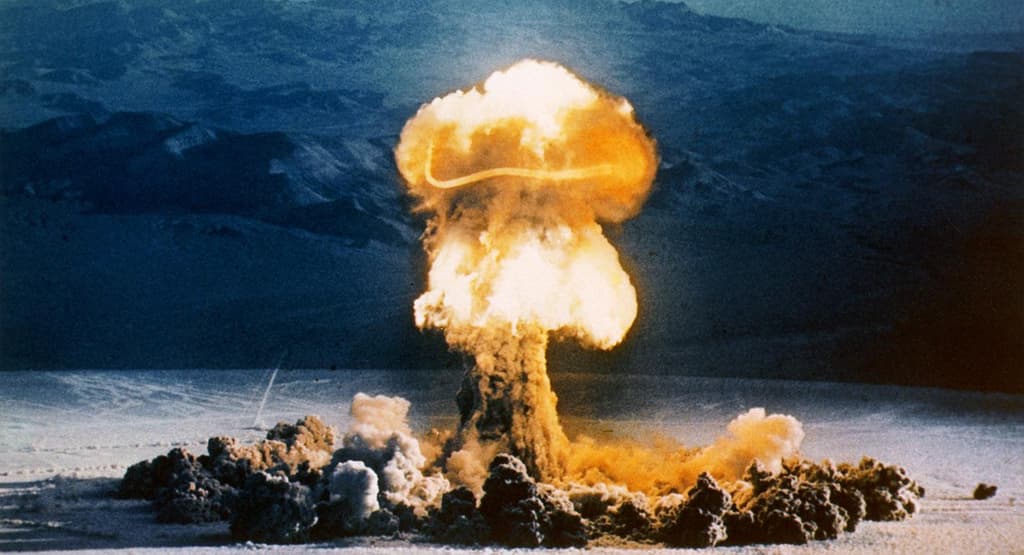
This market will resolve to "Yes" if Russia conducts a nuclear test by the listed date (ET). Otherwise, this market will resolve to "No".
A nuclear test is defined as the intentional non-combat detonation of a device by Russia that produces a nuclear chain reaction (fission or fusion), regardless of yield.
Accidents, radiological dispersal devices (bombs that spread radioactive material using conventional explosives such as "dirty bombs"), or actions by third parties will not count toward this market's resolution.
Tests not explicitly claimed by Russia may still qualify if a clear consensus of credible reporting attributes the nuclear detonation to Russia. For example, an unclaimed nuclear test analogous to the 1979 "Vela Incident" would count if credible reporting attributes it to Russia.
The resolution source for this market will be a broad consensus of credible reporting.Russia's successful test launch of the nuclear-capable RS-28 Sarmat intercontinental ballistic missile on May 12, 2026—hailed by President Putin as advancing deployment by year's end—highlights ongoing nuclear arsenal modernization following the US-Russia New START treaty's expiration, yet marks no nuclear device detonation, with Moscow's last full-scale test in 1990. This follows ICBM drills at the Kura range (May 6-10) amid Ukraine ceasefire talks and 2025 rhetoric threatening tests if the US resumes under the Trump administration. Traders monitor Novaya Zemlya for seismic or satellite activity, diplomatic signals, or escalation in sanctions and arms control, as no confirmed preparations for explosive testing have emerged in the past 30 days.
This market will resolve to "Yes" if Russia conducts a nuclear test by the listed date (ET). Otherwise, this market will resolve to "No".
A nuclear test is defined as the intentional non-combat detonation of a device by Russia that produces a nuclear chain reaction (fission or fusion), regardless of yield.
Accidents, radiological dispersal devices (bombs that spread radioactive material using conventional explosives such as "dirty bombs"), or actions by third parties will not count toward this market's resolution.
Tests not explicitly claimed by Russia may still qualify if a clear consensus of credible reporting attributes the nuclear detonation to Russia. For example, an unclaimed nuclear test analogous to the 1979 "Vela Incident" would count if credible reporting attributes it to Russia.
The resolution source for this market will be a broad consensus of credible reporting.
This market will resolve to "Yes" if Russia conducts a nuclear test by the listed date (ET). Otherwise, this market will resolve to "No".
A nuclear test is defined as the intentional non-combat detonation of a device by Russia that produces a nuclear chain reaction (fission or fusion), regardless of yield.
Accidents, radiological dispersal devices (bombs that spread radioactive material using conventional explosives such as "dirty bombs"), or actions by third parties will not count toward this market's resolution.
Tests not explicitly claimed by Russia may still qualify if a clear consensus of credible reporting attributes the nuclear detonation to Russia. For example, an unclaimed nuclear test analogous to the 1979 "Vela Incident" would count if credible reporting attributes it to Russia.
The resolution source for this market will be a broad consensus of credible reporting.
Russia's successful test launch of the nuclear-capable RS-28 Sarmat intercontinental ballistic missile on May 12, 2026—hailed by President Putin as advancing deployment by year's end—highlights ongoing nuclear arsenal modernization following the US-Russia New START treaty's expiration, yet marks no nuclear device detonation, with Moscow's last full-scale test in 1990. This follows ICBM drills at the Kura range (May 6-10) amid Ukraine ceasefire talks and 2025 rhetoric threatening tests if the US resumes under the Trump administration. Traders monitor Novaya Zemlya for seismic or satellite activity, diplomatic signals, or escalation in sanctions and arms control, as no confirmed preparations for explosive testing have emerged in the past 30 days.
Экспериментальная сводка, созданная ИИ на основе данных Polymarket. Это не является торговой рекомендацией и не влияет на то, как разрешается этот рынок. · Обновлено
May 7 2026
Russia uses nuclear-capable Oreshnik missile in massive strike on Ukraine
September 30, 2026 dips to 5%1%
Russia launched a massive missile and drone strike on Ukraine, including the use of the nuclear-capable Oreshnik intermediate-range ballistic missile. While this demonstrated Russia’s willingness to deploy nuclear-capable weapons, no nuclear test was reported, and the strike was conventional in nature, influencing market perceptions downward for a nuclear test occurring soon.
May 6 2026
Russia and Ukraine envoys meet in Abu Dhabi for US-brokered peace talks
Diplomatic talks between Russia and Ukraine, brokered by the U.S., aimed at ending the nearly four-year war, signaled ongoing efforts to avoid escalation including nuclear testing. The talks coincided with the expiration of the last nuclear arms treaty, reinforcing market expectations against a nuclear test by Russia in the near term.
Apr 29 2026
Russia’s nuclear-capable Oreshnik missiles enter active service in Belarus
September 30, 2026 dips to 6%1%
Russia announced that its nuclear-capable Oreshnik missile system had entered active service in Belarus, demonstrating enhanced nuclear delivery capabilities. This development raised concerns about nuclear escalation but did not indicate an actual nuclear test, contributing to market uncertainty and price adjustments.
Apr 13 2026
U.S. imposes naval blockade on Iranian ports amid fragile ceasefire with Iran
December 31, 2026 dips to 8%4%
The U.S. military blockade of Iranian ports near the Strait of Hormuz raised regional tensions and cast doubt on the fragile ceasefire, increasing global security concerns but not directly implicating Russia in nuclear testing. This heightened geopolitical risk may have influenced market perceptions of nuclear escalation risks generally.
Apr 2 2026
Russia launches massive missile and drone strike on Ukraine including nuclear-capable missile
June 30, 2026 plunges to 2%48%
On April 2, 2026, Russia conducted a large-scale missile and drone attack on Ukraine, using a nuclear-capable intermediate-range ballistic missile. While this demonstrated Russia's nuclear-capable strike capability, it was not a nuclear test, contributing to market price drops as fears of an actual nuclear test diminished.
Apr 2 2026
No credible reports of Russia conducting nuclear test amid heightened tensions
December 31, 2026 plunges to 9%42%
Despite military escalations and deployment of nuclear-capable weapons, no credible reports or confirmations emerged of Russia conducting a nuclear test during the analysis window. This absence of evidence led to a significant market reassessment and price decline for the likelihood of a nuclear test by Russia by the listed dates.
Apr 1 2026
Russia deploys nuclear-capable Oreshnik missiles in Belarus amid Ukraine conflict
September 30, 2026 drops to 46%5%
On April 1, 2026, Russia announced that its nuclear-capable Oreshnik missile system had entered active service in Belarus, signaling a strategic military escalation. This deployment raised concerns about potential nuclear use but did not constitute a nuclear test, leading to initial market uncertainty reflected in prices around this date.
This market will resolve to "Yes" if Russia conducts a nuclear test by the listed date (ET). Otherwise, this market will resolve to "No".
A nuclear test is defined as the intentional non-combat detonation of a device by Russia that produces a nuclear chain reaction (fission or fusion), regardless of yield.
Accidents, radiological dispersal devices (bombs that spread radioactive material using conventional explosives such as "dirty bombs"), or actions by third parties will not count toward this market's resolution.
Tests not explicitly claimed by Russia may still qualify if a clear consensus of credible reporting attributes the nuclear detonation to Russia. For example, an unclaimed nuclear test analogous to the 1979 "Vela Incident" would count if credible reporting attributes it to Russia.
The resolution source for this market will be a broad consensus of credible reporting.Russia's successful test launch of the nuclear-capable RS-28 Sarmat intercontinental ballistic missile on May 12, 2026—hailed by President Putin as advancing deployment by year's end—highlights ongoing nuclear arsenal modernization following the US-Russia New START treaty's expiration, yet marks no nuclear device detonation, with Moscow's last full-scale test in 1990. This follows ICBM drills at the Kura range (May 6-10) amid Ukraine ceasefire talks and 2025 rhetoric threatening tests if the US resumes under the Trump administration. Traders monitor Novaya Zemlya for seismic or satellite activity, diplomatic signals, or escalation in sanctions and arms control, as no confirmed preparations for explosive testing have emerged in the past 30 days.
This market will resolve to "Yes" if Russia conducts a nuclear test by the listed date (ET). Otherwise, this market will resolve to "No".
A nuclear test is defined as the intentional non-combat detonation of a device by Russia that produces a nuclear chain reaction (fission or fusion), regardless of yield.
Accidents, radiological dispersal devices (bombs that spread radioactive material using conventional explosives such as "dirty bombs"), or actions by third parties will not count toward this market's resolution.
Tests not explicitly claimed by Russia may still qualify if a clear consensus of credible reporting attributes the nuclear detonation to Russia. For example, an unclaimed nuclear test analogous to the 1979 "Vela Incident" would count if credible reporting attributes it to Russia.
The resolution source for this market will be a broad consensus of credible reporting.
This market will resolve to "Yes" if Russia conducts a nuclear test by the listed date (ET). Otherwise, this market will resolve to "No".
A nuclear test is defined as the intentional non-combat detonation of a device by Russia that produces a nuclear chain reaction (fission or fusion), regardless of yield.
Accidents, radiological dispersal devices (bombs that spread radioactive material using conventional explosives such as "dirty bombs"), or actions by third parties will not count toward this market's resolution.
Tests not explicitly claimed by Russia may still qualify if a clear consensus of credible reporting attributes the nuclear detonation to Russia. For example, an unclaimed nuclear test analogous to the 1979 "Vela Incident" would count if credible reporting attributes it to Russia.
The resolution source for this market will be a broad consensus of credible reporting.
Russia's successful test launch of the nuclear-capable RS-28 Sarmat intercontinental ballistic missile on May 12, 2026—hailed by President Putin as advancing deployment by year's end—highlights ongoing nuclear arsenal modernization following the US-Russia New START treaty's expiration, yet marks no nuclear device detonation, with Moscow's last full-scale test in 1990. This follows ICBM drills at the Kura range (May 6-10) amid Ukraine ceasefire talks and 2025 rhetoric threatening tests if the US resumes under the Trump administration. Traders monitor Novaya Zemlya for seismic or satellite activity, diplomatic signals, or escalation in sanctions and arms control, as no confirmed preparations for explosive testing have emerged in the past 30 days.
Экспериментальная сводка, созданная ИИ на основе данных Polymarket. Это не является торговой рекомендацией и не влияет на то, как разрешается этот рынок. · Обновлено
May 7 2026
Russia uses nuclear-capable Oreshnik missile in massive strike on Ukraine
September 30, 2026 dips to 5%1%
Russia launched a massive missile and drone strike on Ukraine, including the use of the nuclear-capable Oreshnik intermediate-range ballistic missile. While this demonstrated Russia’s willingness to deploy nuclear-capable weapons, no nuclear test was reported, and the strike was conventional in nature, influencing market perceptions downward for a nuclear test occurring soon.
May 6 2026
Russia and Ukraine envoys meet in Abu Dhabi for US-brokered peace talks
Diplomatic talks between Russia and Ukraine, brokered by the U.S., aimed at ending the nearly four-year war, signaled ongoing efforts to avoid escalation including nuclear testing. The talks coincided with the expiration of the last nuclear arms treaty, reinforcing market expectations against a nuclear test by Russia in the near term.
Apr 29 2026
Russia’s nuclear-capable Oreshnik missiles enter active service in Belarus
September 30, 2026 dips to 6%1%
Russia announced that its nuclear-capable Oreshnik missile system had entered active service in Belarus, demonstrating enhanced nuclear delivery capabilities. This development raised concerns about nuclear escalation but did not indicate an actual nuclear test, contributing to market uncertainty and price adjustments.
Apr 13 2026
U.S. imposes naval blockade on Iranian ports amid fragile ceasefire with Iran
December 31, 2026 dips to 8%4%
The U.S. military blockade of Iranian ports near the Strait of Hormuz raised regional tensions and cast doubt on the fragile ceasefire, increasing global security concerns but not directly implicating Russia in nuclear testing. This heightened geopolitical risk may have influenced market perceptions of nuclear escalation risks generally.
Apr 2 2026
Russia launches massive missile and drone strike on Ukraine including nuclear-capable missile
June 30, 2026 plunges to 2%48%
On April 2, 2026, Russia conducted a large-scale missile and drone attack on Ukraine, using a nuclear-capable intermediate-range ballistic missile. While this demonstrated Russia's nuclear-capable strike capability, it was not a nuclear test, contributing to market price drops as fears of an actual nuclear test diminished.
Apr 2 2026
No credible reports of Russia conducting nuclear test amid heightened tensions
December 31, 2026 plunges to 9%42%
Despite military escalations and deployment of nuclear-capable weapons, no credible reports or confirmations emerged of Russia conducting a nuclear test during the analysis window. This absence of evidence led to a significant market reassessment and price decline for the likelihood of a nuclear test by Russia by the listed dates.
Apr 1 2026
Russia deploys nuclear-capable Oreshnik missiles in Belarus amid Ukraine conflict
September 30, 2026 drops to 46%5%
On April 1, 2026, Russia announced that its nuclear-capable Oreshnik missile system had entered active service in Belarus, signaling a strategic military escalation. This deployment raised concerns about potential nuclear use but did not constitute a nuclear test, leading to initial market uncertainty reflected in prices around this date.
Не доверяй внешним ссылкам.
Часто задаваемые вопросы
«Ядерное испытание России...?» — это рынок прогнозов на Polymarket с 6 возможными исходами, где трейдеры покупают и продают акции на основе своих прогнозов. Текущий лидирующий исход — «31 декабря 2026 года» с 5%, за ним следует «30 сентября 2026 года» с 4%. Цены отражают вероятности сообщества в реальном времени. Например, акция по цене 5¢ означает, что рынок коллективно оценивает вероятность этого исхода в 5%. Эти коэффициенты постоянно меняются. Акции правильного исхода можно обменять на $1 каждую при разрешении рынка.
На сегодняшний день «Ядерное испытание России...?» сгенерировал общий объём торгов $1.4 million с момента запуска рынка Nov 5, 2025. Такой уровень активности отражает высокую вовлечённость сообщества Polymarket и гарантирует, что текущие коэффициенты формируются широким кругом участников рынка. Ты можешь отслеживать движение цен в реальном времени и торговать любым исходом прямо на этой странице.
Чтобы торговать на «Ядерное испытание России...?», просмотри 6 доступных исходов на этой странице. Каждый исход показывает текущую цену, представляющую подразумеваемую вероятность рынка. Чтобы занять позицию, выбери исход, который считаешь наиболее вероятным, выбери «Да» для торговли в его пользу или «Нет» для торговли против, введи сумму и нажми «Торговать». Если твой выбранный исход окажется верным, твои акции «Да» принесут $1 каждая. Если нет — $0. Ты также можешь продать акции до разрешения.
Это очень открытый рынок. Текущий лидер для «Ядерное испытание России...?» — «31 декабря 2026 года» всего с 5%, а «30 сентября 2026 года» близко позади с 4%. Поскольку ни один исход не доминирует, трейдеры видят это как крайне неопределённую ситуацию, что может создавать уникальные торговые возможности. Эти коэффициенты обновляются в реальном времени, так что добавь эту страницу в закладки.
Правила разрешения «Ядерное испытание России...?» точно определяют, что должно произойти, чтобы каждый исход был объявлен победителем, включая официальные источники данных, используемые для определения результата. Ты можешь просмотреть полные критерии разрешения в разделе «Правила» на этой странице над комментариями. Мы рекомендуем внимательно прочитать правила перед торговлей, так как они определяют точные условия, особые случаи и источники.
Да. Тебе не нужно торговать, чтобы оставаться в курсе. Эта страница служит трекером в реальном времени для «Ядерное испытание России...?». Вероятности исходов обновляются в реальном времени по мере поступления новых сделок. Ты можешь добавить эту страницу в закладки и читать раздел комментариев, чтобы узнать мнение других трейдеров. Ты также можешь использовать фильтры временного диапазона на графике, чтобы увидеть, как менялись коэффициенты со временем.
Коэффициенты Polymarket устанавливаются реальными трейдерами, вкладывающими реальные деньги в свои убеждения, что обычно приводит к точным прогнозам. С объёмом торгов $1.4 million по “Ядерное испытание России...?” эти цены агрегируют коллективные знания и убеждённость тысяч участников — часто превосходя опросы, экспертные прогнозы и традиционные исследования. Рынки прогнозов, такие как Polymarket, имеют сильный послужной список точности, особенно когда события приближаются к дате разрешения. Например, месячный показатель точности Polymarket составляет 94%. Для получения последних статистических данных о точности прогнозов Polymarket посети страницу точности на Polymarket.
Чтобы совершить первую сделку на «Ядерное испытание России...?», зарегистрируй бесплатный аккаунт на Polymarket и пополни его с помощью криптовалюты, кредитной или дебетовой карты или банковского перевода. После пополнения аккаунта вернись на эту страницу, выбери исход, на который хочешь торговать, введи сумму и нажми «Торговать». Если ты новичок на рынках прогнозов, нажми на ссылку «Как это работает» вверху любой страницы Polymarket для пошагового руководства.
На Polymarket цена каждого исхода представляет подразумеваемую вероятность рынка. Цена 5¢ для «31 декабря 2026 года» на рынке «Ядерное испытание России...?» означает, что трейдеры коллективно оценивают вероятность того, что «31 декабря 2026 года» будет правильным результатом, примерно в 5%. Если ты купишь акции «Да» по 5¢ и исход окажется правильным, ты получишь $1,00 за акцию — прибыль 95¢ за акцию. Если нет — эти акции будут стоить $0.
Запланированная дата окончания рынка «Ядерное испытание России...?» прошла, но рынок ещё не был официально разрешён. Дата окончания указывает, когда ожидается наступление базового события. Рынок остаётся открытым для торговли до формального разрешения. Проверь статус разрешения и раздел «Правила» на этой странице для обновлений.
Рынок «Ядерное испытание России...?» имеет растущая дискуссия из 7 комментариев, где трейдеры делятся своим анализом, обсуждают исходы и последние события. Прокрути вниз до раздела комментариев, чтобы прочитать, что думают другие участники. Ты также можешь фильтровать по «Топ-держателям» или проверить вкладку «Активность» для ленты сделок в реальном времени.
Polymarket — крупнейший в мире рынок прогнозов, где ты можешь оставаться в курсе событий и зарабатывать на своих знаниях о реальных событиях. Трейдеры покупают и продают акции на исходы по темам от политики и выборов до криптовалют, финансов, спорта, технологий и культуры, включая рынки вроде «Ядерное испытание России...?». Цены отражают вероятности в реальном времени, подкреплённые финансовыми убеждениями, зачастую обеспечивая более быстрые и точные сигналы, чем опросы, эксперты или традиционные исследования.
Не доверяй внешним ссылкам.
Часто задаваемые вопросы