

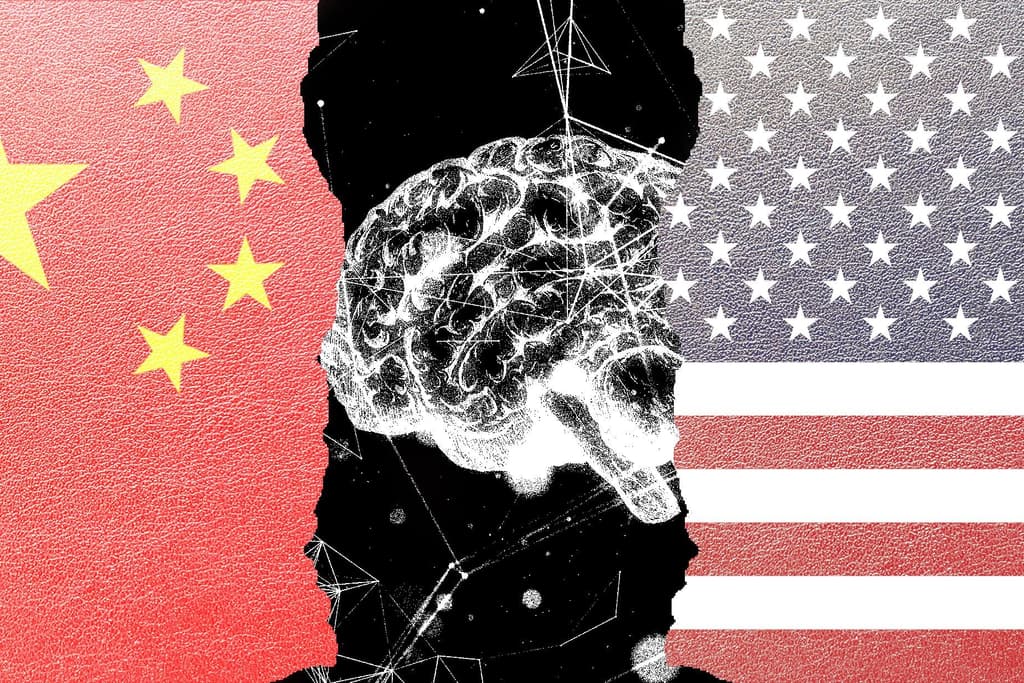
Trader consensus around a 92% chance that the US government avoids banning any open-source AI model in 2026 stems from explicit policy support for domestic open-weight models as a competitive edge against China. Recent administration frameworks exempt open models from pre-release government review required for closed frontier systems, while the Open-Source AI Leadership Act advancing through Congress directs Commerce to promote American open models and explicitly bars any ban or restriction authority. Temporary export controls targeted closed models like Anthropic’s Mythos 5, and industry pushback from Nvidia, Meta, and others has reinforced carve-outs. A sudden national security incident involving a widely used open model or sharpened US-China tensions could still trigger targeted limits on foreign releases, though broad prohibition remains improbable before year-end.
Eksperimental na AI-generated summary na nire-reference ang Polymarket data. Hindi ito trading advice at wala itong papel sa kung paano nire-resolve ang market na ito. · Na-updateUS government bans an open source AI model in 2026?
US government bans an open source AI model in 2026?
“Open source AI model" refers to a general-purpose large language or multimodal foundation model whose weights and source are publicly downloadable and usable on user-controlled hardware (e.g., Llama, Mistral, DeepSeek, Qwen). "Source available" AI models will qualify regardless of any licensing restrictions on acceptable use. Narrow or special-purpose models (e.g., embedding, moderation, or single-modality media generation models) and deprecated, research-only, or preview-only models will not qualify.
To qualify, a ban must target ordinary public access to the model across ordinary public channels within the US. A ban with the intention to remove access from a single channel is not sufficient.
A qualifying ban may target a specific model or a slate of models, so long as at least one open source model is restricted.
A qualifying ban enacted or issued by the resolution date will qualify regardless of if or when it takes effect.
Both temporary bans, including those with a defined end date, and indefinite bans will qualify.
Non-binding or preliminary actions, including non-binding resolutions, recommendations, proposed or pending legislation, investigations, and hearings, will not qualify on their own.
The resolution source for this market is official information and announcements from the United States government and the maintainer or developer of the relevant open source AI model. However, a consensus of credible reporting may also be used.
Binuksan ang Market: Jul 13, 2026, 10:13 PM ET
Resolver
0x65070BE91...“Open source AI model" refers to a general-purpose large language or multimodal foundation model whose weights and source are publicly downloadable and usable on user-controlled hardware (e.g., Llama, Mistral, DeepSeek, Qwen). "Source available" AI models will qualify regardless of any licensing restrictions on acceptable use. Narrow or special-purpose models (e.g., embedding, moderation, or single-modality media generation models) and deprecated, research-only, or preview-only models will not qualify.
To qualify, a ban must target ordinary public access to the model across ordinary public channels within the US. A ban with the intention to remove access from a single channel is not sufficient.
A qualifying ban may target a specific model or a slate of models, so long as at least one open source model is restricted.
A qualifying ban enacted or issued by the resolution date will qualify regardless of if or when it takes effect.
Both temporary bans, including those with a defined end date, and indefinite bans will qualify.
Non-binding or preliminary actions, including non-binding resolutions, recommendations, proposed or pending legislation, investigations, and hearings, will not qualify on their own.
The resolution source for this market is official information and announcements from the United States government and the maintainer or developer of the relevant open source AI model. However, a consensus of credible reporting may also be used.
Resolver
0x65070BE91...Trader consensus around a 92% chance that the US government avoids banning any open-source AI model in 2026 stems from explicit policy support for domestic open-weight models as a competitive edge against China. Recent administration frameworks exempt open models from pre-release government review required for closed frontier systems, while the Open-Source AI Leadership Act advancing through Congress directs Commerce to promote American open models and explicitly bars any ban or restriction authority. Temporary export controls targeted closed models like Anthropic’s Mythos 5, and industry pushback from Nvidia, Meta, and others has reinforced carve-outs. A sudden national security incident involving a widely used open model or sharpened US-China tensions could still trigger targeted limits on foreign releases, though broad prohibition remains improbable before year-end.
Eksperimental na AI-generated summary na nire-reference ang Polymarket data. Hindi ito trading advice at wala itong papel sa kung paano nire-resolve ang market na ito. · Na-update
Mag-ingat sa mga external link.
Mag-ingat sa mga external link.
Mga Madalas na Tanong