icon for Will a hurricane make landfall in Hawaii before 2027?

Will a hurricane make landfall in Hawaii before 2027?

icon for Will a hurricane make landfall in Hawaii before 2027?

Will a hurricane make landfall in Hawaii before 2027?

53% шанс
Polymarket
НОВЕ
53% шанс
Polymarket
НОВЕ
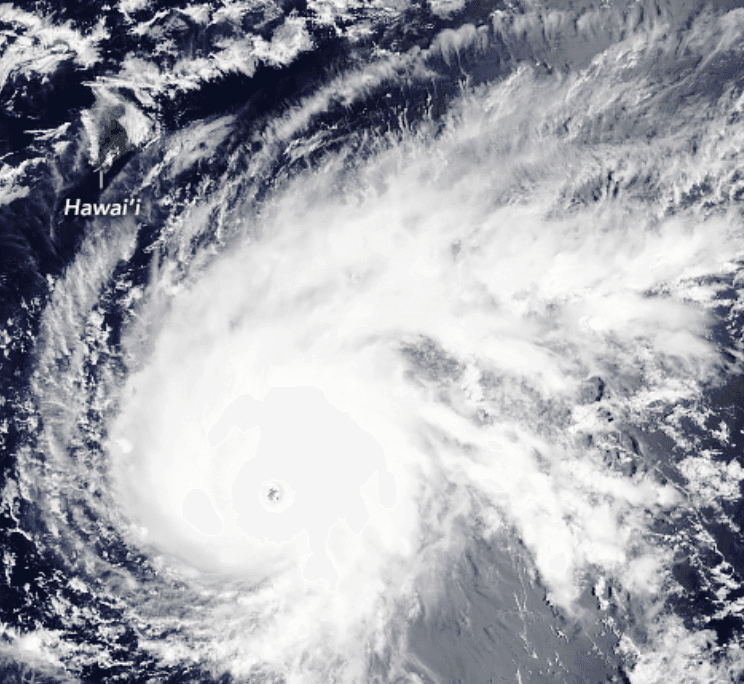
This market will resolve to "Yes" if any storm makes landfall in the State of Hawaii at Category 1 strength or higher, as reported in official Central Pacific Hurricane Center advisories (https://www.nhc.noaa.gov/cphc/), between market creation and December 31, 2026, 11:59:59 PM ET. Otherwise, this market will resolve to "No". A landfall counts toward this determination only if it occurs within this window; the time of the physical landfall governs, not the time any confirming advisory is issued. A hurricane is a tropical cyclone with maximum sustained winds of 74 mph or greater (Category 1 or higher on the Saffir-Simpson Hurricane Wind Scale), as described at https://www.nhc.noaa.gov/aboutsshws.php, and a hurricane landfall is said to occur when the hurricane's surface center intersects with the coastline, as described at https://www.nhc.noaa.gov/aboutgloss.shtml#LANDFALL. A storm must hold hurricane strength (Category 1 or higher on the Saffir-Simpson scale) at the moment its surface center intersects the coastline for that landfall to qualify. "Hawaii" means the entire State of Hawaii as recognized under U.S. law, including the main Hawaiian Islands (Hawaiʻi, Maui, Oʻahu, Kauaʻi, Molokaʻi, Lānaʻi, Niʻihau, and Kahoʻolawe) and the Northwestern Hawaiian Islands (including Midway Atoll and the Papahānaumokuākea Marine National Monument). The wind speed at the moment of landfall will be determined from the CPHC advisory or Special Advisory in effect at the time closest to the reported landfall time; where no advisory covers that exact moment, the most recent advisory issued prior to landfall governs. This market may resolve based on the initial CPHC advisory reporting a qualifying landfall regardless of any later advisory, retraction, best-track revision, or reanalysis that revises that storm's intensity downward at the time of landfall. However, if a subsequent advisory or correction identifies a qualifying landfall that was not reflected in initial reporting, this market will resolve to "Yes" based on that correction.Hawaii's position in the central Pacific, combined with prevailing easterly trade winds and typical storm tracks, has made direct hurricane landfalls exceptionally rare, with only two or three recorded since the mid-20th century despite an average of four to five tropical cyclones forming in the basin annually. The small island chain presents a narrow target, and most systems are deflected westward or northward before reaching it, as seen in recent seasons with close passes but limited impacts. The 2026 central Pacific outlook calls for above-normal activity through November, yet current modeling for early systems like Hurricane Fausto shows tracks favoring misses north of the islands. Trader consensus at 94% for no landfall before 2027 reflects this climatology and the limited remaining window, though an atypical steering pattern or late-season intensification could still produce a direct hit.

This market will resolve to "Yes" if any storm makes landfall in the State of Hawaii at Category 1 strength or higher, as reported in official Central Pacific Hurricane Center advisories (https://www.nhc.noaa.gov/cphc/), between market creation and December 31, 2026, 11:59:59 PM ET. Otherwise, this market will resolve to "No". A landfall counts toward this determination only if it occurs within this window; the time of the physical landfall governs, not the time any confirming advisory is issued.

A hurricane is a tropical cyclone with maximum sustained winds of 74 mph or greater (Category 1 or higher on the Saffir-Simpson Hurricane Wind Scale), as described at https://www.nhc.noaa.gov/aboutsshws.php, and a hurricane landfall is said to occur when the hurricane's surface center intersects with the coastline, as described at https://www.nhc.noaa.gov/aboutgloss.shtml#LANDFALL. A storm must hold hurricane strength (Category 1 or higher on the Saffir-Simpson scale) at the moment its surface center intersects the coastline for that landfall to qualify.

"Hawaii" means the entire State of Hawaii as recognized under U.S. law, including the main Hawaiian Islands (Hawaiʻi, Maui, Oʻahu, Kauaʻi, Molokaʻi, Lānaʻi, Niʻihau, and Kahoʻolawe) and the Northwestern Hawaiian Islands (including Midway Atoll and the Papahānaumokuākea Marine National Monument).

The wind speed at the moment of landfall will be determined from the CPHC advisory or Special Advisory in effect at the time closest to the reported landfall time; where no advisory covers that exact moment, the most recent advisory issued prior to landfall governs.

This market may resolve based on the initial CPHC advisory reporting a qualifying landfall regardless of any later advisory, retraction, best-track revision, or reanalysis that revises that storm's intensity downward at the time of landfall. However, if a subsequent advisory or correction identifies a qualifying landfall that was not reflected in initial reporting, this market will resolve to "Yes" based on that correction.
Обсяг
$20
Дата завершення
Jan 1, 2027
Ринок відкрито
Jul 24, 2026, 11:28 AM ET
This market will resolve to "Yes" if any storm makes landfall in the State of Hawaii at Category 1 strength or higher, as reported in official Central Pacific Hurricane Center advisories (https://www.nhc.noaa.gov/cphc/), between market creation and December 31, 2026, 11:59:59 PM ET. Otherwise, this market will resolve to "No". A landfall counts toward this determination only if it occurs within this window; the time of the physical landfall governs, not the time any confirming advisory is issued. A hurricane is a tropical cyclone with maximum sustained winds of 74 mph or greater (Category 1 or higher on the Saffir-Simpson Hurricane Wind Scale), as described at https://www.nhc.noaa.gov/aboutsshws.php, and a hurricane landfall is said to occur when the hurricane's surface center intersects with the coastline, as described at https://www.nhc.noaa.gov/aboutgloss.shtml#LANDFALL. A storm must hold hurricane strength (Category 1 or higher on the Saffir-Simpson scale) at the moment its surface center intersects the coastline for that landfall to qualify. "Hawaii" means the entire State of Hawaii as recognized under U.S. law, including the main Hawaiian Islands (Hawaiʻi, Maui, Oʻahu, Kauaʻi, Molokaʻi, Lānaʻi, Niʻihau, and Kahoʻolawe) and the Northwestern Hawaiian Islands (including Midway Atoll and the Papahānaumokuākea Marine National Monument). The wind speed at the moment of landfall will be determined from the CPHC advisory or Special Advisory in effect at the time closest to the reported landfall time; where no advisory covers that exact moment, the most recent advisory issued prior to landfall governs. This market may resolve based on the initial CPHC advisory reporting a qualifying landfall regardless of any later advisory, retraction, best-track revision, or reanalysis that revises that storm's intensity downward at the time of landfall. However, if a subsequent advisory or correction identifies a qualifying landfall that was not reflected in initial reporting, this market will resolve to "Yes" based on that correction.
This market will resolve to "Yes" if any storm makes landfall in the State of Hawaii at Category 1 strength or higher, as reported in official Central Pacific Hurricane Center advisories (https://www.nhc.noaa.gov/cphc/), between market creation and December 31, 2026, 11:59:59 PM ET. Otherwise, this market will resolve to "No". A landfall counts toward this determination only if it occurs within this window; the time of the physical landfall governs, not the time any confirming advisory is issued. A hurricane is a tropical cyclone with maximum sustained winds of 74 mph or greater (Category 1 or higher on the Saffir-Simpson Hurricane Wind Scale), as described at https://www.nhc.noaa.gov/aboutsshws.php, and a hurricane landfall is said to occur when the hurricane's surface center intersects with the coastline, as described at https://www.nhc.noaa.gov/aboutgloss.shtml#LANDFALL. A storm must hold hurricane strength (Category 1 or higher on the Saffir-Simpson scale) at the moment its surface center intersects the coastline for that landfall to qualify. "Hawaii" means the entire State of Hawaii as recognized under U.S. law, including the main Hawaiian Islands (Hawaiʻi, Maui, Oʻahu, Kauaʻi, Molokaʻi, Lānaʻi, Niʻihau, and Kahoʻolawe) and the Northwestern Hawaiian Islands (including Midway Atoll and the Papahānaumokuākea Marine National Monument). The wind speed at the moment of landfall will be determined from the CPHC advisory or Special Advisory in effect at the time closest to the reported landfall time; where no advisory covers that exact moment, the most recent advisory issued prior to landfall governs. This market may resolve based on the initial CPHC advisory reporting a qualifying landfall regardless of any later advisory, retraction, best-track revision, or reanalysis that revises that storm's intensity downward at the time of landfall. However, if a subsequent advisory or correction identifies a qualifying landfall that was not reflected in initial reporting, this market will resolve to "Yes" based on that correction.Hawaii's position in the central Pacific, combined with prevailing easterly trade winds and typical storm tracks, has made direct hurricane landfalls exceptionally rare, with only two or three recorded since the mid-20th century despite an average of four to five tropical cyclones forming in the basin annually. The small island chain presents a narrow target, and most systems are deflected westward or northward before reaching it, as seen in recent seasons with close passes but limited impacts. The 2026 central Pacific outlook calls for above-normal activity through November, yet current modeling for early systems like Hurricane Fausto shows tracks favoring misses north of the islands. Trader consensus at 94% for no landfall before 2027 reflects this climatology and the limited remaining window, though an atypical steering pattern or late-season intensification could still produce a direct hit.

This market will resolve to "Yes" if any storm makes landfall in the State of Hawaii at Category 1 strength or higher, as reported in official Central Pacific Hurricane Center advisories (https://www.nhc.noaa.gov/cphc/), between market creation and December 31, 2026, 11:59:59 PM ET. Otherwise, this market will resolve to "No". A landfall counts toward this determination only if it occurs within this window; the time of the physical landfall governs, not the time any confirming advisory is issued.

A hurricane is a tropical cyclone with maximum sustained winds of 74 mph or greater (Category 1 or higher on the Saffir-Simpson Hurricane Wind Scale), as described at https://www.nhc.noaa.gov/aboutsshws.php, and a hurricane landfall is said to occur when the hurricane's surface center intersects with the coastline, as described at https://www.nhc.noaa.gov/aboutgloss.shtml#LANDFALL. A storm must hold hurricane strength (Category 1 or higher on the Saffir-Simpson scale) at the moment its surface center intersects the coastline for that landfall to qualify.

"Hawaii" means the entire State of Hawaii as recognized under U.S. law, including the main Hawaiian Islands (Hawaiʻi, Maui, Oʻahu, Kauaʻi, Molokaʻi, Lānaʻi, Niʻihau, and Kahoʻolawe) and the Northwestern Hawaiian Islands (including Midway Atoll and the Papahānaumokuākea Marine National Monument).

The wind speed at the moment of landfall will be determined from the CPHC advisory or Special Advisory in effect at the time closest to the reported landfall time; where no advisory covers that exact moment, the most recent advisory issued prior to landfall governs.

This market may resolve based on the initial CPHC advisory reporting a qualifying landfall regardless of any later advisory, retraction, best-track revision, or reanalysis that revises that storm's intensity downward at the time of landfall. However, if a subsequent advisory or correction identifies a qualifying landfall that was not reflected in initial reporting, this market will resolve to "Yes" based on that correction.
Обсяг
$20
Дата завершення
Jan 1, 2027
Ринок відкрито
Jul 24, 2026, 11:28 AM ET
This market will resolve to "Yes" if any storm makes landfall in the State of Hawaii at Category 1 strength or higher, as reported in official Central Pacific Hurricane Center advisories (https://www.nhc.noaa.gov/cphc/), between market creation and December 31, 2026, 11:59:59 PM ET. Otherwise, this market will resolve to "No". A landfall counts toward this determination only if it occurs within this window; the time of the physical landfall governs, not the time any confirming advisory is issued. A hurricane is a tropical cyclone with maximum sustained winds of 74 mph or greater (Category 1 or higher on the Saffir-Simpson Hurricane Wind Scale), as described at https://www.nhc.noaa.gov/aboutsshws.php, and a hurricane landfall is said to occur when the hurricane's surface center intersects with the coastline, as described at https://www.nhc.noaa.gov/aboutgloss.shtml#LANDFALL. A storm must hold hurricane strength (Category 1 or higher on the Saffir-Simpson scale) at the moment its surface center intersects the coastline for that landfall to qualify. "Hawaii" means the entire State of Hawaii as recognized under U.S. law, including the main Hawaiian Islands (Hawaiʻi, Maui, Oʻahu, Kauaʻi, Molokaʻi, Lānaʻi, Niʻihau, and Kahoʻolawe) and the Northwestern Hawaiian Islands (including Midway Atoll and the Papahānaumokuākea Marine National Monument). The wind speed at the moment of landfall will be determined from the CPHC advisory or Special Advisory in effect at the time closest to the reported landfall time; where no advisory covers that exact moment, the most recent advisory issued prior to landfall governs. This market may resolve based on the initial CPHC advisory reporting a qualifying landfall regardless of any later advisory, retraction, best-track revision, or reanalysis that revises that storm's intensity downward at the time of landfall. However, if a subsequent advisory or correction identifies a qualifying landfall that was not reflected in initial reporting, this market will resolve to "Yes" based on that correction.

Обережно з зовнішніми посиланнями.

Часті запитання

«Will a hurricane make landfall in Hawaii before 2027?» — це ринок прогнозів на Polymarket, де трейдери купують і продають акції «Так» або «Ні» залежно від того, чи вірять вони, що ця подія станеться. Поточна краудсорсингова ймовірність — 53% для «Yes». Наприклад, якщо «Так» коштує 53¢, ринок колективно оцінює шанс цієї події в 53%. Ці шанси безперервно змінюються, коли трейдери реагують на нові події. Акції правильного результату погашаються по $1 кожна при вирішенні ринку.

«Will a hurricane make landfall in Hawaii before 2027?» — це нещодавно створений ринок на Polymarket, запущений Jul 24, 2026. Як ранній ринок, це ваша можливість бути серед перших трейдерів, що встановлюють шанси. Ви також можете зберегти цю сторінку в закладки для відстеження обсягу.

Щоб торгувати на «Will a hurricane make landfall in Hawaii before 2027?», просто оберіть, чи вірите ви, що відповідь — «Так» або «Ні». Кожна сторона має поточну ціну, що відображає ймовірність ринку. Введіть суму та натисніть «Торгувати». Якщо ви купили акції «Так» і результат — «Так», кожна акція виплачує $1. Якщо «Ні» — ваші акції «Так» коштують $0. Ви також можете продати акції в будь-який час до вирішення.

Поточна ймовірність для «Will a hurricane make landfall in Hawaii before 2027?» — 53% для «Yes». Це означає, що спільнота Polymarket вважає, що є 53% шанс, що ця подія станеться. Ці шанси оновлюються в реальному часі.

Правила вирішення для «Will a hurricane make landfall in Hawaii before 2027?» точно визначають, що має статися для оголошення переможця — включаючи офіційні джерела даних. Ви можете переглянути повні критерії вирішення в розділі «Правила» на цій сторінці. Рекомендуємо уважно прочитати правила перед торгівлею.