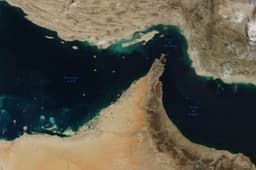
Sustained geopolitical tensions in the Middle East, particularly involving Iran and threats to maritime security, underpin the 59% market-implied probability that Strait of Hormuz traffic will not normalize by year-end 2026. Traders assign only single-digit odds to a return in August through December, reflecting limited near-term de-escalation signals and ongoing disruptions to oil shipping lanes. This pricing incorporates broader risk factors such as potential sanctions impacts, military posturing, and energy market volatility, with modest probabilities for late-year months indicating expectations of gradual rather than abrupt resolution. Key upcoming catalysts include any multilateral diplomatic efforts or shifts in regional conflict dynamics that could alter implied odds.
Résumé expérimental généré par IA à partir des données Polymarket. Ceci n'est pas un conseil de trading et ne joue aucun rôle dans la résolution de ce marché. · Mis à jourPas de retour à un trafic normal en 2026 59%
December 10%
September 8%
October 8%
$298,247 Vol.
$298,247 Vol.
August
2%
September
8%
October
8%
November
8%
December
10%
Pas de retour à un trafic normal en 2026
59%
Pas de retour à un trafic normal en 2026 59%
December 10%
September 8%
October 8%
$298,247 Vol.
$298,247 Vol.
August
2%
September
8%
October
8%
November
8%
December
10%
Pas de retour à un trafic normal en 2026
59%
Daily transit calls include container, dry bulk, roll-on/roll-off, general cargo, and tanker ships. Ships not reported by IMF Portwatch will not be considered.
The qualifying month will be the calendar month containing the date associated with the first qualifying data point published by IMF PortWatch.
This market will resolve as soon as IMF Portwatch publishes a 7-day moving average of transit calls equal to or above the specified level, or once data has been published for the final date of the specified month, and no such value has been published.
If data is published for December 31, 2026 and a qualifying data point has not been published for any month, this market will resolve to “No Return to Normal Traffic in 2026.” If no data has been published for December 31, 2026 by January 31, 2027, 11:59 PM ET, this market will resolve based on data published up to that point.
Revisions to previously published data points made within this market’s timeframe will be considered. However, they will not disqualify a previously published data point from qualifying. Revisions to previously published data points after data is published for the final date in the specified month, however, will not be considered.
In case of obvious data integrity issues (i.e., erroneous data), the market may remain open until the end of the third calendar day (ET) after the date on which such data is first released to allow for corrections. Data integrity issues refer only to clerical or other similar errors in the underlying data, and do not include cases where IMF Portwatch differs from alternative sources.
The resolution source for this market will be IMF Portwatch, specifically the transit calls data published for the Strait of Hormuz at https://portwatch.imf.org/pages/cb5856222a5b4105adc6ee7e880a1730, both in the chart and through downloadable files.
Marché ouvert : Jul 8, 2026, 2:43 PM ET
Resolver
0x69c47De9D...Daily transit calls include container, dry bulk, roll-on/roll-off, general cargo, and tanker ships. Ships not reported by IMF Portwatch will not be considered.
The qualifying month will be the calendar month containing the date associated with the first qualifying data point published by IMF PortWatch.
This market will resolve as soon as IMF Portwatch publishes a 7-day moving average of transit calls equal to or above the specified level, or once data has been published for the final date of the specified month, and no such value has been published.
If data is published for December 31, 2026 and a qualifying data point has not been published for any month, this market will resolve to “No Return to Normal Traffic in 2026.” If no data has been published for December 31, 2026 by January 31, 2027, 11:59 PM ET, this market will resolve based on data published up to that point.
Revisions to previously published data points made within this market’s timeframe will be considered. However, they will not disqualify a previously published data point from qualifying. Revisions to previously published data points after data is published for the final date in the specified month, however, will not be considered.
In case of obvious data integrity issues (i.e., erroneous data), the market may remain open until the end of the third calendar day (ET) after the date on which such data is first released to allow for corrections. Data integrity issues refer only to clerical or other similar errors in the underlying data, and do not include cases where IMF Portwatch differs from alternative sources.
The resolution source for this market will be IMF Portwatch, specifically the transit calls data published for the Strait of Hormuz at https://portwatch.imf.org/pages/cb5856222a5b4105adc6ee7e880a1730, both in the chart and through downloadable files.
Resolver
0x69c47De9D...Sustained geopolitical tensions in the Middle East, particularly involving Iran and threats to maritime security, underpin the 59% market-implied probability that Strait of Hormuz traffic will not normalize by year-end 2026. Traders assign only single-digit odds to a return in August through December, reflecting limited near-term de-escalation signals and ongoing disruptions to oil shipping lanes. This pricing incorporates broader risk factors such as potential sanctions impacts, military posturing, and energy market volatility, with modest probabilities for late-year months indicating expectations of gradual rather than abrupt resolution. Key upcoming catalysts include any multilateral diplomatic efforts or shifts in regional conflict dynamics that could alter implied odds.
Résumé expérimental généré par IA à partir des données Polymarket. Ceci n'est pas un conseil de trading et ne joue aucun rôle dans la résolution de ce marché. · Mis à jour
Méfiez-vous des liens externes.
Méfiez-vous des liens externes.
Questions fréquentes