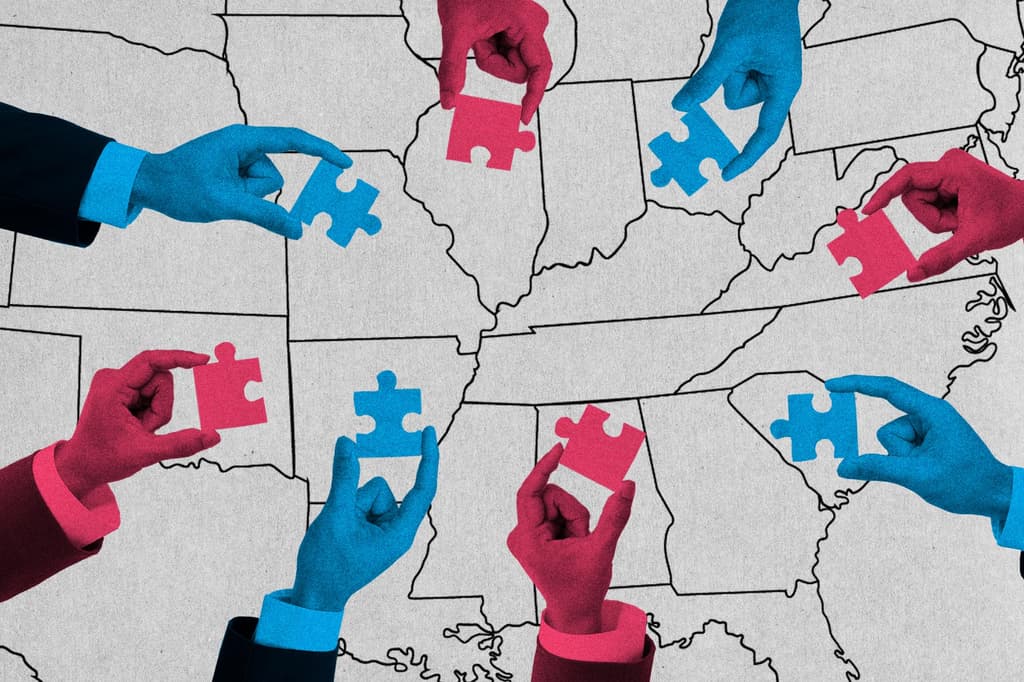
Mid-decade redistricting has produced new congressional maps in 10 states for the 2026 House elections: Alabama, California, Florida, Louisiana, Missouri, North Carolina, Ohio, Tennessee, Texas, and Utah. Republican-led legislatures in states including Texas, Florida, North Carolina, and Missouri initiated redraws starting in summer 2025 to adjust district lines, prompting California Democrats to enact counter-maps via ballot measure. The Supreme Court’s May 2026 Louisiana v. Callais ruling altered Voting Rights Act standards, enabling several states to lift prior injunctions and implement revised lines favoring one party or the other. Most maps survived legal challenges or received Supreme Court stays and are now in effect, though isolated litigation persists. Special primaries and candidate filing deadlines in affected states have already incorporated the updated districts ahead of November voting.
Eksperimental na AI-generated summary na nire-reference ang Polymarket data. Hindi ito trading advice at wala itong papel sa kung paano nire-resolve ang market na ito. · Na-updateWhich states will use new congressional maps in the midterms?
Which states will use new congressional maps in the midterms?
$395,140 Vol.
California
97%
Texas
98%
North Carolina
96%
Ohio
96%
Utah
91%
Florida
98%
Louisiana
93%
Missouri
93%
Virginia
5%
Alabama
91%
South Carolina
<1%
Georgia
6%
Kansas
<1%
New Jersey
4%
Indiana
5%
Washington
4%
Nebraska
5%
Illinois
2%
Minnesota
5%
New York
4%
Maryland
4%
Wisconsin
2%
$395,140 Vol.
California
97%
Texas
98%
North Carolina
96%
Ohio
96%
Utah
91%
Florida
98%
Louisiana
93%
Missouri
93%
Virginia
5%
Alabama
91%
South Carolina
<1%
Georgia
6%
Kansas
<1%
New Jersey
4%
Indiana
5%
Washington
4%
Nebraska
5%
Illinois
2%
Minnesota
5%
New York
4%
Maryland
4%
Wisconsin
2%
To qualify, after the 2024 United States congressional elections, the listed state must have adopted a new congressional district map that is:
- Formally adopted and enacted into law by the appropriate legislative or redistricting authority;
- Not enjoined, vacated or otherwise fully struck down prior to the 2026 United States Midterm elections; and
- In effect for use in the 2026 United States midterm elections.
Maps that are temporarily stayed pending appeal but later upheld will qualify if they are in effect for use in the 2026 United States midterm elections.
Maps that are completely redrawn by a court, special master, or legislature before implementation will not qualify, unless the redrawn map is itself a new map used in the 2026 United States midterm elections.
If the 2026 United States midterm elections occur and no new qualifying map is in use, this market will resolve to “No”.
The primary resolution sources for this market will be official information from the listed state and a consensus of credible reporting.
Binuksan ang Market: Apr 30, 2026, 2:25 PM ET
Resolver
0x65070BE91...To qualify, after the 2024 United States congressional elections, the listed state must have adopted a new congressional district map that is:
- Formally adopted and enacted into law by the appropriate legislative or redistricting authority;
- Not enjoined, vacated or otherwise fully struck down prior to the 2026 United States Midterm elections; and
- In effect for use in the 2026 United States midterm elections.
Maps that are temporarily stayed pending appeal but later upheld will qualify if they are in effect for use in the 2026 United States midterm elections.
Maps that are completely redrawn by a court, special master, or legislature before implementation will not qualify, unless the redrawn map is itself a new map used in the 2026 United States midterm elections.
If the 2026 United States midterm elections occur and no new qualifying map is in use, this market will resolve to “No”.
The primary resolution sources for this market will be official information from the listed state and a consensus of credible reporting.
Resolver
0x65070BE91...Mid-decade redistricting has produced new congressional maps in 10 states for the 2026 House elections: Alabama, California, Florida, Louisiana, Missouri, North Carolina, Ohio, Tennessee, Texas, and Utah. Republican-led legislatures in states including Texas, Florida, North Carolina, and Missouri initiated redraws starting in summer 2025 to adjust district lines, prompting California Democrats to enact counter-maps via ballot measure. The Supreme Court’s May 2026 Louisiana v. Callais ruling altered Voting Rights Act standards, enabling several states to lift prior injunctions and implement revised lines favoring one party or the other. Most maps survived legal challenges or received Supreme Court stays and are now in effect, though isolated litigation persists. Special primaries and candidate filing deadlines in affected states have already incorporated the updated districts ahead of November voting.
Eksperimental na AI-generated summary na nire-reference ang Polymarket data. Hindi ito trading advice at wala itong papel sa kung paano nire-resolve ang market na ito. · Na-update


Mag-ingat sa mga external link.
Mag-ingat sa mga external link.
Mga Madalas na Tanong