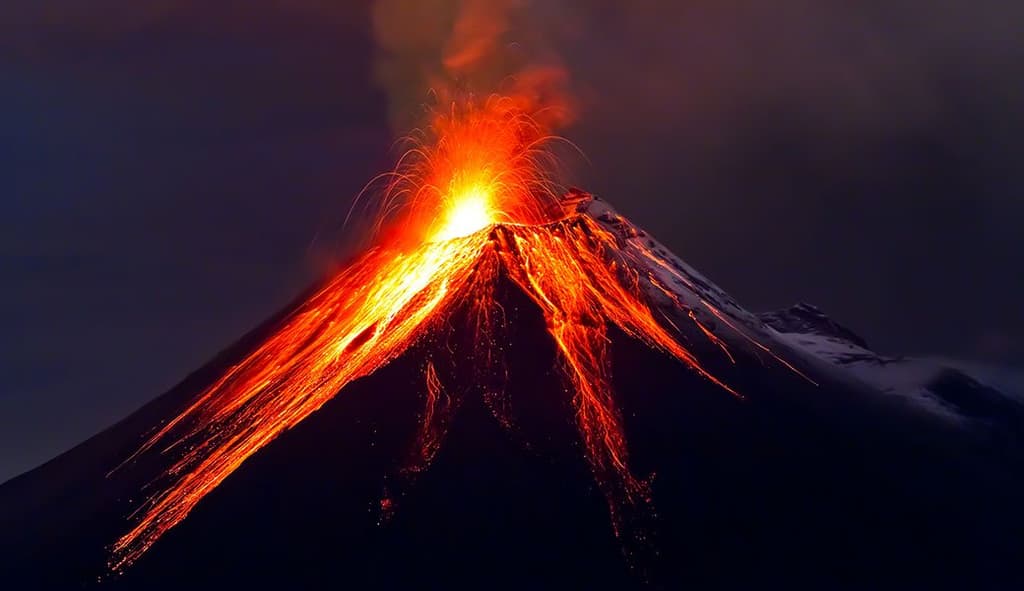
Major eruptions reaching VEI 6 or higher remain statistically rare, with global recurrence intervals typically spanning decades to centuries based on historical records from sources like the Smithsonian Institution and USGS. As of mid-August 2026, ongoing monitoring shows only moderate activity at volcanoes such as Kīlauea and Fuego, with no widespread precursory signals like accelerated seismicity or rapid deformation at high-risk systems that would signal imminent escalation. Trader consensus at 92% for no event reflects this baseline frequency and absence of alerts from official observatories. A sudden shift remains possible if unrest intensifies rapidly at calderas such as Campi Flegrei or Yellowstone, though even then reaching VEI 6 thresholds within the remaining months would require exceptional conditions.
基於Polymarket數據的AI實驗性摘要。這不是交易建議,也不影響該市場的結算方式。 · 更新於是
$127,828 交易量
$127,828 交易量
是
$127,828 交易量
$127,828 交易量
The primary resolution source will be the Smithsonian Institution Global Volcanism Program (GVP: https://volcano.si.edu/), specifically the ‘VEI 6’ figure for 2026 released on the page currently titled "Eruptions Avg 2000-2024 (N/T)" (https://volcano.si.edu/faq/index.cfm?question=eruptionsbyyear) as of March 31, 2027, 12 PM ET. Any prior updates will not be considered finalized.
If this dataset has not been updated to include all relevant events by March 31, 2027, or if the Smithsonian GVP becomes permanently unavailable, this market may resolve based on a consensus of credible scientific sources, including the U.S. Geological Survey (USGS), national or regional volcanic observatories, or credible reporting of a scientific consensus.
Note: Smithsonian Institution Global Volcanism Program databases, which include eruptions that reached the relevant threshold prior to this market’s timeframe (e.g., https://volcano.si.edu/faq/index.cfm?question=eruptionsbyyear&checkyear=2025), will not be considered.
市場開放時間: Dec 29, 2025, 6:24 PM ET
Resolver
0x65070BE91...The primary resolution source will be the Smithsonian Institution Global Volcanism Program (GVP: https://volcano.si.edu/), specifically the ‘VEI 6’ figure for 2026 released on the page currently titled "Eruptions Avg 2000-2024 (N/T)" (https://volcano.si.edu/faq/index.cfm?question=eruptionsbyyear) as of March 31, 2027, 12 PM ET. Any prior updates will not be considered finalized.
If this dataset has not been updated to include all relevant events by March 31, 2027, or if the Smithsonian GVP becomes permanently unavailable, this market may resolve based on a consensus of credible scientific sources, including the U.S. Geological Survey (USGS), national or regional volcanic observatories, or credible reporting of a scientific consensus.
Note: Smithsonian Institution Global Volcanism Program databases, which include eruptions that reached the relevant threshold prior to this market’s timeframe (e.g., https://volcano.si.edu/faq/index.cfm?question=eruptionsbyyear&checkyear=2025), will not be considered.
Resolver
0x65070BE91...Major eruptions reaching VEI 6 or higher remain statistically rare, with global recurrence intervals typically spanning decades to centuries based on historical records from sources like the Smithsonian Institution and USGS. As of mid-August 2026, ongoing monitoring shows only moderate activity at volcanoes such as Kīlauea and Fuego, with no widespread precursory signals like accelerated seismicity or rapid deformation at high-risk systems that would signal imminent escalation. Trader consensus at 92% for no event reflects this baseline frequency and absence of alerts from official observatories. A sudden shift remains possible if unrest intensifies rapidly at calderas such as Campi Flegrei or Yellowstone, though even then reaching VEI 6 thresholds within the remaining months would require exceptional conditions.
基於Polymarket數據的AI實驗性摘要。這不是交易建議,也不影響該市場的結算方式。 · 更新於

警惕外部連結哦。
警惕外部連結哦。
Frequently Asked Questions