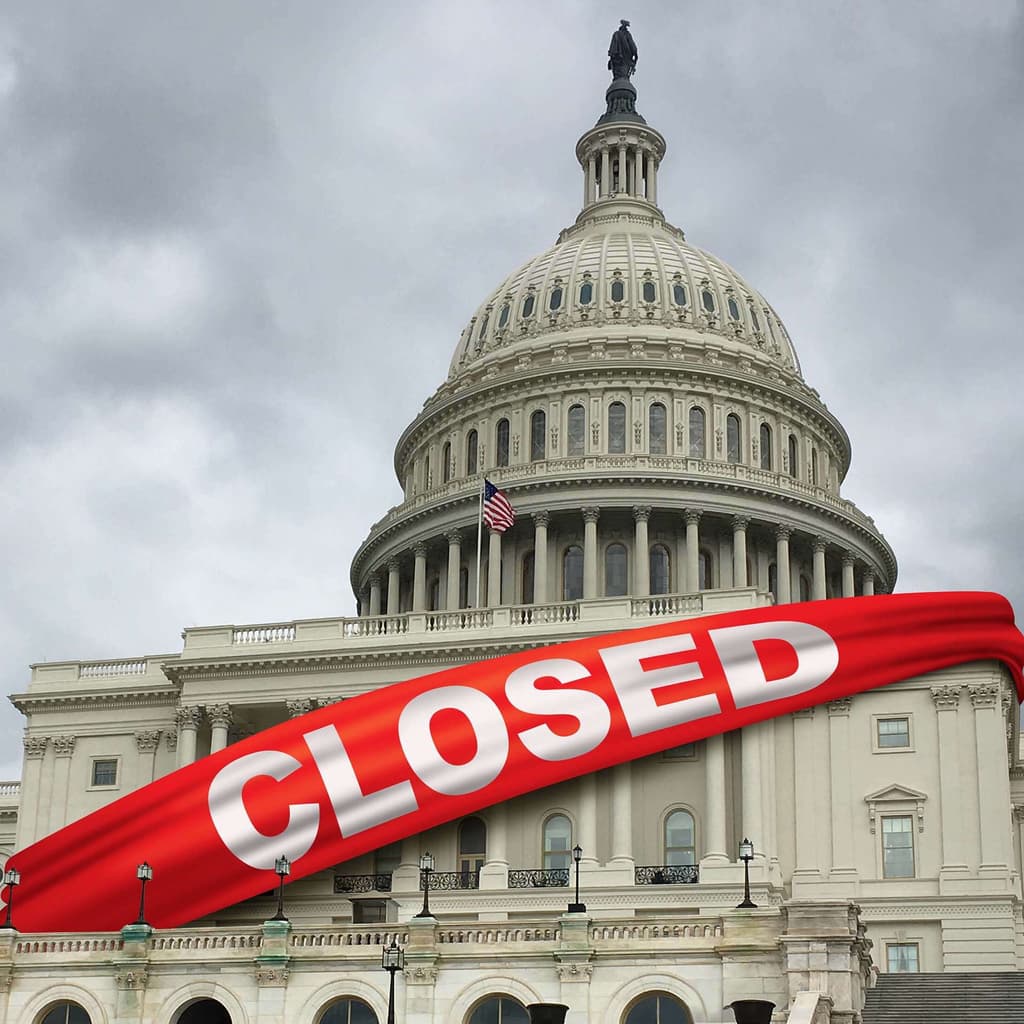
Congress enacted and President Trump signed a continuing resolution (H.R. 6500, P.L. 119-103) on September 2, 2026, extending federal funding at FY2026 levels through December 11 and eliminating any appropriations lapse on October 1. The measure advanced with broad support, passing the Senate 90-6 and the House 370-48, reflecting bipartisan consensus to sidestep disruptions ahead of the November midterms after multiple prior shutdowns. With the law already in effect, traders assign a 98.4% probability to no shutdown by the deadline, consistent with the absence of procedural or partisan obstacles. Only an extraordinary post-enactment reversal, such as an unforeseen legal challenge to the CR itself, could alter that outcome before October 1.
基于Polymarket数据的AI实验性摘要。这不是交易建议,也不影响该市场的结算方式。 · 更新于是
2% 概率
$15,722 交易量
$15,722 交易量
2026-10-01
是
2% 概率
$15,722 交易量
$15,722 交易量
2026-10-01
This market will resolve to "Yes" if the United States federal government enters a shutdown due to a lapse in appropriations by the specified date, 11:59 PM ET. Otherwise, this market will resolve to "No".
A U.S. federal government shutdown is considered to have gone into effect when there is a lapse in appropriations that results in federal government agencies suspending non-excepted operations, typically including the furlough of non-excepted federal employees.
A lapse in appropriations occurs when Congress fails to enact, or the President fails to sign into law, legislation providing funding authority for federal government operations by an applicable deadline, resulting in a funding lapse. A lapse in appropriations where no federal agencies cease or suspend non-excepted operations will not qualify as a shutdown.
Partial shutdowns qualify. A shutdown affecting one or more, but not all, federal agencies constitutes a shutdown.
The following will qualify as a shutdown:
- An official directive from the Office of Management and Budget (OMB) ordering heads of affected agencies to execute shutdown plans (e.g., an instruction to "execute plans for an orderly shutdown") that is in effect by the specified date and time
- An official operating status published by the U.S. Office of Personnel Management (OPM) indicating that, due to a lapse in appropriations, federal government operations are suspended, reduced, or vary by agency (e.g., a notice that "due to a partial lapse in appropriations, Federal Government operations vary by agency")
The following will not qualify as a shutdown:
- A technical lapse in appropriations where OMB or other authorized authority directs agencies to continue normal or substantially normal operations
- Government closures or operating status changes resulting solely from Federal holidays, inclement weather, natural disasters, or other emergencies, unless such closures coincide with a qualifying shutdown caused by a lapse in appropriations
The primary resolution source for this market will be official information from the United States government, including the U.S. Office of Personnel Management (OPM); however, a consensus of credible reporting may also be used.Congress enacted and President Trump signed a continuing resolution (H.R. 6500, P.L. 119-103) on September 2, 2026, extending federal funding at FY2026 levels through December 11 and eliminating any appropriations lapse on October 1. The measure advanced with broad support, passing the Senate 90-6 and the House 370-48, reflecting bipartisan consensus to sidestep disruptions ahead of the November midterms after multiple prior shutdowns. With the law already in effect, traders assign a 98.4% probability to no shutdown by the deadline, consistent with the absence of procedural or partisan obstacles. Only an extraordinary post-enactment reversal, such as an unforeseen legal challenge to the CR itself, could alter that outcome before October 1.
This market will resolve to "Yes" if the United States federal government enters a shutdown due to a lapse in appropriations by the specified date, 11:59 PM ET. Otherwise, this market will resolve to "No".
A U.S. federal government shutdown is considered to have gone into effect when there is a lapse in appropriations that results in federal government agencies suspending non-excepted operations, typically including the furlough of non-excepted federal employees.
A lapse in appropriations occurs when Congress fails to enact, or the President fails to sign into law, legislation providing funding authority for federal government operations by an applicable deadline, resulting in a funding lapse. A lapse in appropriations where no federal agencies cease or suspend non-excepted operations will not qualify as a shutdown.
Partial shutdowns qualify. A shutdown affecting one or more, but not all, federal agencies constitutes a shutdown.
The following will qualify as a shutdown:
- An official directive from the Office of Management and Budget (OMB) ordering heads of affected agencies to execute shutdown plans (e.g., an instruction to "execute plans for an orderly shutdown") that is in effect by the specified date and time
- An official operating status published by the U.S. Office of Personnel Management (OPM) indicating that, due to a lapse in appropriations, federal government operations are suspended, reduced, or vary by agency (e.g., a notice that "due to a partial lapse in appropriations, Federal Government operations vary by agency")
The following will not qualify as a shutdown:
- A technical lapse in appropriations where OMB or other authorized authority directs agencies to continue normal or substantially normal operations
- Government closures or operating status changes resulting solely from Federal holidays, inclement weather, natural disasters, or other emergencies, unless such closures coincide with a qualifying shutdown caused by a lapse in appropriations
The primary resolution source for this market will be official information from the United States government, including the U.S. Office of Personnel Management (OPM); however, a consensus of credible reporting may also be used.
A U.S. federal government shutdown is considered to have gone into effect when there is a lapse in appropriations that results in federal government agencies suspending non-excepted operations, typically including the furlough of non-excepted federal employees.
A lapse in appropriations occurs when Congress fails to enact, or the President fails to sign into law, legislation providing funding authority for federal government operations by an applicable deadline, resulting in a funding lapse. A lapse in appropriations where no federal agencies cease or suspend non-excepted operations will not qualify as a shutdown.
Partial shutdowns qualify. A shutdown affecting one or more, but not all, federal agencies constitutes a shutdown.
The following will qualify as a shutdown:
- An official directive from the Office of Management and Budget (OMB) ordering heads of affected agencies to execute shutdown plans (e.g., an instruction to "execute plans for an orderly shutdown") that is in effect by the specified date and time
- An official operating status published by the U.S. Office of Personnel Management (OPM) indicating that, due to a lapse in appropriations, federal government operations are suspended, reduced, or vary by agency (e.g., a notice that "due to a partial lapse in appropriations, Federal Government operations vary by agency")
The following will not qualify as a shutdown:
- A technical lapse in appropriations where OMB or other authorized authority directs agencies to continue normal or substantially normal operations
- Government closures or operating status changes resulting solely from Federal holidays, inclement weather, natural disasters, or other emergencies, unless such closures coincide with a qualifying shutdown caused by a lapse in appropriations
The primary resolution source for this market will be official information from the United States government, including the U.S. Office of Personnel Management (OPM); however, a consensus of credible reporting may also be used.
市场开放时间: Jun 10, 2026, 12:27 PM ET
交易量
$15,722结束日期
2026-10-02市场开放时间
Jun 10, 2026, 12:27 PM ETThis market will resolve to "Yes" if the United States federal government enters a shutdown due to a lapse in appropriations by the specified date, 11:59 PM ET. Otherwise, this market will resolve to "No".
A U.S. federal government shutdown is considered to have gone into effect when there is a lapse in appropriations that results in federal government agencies suspending non-excepted operations, typically including the furlough of non-excepted federal employees.
A lapse in appropriations occurs when Congress fails to enact, or the President fails to sign into law, legislation providing funding authority for federal government operations by an applicable deadline, resulting in a funding lapse. A lapse in appropriations where no federal agencies cease or suspend non-excepted operations will not qualify as a shutdown.
Partial shutdowns qualify. A shutdown affecting one or more, but not all, federal agencies constitutes a shutdown.
The following will qualify as a shutdown:
- An official directive from the Office of Management and Budget (OMB) ordering heads of affected agencies to execute shutdown plans (e.g., an instruction to "execute plans for an orderly shutdown") that is in effect by the specified date and time
- An official operating status published by the U.S. Office of Personnel Management (OPM) indicating that, due to a lapse in appropriations, federal government operations are suspended, reduced, or vary by agency (e.g., a notice that "due to a partial lapse in appropriations, Federal Government operations vary by agency")
The following will not qualify as a shutdown:
- A technical lapse in appropriations where OMB or other authorized authority directs agencies to continue normal or substantially normal operations
- Government closures or operating status changes resulting solely from Federal holidays, inclement weather, natural disasters, or other emergencies, unless such closures coincide with a qualifying shutdown caused by a lapse in appropriations
The primary resolution source for this market will be official information from the United States government, including the U.S. Office of Personnel Management (OPM); however, a consensus of credible reporting may also be used.Congress enacted and President Trump signed a continuing resolution (H.R. 6500, P.L. 119-103) on September 2, 2026, extending federal funding at FY2026 levels through December 11 and eliminating any appropriations lapse on October 1. The measure advanced with broad support, passing the Senate 90-6 and the House 370-48, reflecting bipartisan consensus to sidestep disruptions ahead of the November midterms after multiple prior shutdowns. With the law already in effect, traders assign a 98.4% probability to no shutdown by the deadline, consistent with the absence of procedural or partisan obstacles. Only an extraordinary post-enactment reversal, such as an unforeseen legal challenge to the CR itself, could alter that outcome before October 1.
This market will resolve to "Yes" if the United States federal government enters a shutdown due to a lapse in appropriations by the specified date, 11:59 PM ET. Otherwise, this market will resolve to "No".
A U.S. federal government shutdown is considered to have gone into effect when there is a lapse in appropriations that results in federal government agencies suspending non-excepted operations, typically including the furlough of non-excepted federal employees.
A lapse in appropriations occurs when Congress fails to enact, or the President fails to sign into law, legislation providing funding authority for federal government operations by an applicable deadline, resulting in a funding lapse. A lapse in appropriations where no federal agencies cease or suspend non-excepted operations will not qualify as a shutdown.
Partial shutdowns qualify. A shutdown affecting one or more, but not all, federal agencies constitutes a shutdown.
The following will qualify as a shutdown:
- An official directive from the Office of Management and Budget (OMB) ordering heads of affected agencies to execute shutdown plans (e.g., an instruction to "execute plans for an orderly shutdown") that is in effect by the specified date and time
- An official operating status published by the U.S. Office of Personnel Management (OPM) indicating that, due to a lapse in appropriations, federal government operations are suspended, reduced, or vary by agency (e.g., a notice that "due to a partial lapse in appropriations, Federal Government operations vary by agency")
The following will not qualify as a shutdown:
- A technical lapse in appropriations where OMB or other authorized authority directs agencies to continue normal or substantially normal operations
- Government closures or operating status changes resulting solely from Federal holidays, inclement weather, natural disasters, or other emergencies, unless such closures coincide with a qualifying shutdown caused by a lapse in appropriations
The primary resolution source for this market will be official information from the United States government, including the U.S. Office of Personnel Management (OPM); however, a consensus of credible reporting may also be used.
A U.S. federal government shutdown is considered to have gone into effect when there is a lapse in appropriations that results in federal government agencies suspending non-excepted operations, typically including the furlough of non-excepted federal employees.
A lapse in appropriations occurs when Congress fails to enact, or the President fails to sign into law, legislation providing funding authority for federal government operations by an applicable deadline, resulting in a funding lapse. A lapse in appropriations where no federal agencies cease or suspend non-excepted operations will not qualify as a shutdown.
Partial shutdowns qualify. A shutdown affecting one or more, but not all, federal agencies constitutes a shutdown.
The following will qualify as a shutdown:
- An official directive from the Office of Management and Budget (OMB) ordering heads of affected agencies to execute shutdown plans (e.g., an instruction to "execute plans for an orderly shutdown") that is in effect by the specified date and time
- An official operating status published by the U.S. Office of Personnel Management (OPM) indicating that, due to a lapse in appropriations, federal government operations are suspended, reduced, or vary by agency (e.g., a notice that "due to a partial lapse in appropriations, Federal Government operations vary by agency")
The following will not qualify as a shutdown:
- A technical lapse in appropriations where OMB or other authorized authority directs agencies to continue normal or substantially normal operations
- Government closures or operating status changes resulting solely from Federal holidays, inclement weather, natural disasters, or other emergencies, unless such closures coincide with a qualifying shutdown caused by a lapse in appropriations
The primary resolution source for this market will be official information from the United States government, including the U.S. Office of Personnel Management (OPM); however, a consensus of credible reporting may also be used.
交易量
$15,722结束日期
2026-10-02市场开放时间
Jun 10, 2026, 12:27 PM ETCongress enacted and President Trump signed a continuing resolution (H.R. 6500, P.L. 119-103) on September 2, 2026, extending federal funding at FY2026 levels through December 11 and eliminating any appropriations lapse on October 1. The measure advanced with broad support, passing the Senate 90-6 and the House 370-48, reflecting bipartisan consensus to sidestep disruptions ahead of the November midterms after multiple prior shutdowns. With the law already in effect, traders assign a 98.4% probability to no shutdown by the deadline, consistent with the absence of procedural or partisan obstacles. Only an extraordinary post-enactment reversal, such as an unforeseen legal challenge to the CR itself, could alter that outcome before October 1.
基于Polymarket数据的AI实验性摘要。这不是交易建议,也不影响该市场的结算方式。 · 更新于

警惕外部链接哦。
警惕外部链接哦。
常见问题