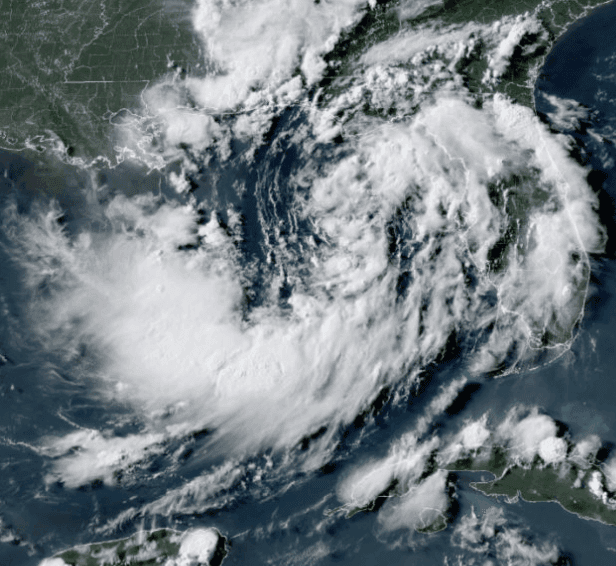
icon for Quanti uragani si formeranno durante la stagione degli uragani atlantici nel 2026?

Quanti uragani si formeranno durante la stagione degli uragani atlantici nel 2026?

icon for Quanti uragani si formeranno durante la stagione degli uragani atlantici nel 2026?

Quanti uragani si formeranno durante la stagione degli uragani atlantici nel 2026?

NUOVO
1 dic 2026
Polymarket

$0.00 Vol.

Polymarket

1-3

$0 Vol.

38%

4-6

$0 Vol.

42%

7+

$0 Vol.

56%

0

$0 Vol.

50%

This market will resolve according to the number of storms categorized as a hurricane in the Atlantic from the creation of this market through November 30, 2026 11:59:59 PM ET. If there is no storm categorized as a hurricane in the Atlantic from the creation of this market through November 30, 2026 11:59:59 PM ET, then this market will resolve to "0". A hurricane is a tropical cyclone with maximum sustained winds of 74 mph or greater (Category 1 or higher on the Saffir-Simpson Hurricane Wind Scale), as described at https://www.nhc.noaa.gov/aboutsshws.php. This market may resolve based on the initial NHC advisory reporting a qualifying hurricane regardless of any later advisory, retraction, best-track revision, or reanalysis that revises that storm's intensity downward. The official count will be determined by the NHC (nhc.noaa.gov) advisories.A strengthening El Niño, confirmed by recent atmospheric observations, is suppressing Atlantic hurricane activity through increased vertical wind shear and altered steering patterns, driving consensus toward a below-normal 2026 season. NOAA’s May outlook projects 3–6 hurricanes with 70% confidence, while Colorado State University’s July update lowered its forecast to 4 hurricanes amid the evolving El Niño. As of July 24, only two tropical storms (Arthur and Bertha) have formed, yielding minimal Accumulated Cyclone Energy well below the 1991–2020 average. Peak-season months (August–October) remain critical, with traders watching updated ENSO indices, National Hurricane Center model runs, and any late-July disturbances that could alter totals before resolution on November 30.

This market will resolve according to the number of storms categorized as a hurricane in the Atlantic from the creation of this market through November 30, 2026 11:59:59 PM ET. If there is no storm categorized as a hurricane in the Atlantic from the creation of this market through November 30, 2026 11:59:59 PM ET, then this market will resolve to "0".

A hurricane is a tropical cyclone with maximum sustained winds of 74 mph or greater (Category 1 or higher on the Saffir-Simpson Hurricane Wind Scale), as described at https://www.nhc.noaa.gov/aboutsshws.php.

This market may resolve based on the initial NHC advisory reporting a qualifying hurricane regardless of any later advisory, retraction, best-track revision, or reanalysis that revises that storm's intensity downward. The official count will be determined by the NHC (nhc.noaa.gov) advisories.
Volume
$0
Data di fine
1 dic 2026
Mercato aperto
Jul 24, 2026, 2:37 PM ET
This market will resolve according to the number of storms categorized as a hurricane in the Atlantic from the creation of this market through November 30, 2026 11:59:59 PM ET. If there is no storm categorized as a hurricane in the Atlantic from the creation of this market through November 30, 2026 11:59:59 PM ET, then this market will resolve to "0". A hurricane is a tropical cyclone with maximum sustained winds of 74 mph or greater (Category 1 or higher on the Saffir-Simpson Hurricane Wind Scale), as described at https://www.nhc.noaa.gov/aboutsshws.php. This market may resolve based on the initial NHC advisory reporting a qualifying hurricane regardless of any later advisory, retraction, best-track revision, or reanalysis that revises that storm's intensity downward. The official count will be determined by the NHC (nhc.noaa.gov) advisories.
This market will resolve according to the number of storms categorized as a hurricane in the Atlantic from the creation of this market through November 30, 2026 11:59:59 PM ET. If there is no storm categorized as a hurricane in the Atlantic from the creation of this market through November 30, 2026 11:59:59 PM ET, then this market will resolve to "0". A hurricane is a tropical cyclone with maximum sustained winds of 74 mph or greater (Category 1 or higher on the Saffir-Simpson Hurricane Wind Scale), as described at https://www.nhc.noaa.gov/aboutsshws.php. This market may resolve based on the initial NHC advisory reporting a qualifying hurricane regardless of any later advisory, retraction, best-track revision, or reanalysis that revises that storm's intensity downward. The official count will be determined by the NHC (nhc.noaa.gov) advisories.A strengthening El Niño, confirmed by recent atmospheric observations, is suppressing Atlantic hurricane activity through increased vertical wind shear and altered steering patterns, driving consensus toward a below-normal 2026 season. NOAA’s May outlook projects 3–6 hurricanes with 70% confidence, while Colorado State University’s July update lowered its forecast to 4 hurricanes amid the evolving El Niño. As of July 24, only two tropical storms (Arthur and Bertha) have formed, yielding minimal Accumulated Cyclone Energy well below the 1991–2020 average. Peak-season months (August–October) remain critical, with traders watching updated ENSO indices, National Hurricane Center model runs, and any late-July disturbances that could alter totals before resolution on November 30.

This market will resolve according to the number of storms categorized as a hurricane in the Atlantic from the creation of this market through November 30, 2026 11:59:59 PM ET. If there is no storm categorized as a hurricane in the Atlantic from the creation of this market through November 30, 2026 11:59:59 PM ET, then this market will resolve to "0".

A hurricane is a tropical cyclone with maximum sustained winds of 74 mph or greater (Category 1 or higher on the Saffir-Simpson Hurricane Wind Scale), as described at https://www.nhc.noaa.gov/aboutsshws.php.

This market may resolve based on the initial NHC advisory reporting a qualifying hurricane regardless of any later advisory, retraction, best-track revision, or reanalysis that revises that storm's intensity downward. The official count will be determined by the NHC (nhc.noaa.gov) advisories.
Volume
$0
Data di fine
1 dic 2026
Mercato aperto
Jul 24, 2026, 2:37 PM ET
This market will resolve according to the number of storms categorized as a hurricane in the Atlantic from the creation of this market through November 30, 2026 11:59:59 PM ET. If there is no storm categorized as a hurricane in the Atlantic from the creation of this market through November 30, 2026 11:59:59 PM ET, then this market will resolve to "0". A hurricane is a tropical cyclone with maximum sustained winds of 74 mph or greater (Category 1 or higher on the Saffir-Simpson Hurricane Wind Scale), as described at https://www.nhc.noaa.gov/aboutsshws.php. This market may resolve based on the initial NHC advisory reporting a qualifying hurricane regardless of any later advisory, retraction, best-track revision, or reanalysis that revises that storm's intensity downward. The official count will be determined by the NHC (nhc.noaa.gov) advisories.

Fai attenzione ai link esterni.

Domande frequenti

"Quanti uragani si formeranno durante la stagione degli uragani atlantici nel 2026?" è un mercato predittivo su Polymarket con 4 possibili esiti dove i trader comprano e vendono azioni in base a ciò che credono accadrà. L'esito attualmente in testa è "7+" a 56%, seguito da "0" a 50%. I prezzi riflettono probabilità aggregate in tempo reale. Ad esempio, un'azione quotata a 56¢ implica che il mercato assegna collettivamente una probabilità di 56% a quell'esito. Queste quote cambiano continuamente man mano che i trader reagiscono a nuovi sviluppi e informazioni. Le azioni nell'esito corretto possono essere riscattate per $1 ciascuna alla risoluzione del mercato.

"Quanti uragani si formeranno durante la stagione degli uragani atlantici nel 2026?" è un mercato appena creato su Polymarket, lanciato il Jul 24, 2026. Come mercato nuovo, questa è la tua opportunità di essere tra i primi trader a stabilire le quote e i segnali di prezzo iniziali del mercato. Puoi anche aggiungere questa pagina ai preferiti per monitorare il volume e l'attività di trading man mano che il mercato guadagna visibilità.

Per fare trading su "Quanti uragani si formeranno durante la stagione degli uragani atlantici nel 2026?", esplora i 4 esiti disponibili elencati in questa pagina. Ogni esito mostra un prezzo corrente che rappresenta la probabilità implicita del mercato. Per prendere una posizione, seleziona l'esito che ritieni più probabile, scegli "Sì" per fare trading a suo favore o "No" per fare trading contro di esso, inserisci il tuo importo e clicca "Trading". Se il tuo esito scelto è corretto alla risoluzione del mercato, le tue azioni "Sì" pagano $1 ciascuna. Se è errato, pagano $0. Puoi anche vendere le tue azioni in qualsiasi momento prima della risoluzione se vuoi consolidare un profitto o limitare una perdita.

L'attuale favorito per "Quanti uragani si formeranno durante la stagione degli uragani atlantici nel 2026?" è "7+" a 56%, il che significa che il mercato assegna una probabilità di 56% a quell'esito. L'esito successivo più vicino è "0" a 50%. Queste quote si aggiornano in tempo reale man mano che i trader comprano e vendono azioni, quindi riflettono l'ultima visione collettiva di ciò che è più probabile che accada. Controlla frequentemente o aggiungi questa pagina ai preferiti per seguire come cambiano le quote man mano che emergono nuove informazioni.

Le regole di risoluzione per "Quanti uragani si formeranno durante la stagione degli uragani atlantici nel 2026?" definiscono esattamente cosa deve accadere affinché ogni esito venga dichiarato vincitore — comprese le fonti di dati ufficiali utilizzate per determinare il risultato. Puoi consultare i criteri completi di risoluzione nella sezione "Regole" di questa pagina sopra i commenti. Ti consigliamo di leggere attentamente le regole prima di fare trading, poiché specificano le condizioni precise, i casi limite e le fonti che regolano come viene risolto questo mercato.