icon for Will a tropical cyclone make landfall on Honshu in August 2026?

Will a tropical cyclone make landfall on Honshu in August 2026?

icon for Will a tropical cyclone make landfall on Honshu in August 2026?

Will a tropical cyclone make landfall on Honshu in August 2026?

>99% szansa
Polymarket

$1,447 Wol.

>99% szansa
Polymarket

$1,447 Wol.

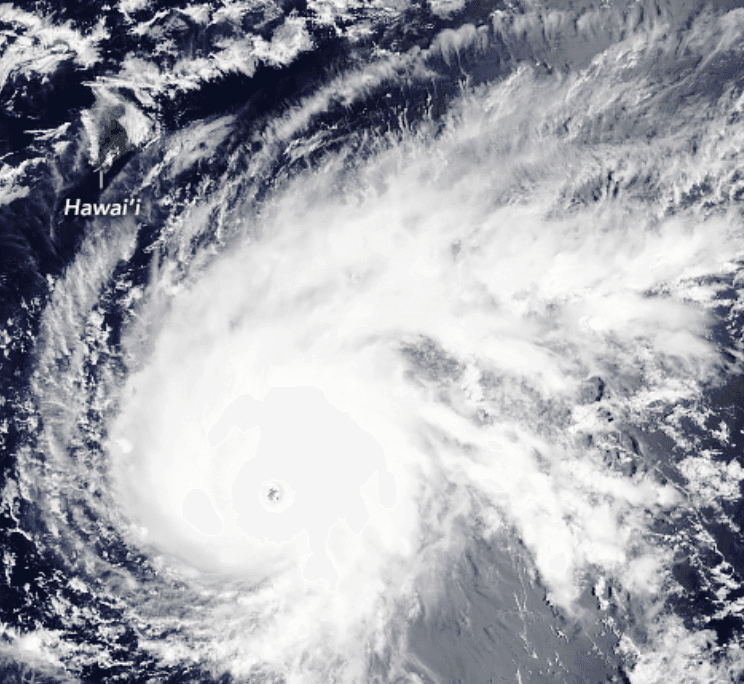
This market will resolve to "Yes" if a tropical cyclone makes landfall on Honshu, Japan between market creation and August 31, 2026, 11:59:59 PM ET. Otherwise, this market will resolve to "No". A landfall counts only if it occurs within this window; the time of the physical landfall governs, not the time any confirming advisory is issued. A tropical cyclone is a system classified by the Japan Meteorological Agency (JMA) as a tropical storm or stronger, meaning maximum sustained winds (10-minute average) of at least 34 knots (17.2 m/s), in the JMA advisory in effect immediately prior to the landfall. A system classified only as a tropical depression, or as extratropical, dissipated, or absorbed, at that time does not qualify. Landfall means the center of the tropical cyclone's circulation physically crosses the coastline of Honshu. A system whose center crosses the coastline only of Hokkaido, Kyushu, Shikoku, Okinawa, the Ryukyu Islands, or any smaller island, or that passes over or near Honshu without its center crossing the Honshu coastline, does not qualify. The primary resolution source for this market will be the Japan Meteorological Agency's position advisories (https://www.jma.go.jp/bosai/map.html#contents=typhoon&lang=en). If a JMA advisory plots the storm's center over Honshu, this market resolves "Yes" regardless of what other sources say. If no JMA advisory plots the center over Honshu but credible international news reporting confirms a crossing occurred between discrete advisory fixes, this market resolves "Yes", with classification taken from the most recently issued JMA advisory prior to the confirmed crossing time. Where a JMA advisory and credible reporting make contradictory claims about the storm's position at the same point in time, JMA is the default resolution source. Once a qualifying landfall is reported, this market may remain open for up to 36 hours to establish confirmation, after which it will resolve according to the latest JMA data. This market may resolve based on the initial JMA advisory reporting a qualifying landfall regardless of any later advisory, retraction, best-track revision, or reanalysis that changes the storm's classification or position at the time of landfall.**Typhoon Chan-hom (No. 15) is the dominant driver pushing the market-implied probability of a Honshu landfall in August 2026 to near 100%.** As of mid-August, the system has tracked westward across the western Pacific and is forecast by the Japan Meteorological Agency to make landfall along the Pacific coast of the Kanto or southern Tohoku regions of Honshu around August 11. Official advisories place the storm east of Japan with sustained winds near 40 kt and a central pressure of 990 hPa, consistent with tropical storm to minimal typhoon intensity on the Saffir-Simpson scale. August represents the climatological peak for western North Pacific tropical cyclone activity, with historical JMA data showing multiple systems typically recurving toward Japan’s main island each year. With the storm already in the basin and steering patterns favoring a direct approach, only an extreme and statistically rare deviation—such as rapid extratropical transition or an atypical blocking ridge—could prevent landfall before month-end. Updated JMA and JTWC model runs through the remainder of August will provide the next key data points for any late-month adjustments.

This market will resolve to "Yes" if a tropical cyclone makes landfall on Honshu, Japan between market creation and August 31, 2026, 11:59:59 PM ET. Otherwise, this market will resolve to "No". A landfall counts only if it occurs within this window; the time of the physical landfall governs, not the time any confirming advisory is issued.

A tropical cyclone is a system classified by the Japan Meteorological Agency (JMA) as a tropical storm or stronger, meaning maximum sustained winds (10-minute average) of at least 34 knots (17.2 m/s), in the JMA advisory in effect immediately prior to the landfall. A system classified only as a tropical depression, or as extratropical, dissipated, or absorbed, at that time does not qualify.

Landfall means the center of the tropical cyclone's circulation physically crosses the coastline of Honshu. A system whose center crosses the coastline only of Hokkaido, Kyushu, Shikoku, Okinawa, the Ryukyu Islands, or any smaller island, or that passes over or near Honshu without its center crossing the Honshu coastline, does not qualify.

The primary resolution source for this market will be the Japan Meteorological Agency's position advisories (https://www.jma.go.jp/bosai/map.html#contents=typhoon&lang=en). If a JMA advisory plots the storm's center over Honshu, this market resolves "Yes" regardless of what other sources say. If no JMA advisory plots the center over Honshu but credible international news reporting confirms a crossing occurred between discrete advisory fixes, this market resolves "Yes", with classification taken from the most recently issued JMA advisory prior to the confirmed crossing time. Where a JMA advisory and credible reporting make contradictory claims about the storm's position at the same point in time, JMA is the default resolution source.

Once a qualifying landfall is reported, this market may remain open for up to 36 hours to establish confirmation, after which it will resolve according to the latest JMA data. This market may resolve based on the initial JMA advisory reporting a qualifying landfall regardless of any later advisory, retraction, best-track revision, or reanalysis that changes the storm's classification or position at the time of landfall.
Wolumen
$1,447
Data zakończenia
Sep 1, 2026
Rynek otwarty
Aug 10, 2026, 11:27 AM ET
This market will resolve to "Yes" if a tropical cyclone makes landfall on Honshu, Japan between market creation and August 31, 2026, 11:59:59 PM ET. Otherwise, this market will resolve to "No". A landfall counts only if it occurs within this window; the time of the physical landfall governs, not the time any confirming advisory is issued. A tropical cyclone is a system classified by the Japan Meteorological Agency (JMA) as a tropical storm or stronger, meaning maximum sustained winds (10-minute average) of at least 34 knots (17.2 m/s), in the JMA advisory in effect immediately prior to the landfall. A system classified only as a tropical depression, or as extratropical, dissipated, or absorbed, at that time does not qualify. Landfall means the center of the tropical cyclone's circulation physically crosses the coastline of Honshu. A system whose center crosses the coastline only of Hokkaido, Kyushu, Shikoku, Okinawa, the Ryukyu Islands, or any smaller island, or that passes over or near Honshu without its center crossing the Honshu coastline, does not qualify. The primary resolution source for this market will be the Japan Meteorological Agency's position advisories (https://www.jma.go.jp/bosai/map.html#contents=typhoon&lang=en). If a JMA advisory plots the storm's center over Honshu, this market resolves "Yes" regardless of what other sources say. If no JMA advisory plots the center over Honshu but credible international news reporting confirms a crossing occurred between discrete advisory fixes, this market resolves "Yes", with classification taken from the most recently issued JMA advisory prior to the confirmed crossing time. Where a JMA advisory and credible reporting make contradictory claims about the storm's position at the same point in time, JMA is the default resolution source. Once a qualifying landfall is reported, this market may remain open for up to 36 hours to establish confirmation, after which it will resolve according to the latest JMA data. This market may resolve based on the initial JMA advisory reporting a qualifying landfall regardless of any later advisory, retraction, best-track revision, or reanalysis that changes the storm's classification or position at the time of landfall.

Wynik zaproponowany: Yes

Brak sporu

Ostateczny wynik: Yes

This market will resolve to "Yes" if a tropical cyclone makes landfall on Honshu, Japan between market creation and August 31, 2026, 11:59:59 PM ET. Otherwise, this market will resolve to "No". A landfall counts only if it occurs within this window; the time of the physical landfall governs, not the time any confirming advisory is issued. A tropical cyclone is a system classified by the Japan Meteorological Agency (JMA) as a tropical storm or stronger, meaning maximum sustained winds (10-minute average) of at least 34 knots (17.2 m/s), in the JMA advisory in effect immediately prior to the landfall. A system classified only as a tropical depression, or as extratropical, dissipated, or absorbed, at that time does not qualify. Landfall means the center of the tropical cyclone's circulation physically crosses the coastline of Honshu. A system whose center crosses the coastline only of Hokkaido, Kyushu, Shikoku, Okinawa, the Ryukyu Islands, or any smaller island, or that passes over or near Honshu without its center crossing the Honshu coastline, does not qualify. The primary resolution source for this market will be the Japan Meteorological Agency's position advisories (https://www.jma.go.jp/bosai/map.html#contents=typhoon&lang=en). If a JMA advisory plots the storm's center over Honshu, this market resolves "Yes" regardless of what other sources say. If no JMA advisory plots the center over Honshu but credible international news reporting confirms a crossing occurred between discrete advisory fixes, this market resolves "Yes", with classification taken from the most recently issued JMA advisory prior to the confirmed crossing time. Where a JMA advisory and credible reporting make contradictory claims about the storm's position at the same point in time, JMA is the default resolution source. Once a qualifying landfall is reported, this market may remain open for up to 36 hours to establish confirmation, after which it will resolve according to the latest JMA data. This market may resolve based on the initial JMA advisory reporting a qualifying landfall regardless of any later advisory, retraction, best-track revision, or reanalysis that changes the storm's classification or position at the time of landfall.**Typhoon Chan-hom (No. 15) is the dominant driver pushing the market-implied probability of a Honshu landfall in August 2026 to near 100%.** As of mid-August, the system has tracked westward across the western Pacific and is forecast by the Japan Meteorological Agency to make landfall along the Pacific coast of the Kanto or southern Tohoku regions of Honshu around August 11. Official advisories place the storm east of Japan with sustained winds near 40 kt and a central pressure of 990 hPa, consistent with tropical storm to minimal typhoon intensity on the Saffir-Simpson scale. August represents the climatological peak for western North Pacific tropical cyclone activity, with historical JMA data showing multiple systems typically recurving toward Japan’s main island each year. With the storm already in the basin and steering patterns favoring a direct approach, only an extreme and statistically rare deviation—such as rapid extratropical transition or an atypical blocking ridge—could prevent landfall before month-end. Updated JMA and JTWC model runs through the remainder of August will provide the next key data points for any late-month adjustments.

This market will resolve to "Yes" if a tropical cyclone makes landfall on Honshu, Japan between market creation and August 31, 2026, 11:59:59 PM ET. Otherwise, this market will resolve to "No". A landfall counts only if it occurs within this window; the time of the physical landfall governs, not the time any confirming advisory is issued.

A tropical cyclone is a system classified by the Japan Meteorological Agency (JMA) as a tropical storm or stronger, meaning maximum sustained winds (10-minute average) of at least 34 knots (17.2 m/s), in the JMA advisory in effect immediately prior to the landfall. A system classified only as a tropical depression, or as extratropical, dissipated, or absorbed, at that time does not qualify.

Landfall means the center of the tropical cyclone's circulation physically crosses the coastline of Honshu. A system whose center crosses the coastline only of Hokkaido, Kyushu, Shikoku, Okinawa, the Ryukyu Islands, or any smaller island, or that passes over or near Honshu without its center crossing the Honshu coastline, does not qualify.

The primary resolution source for this market will be the Japan Meteorological Agency's position advisories (https://www.jma.go.jp/bosai/map.html#contents=typhoon&lang=en). If a JMA advisory plots the storm's center over Honshu, this market resolves "Yes" regardless of what other sources say. If no JMA advisory plots the center over Honshu but credible international news reporting confirms a crossing occurred between discrete advisory fixes, this market resolves "Yes", with classification taken from the most recently issued JMA advisory prior to the confirmed crossing time. Where a JMA advisory and credible reporting make contradictory claims about the storm's position at the same point in time, JMA is the default resolution source.

Once a qualifying landfall is reported, this market may remain open for up to 36 hours to establish confirmation, after which it will resolve according to the latest JMA data. This market may resolve based on the initial JMA advisory reporting a qualifying landfall regardless of any later advisory, retraction, best-track revision, or reanalysis that changes the storm's classification or position at the time of landfall.
Wolumen
$1,447
Data zakończenia
Sep 1, 2026
Rynek otwarty
Aug 10, 2026, 11:27 AM ET
This market will resolve to "Yes" if a tropical cyclone makes landfall on Honshu, Japan between market creation and August 31, 2026, 11:59:59 PM ET. Otherwise, this market will resolve to "No". A landfall counts only if it occurs within this window; the time of the physical landfall governs, not the time any confirming advisory is issued. A tropical cyclone is a system classified by the Japan Meteorological Agency (JMA) as a tropical storm or stronger, meaning maximum sustained winds (10-minute average) of at least 34 knots (17.2 m/s), in the JMA advisory in effect immediately prior to the landfall. A system classified only as a tropical depression, or as extratropical, dissipated, or absorbed, at that time does not qualify. Landfall means the center of the tropical cyclone's circulation physically crosses the coastline of Honshu. A system whose center crosses the coastline only of Hokkaido, Kyushu, Shikoku, Okinawa, the Ryukyu Islands, or any smaller island, or that passes over or near Honshu without its center crossing the Honshu coastline, does not qualify. The primary resolution source for this market will be the Japan Meteorological Agency's position advisories (https://www.jma.go.jp/bosai/map.html#contents=typhoon&lang=en). If a JMA advisory plots the storm's center over Honshu, this market resolves "Yes" regardless of what other sources say. If no JMA advisory plots the center over Honshu but credible international news reporting confirms a crossing occurred between discrete advisory fixes, this market resolves "Yes", with classification taken from the most recently issued JMA advisory prior to the confirmed crossing time. Where a JMA advisory and credible reporting make contradictory claims about the storm's position at the same point in time, JMA is the default resolution source. Once a qualifying landfall is reported, this market may remain open for up to 36 hours to establish confirmation, after which it will resolve according to the latest JMA data. This market may resolve based on the initial JMA advisory reporting a qualifying landfall regardless of any later advisory, retraction, best-track revision, or reanalysis that changes the storm's classification or position at the time of landfall.

Wynik zaproponowany: Yes

Brak sporu

Ostateczny wynik: Yes

Uważaj na linki zewnętrzne.

Często zadawane pytania

"Will a tropical cyclone make landfall on Honshu in August 2026?" to rynek prognoz na Polymarket, gdzie traderzy kupują i sprzedają udziały "Tak" lub "Nie" w zależności od tego, czy wierzą, że to wydarzenie nastąpi. Obecne zbiorowe prawdopodobieństwo to 100% na "Yes". Na przykład, jeśli "Tak" kosztuje 100¢, rynek zbiorowo przypisuje 100% szansy na to, że to wydarzenie nastąpi. Te kursy zmieniają się ciągle, gdy traderzy reagują na nowe informacje i wydarzenia. Udziały w poprawnym wyniku można wymienić na $1 za sztukę po rozstrzygnięciu rynku.

"Will a tropical cyclone make landfall on Honshu in August 2026?" to nowo utworzony rynek na Polymarket, uruchomiony Aug 10, 2026. Jako wczesny rynek, to Twoja okazja, aby być jednym z pierwszych traderów, którzy ustalą kursy i określą początkowe sygnały cenowe rynku. Możesz też dodać tę stronę do zakładek, aby śledzić wolumen i aktywność handlową w miarę rozwoju rynku.

Aby handlować na "Will a tropical cyclone make landfall on Honshu in August 2026?", wybierz, czy uważasz, że odpowiedź to "Tak" czy "Nie". Każda strona ma bieżącą cenę odzwierciedlającą implikowane prawdopodobieństwo rynku. Wpisz kwotę i kliknij "Handluj". Jeśli kupisz udziały "Tak" i wynik okaże się "Tak", każdy udział wypłaci $1. Jeśli okaże się "Nie", Twoje udziały "Tak" wypłacą $0. Możesz też sprzedać swoje udziały w dowolnym momencie przed rozstrzygnięciem, jeśli chcesz zrealizować zysk lub ograniczyć stratę.

Obecne prawdopodobieństwo dla "Will a tropical cyclone make landfall on Honshu in August 2026?" to 100% na "Yes". Oznacza to, że społeczność Polymarket uważa, że istnieje 100% szansy na to, że to wydarzenie nastąpi. Te kursy aktualizują się w czasie rzeczywistym na podstawie rzeczywistych transakcji, dostarczając ciągle aktualizowany sygnał tego, czego rynek oczekuje.

Zasady rozstrzygania "Will a tropical cyclone make landfall on Honshu in August 2026?" określają dokładnie, co musi się wydarzyć, aby każdy wynik został ogłoszony zwycięzcą — w tym oficjalne źródła danych używane do ustalenia wyniku. Możesz przejrzeć pełne kryteria rozstrzygania w sekcji "Zasady" na tej stronie nad komentarzami. Zalecamy dokładne zapoznanie się z zasadami przed handlem, ponieważ określają one precyzyjne warunki, przypadki graniczne i źródła regulujące rozstrzyganie tego rynku.