Um in den USA zu traden, geh zu polymarket.us

icon for Wird ein Hurrikan vor 2027 auf Hawaii landen?

Wird ein Hurrikan vor 2027 auf Hawaii landen?

icon for Wird ein Hurrikan vor 2027 auf Hawaii landen?

Wird ein Hurrikan vor 2027 auf Hawaii landen?

Ja

14% Chance
Polymarket

$45,241 Vol.

Ja

14% Chance
Polymarket

$45,241 Vol.

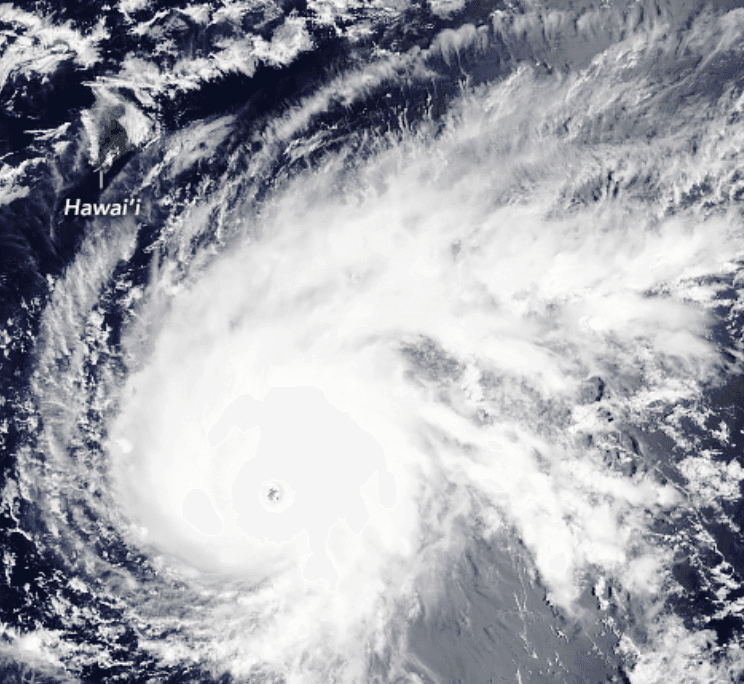
This market will resolve to "Yes" if any storm makes landfall in the State of Hawaii at Category 1 strength or higher, as reported in official Central Pacific Hurricane Center advisories (https://www.nhc.noaa.gov/cphc/), between market creation and December 31, 2026, 11:59:59 PM ET. Otherwise, this market will resolve to "No". A landfall counts toward this determination only if it occurs within this window; the time of the physical landfall governs, not the time any confirming advisory is issued. A hurricane is a tropical cyclone with maximum sustained winds of 74 mph or greater (Category 1 or higher on the Saffir-Simpson Hurricane Wind Scale), as described at https://www.nhc.noaa.gov/aboutsshws.php, and a hurricane landfall is said to occur when the hurricane's surface center intersects with the coastline, as described at https://www.nhc.noaa.gov/aboutgloss.shtml#LANDFALL. A storm must hold hurricane strength (Category 1 or higher on the Saffir-Simpson scale) at the moment its surface center intersects the coastline for that landfall to qualify. "Hawaii" means the entire State of Hawaii as recognized under U.S. law, including the main Hawaiian Islands (Hawaiʻi, Maui, Oʻahu, Kauaʻi, Molokaʻi, Lānaʻi, Niʻihau, and Kahoʻolawe) and the Northwestern Hawaiian Islands (including Midway Atoll and the Papahānaumokuākea Marine National Monument). The wind speed at the moment of landfall will be determined from the CPHC advisory or Special Advisory in effect at the time closest to the reported landfall time; where no advisory covers that exact moment, the most recent advisory issued prior to landfall governs. This market may resolve based on the initial CPHC advisory reporting a qualifying landfall regardless of any later advisory, retraction, best-track revision, or reanalysis that revises that storm's intensity downward at the time of landfall. However, if a subsequent advisory or correction identifies a qualifying landfall that was not reflected in initial reporting, this market will resolve to "Yes" based on that correction.Hawaii’s historically low hurricane landfall rate—only two direct events (Dot in 1959 and Iniki in 1992) in the modern record—underpins the 86.5% market-implied probability of no landfall before 2027. Protective factors including cooler sea-surface temperatures east of the islands, persistent trade-wind shear, and a semi-permanent high-pressure ridge typically steer or weaken approaching systems. In 2026, an active El Niño season produced multiple close approaches, including Hurricane Lala in August and Hurricane Lowell in September, both of which delivered heavy rain and gusts yet missed official landfall criteria by passing just offshore. With the Central Pacific season waning and forecast models showing limited late-season formation near the islands, traders see little remaining window for the eye to intersect land before year-end.

This market will resolve to "Yes" if any storm makes landfall in the State of Hawaii at Category 1 strength or higher, as reported in official Central Pacific Hurricane Center advisories (https://www.nhc.noaa.gov/cphc/), between market creation and December 31, 2026, 11:59:59 PM ET. Otherwise, this market will resolve to "No". A landfall counts toward this determination only if it occurs within this window; the time of the physical landfall governs, not the time any confirming advisory is issued.

A hurricane is a tropical cyclone with maximum sustained winds of 74 mph or greater (Category 1 or higher on the Saffir-Simpson Hurricane Wind Scale), as described at https://www.nhc.noaa.gov/aboutsshws.php, and a hurricane landfall is said to occur when the hurricane's surface center intersects with the coastline, as described at https://www.nhc.noaa.gov/aboutgloss.shtml#LANDFALL. A storm must hold hurricane strength (Category 1 or higher on the Saffir-Simpson scale) at the moment its surface center intersects the coastline for that landfall to qualify.

"Hawaii" means the entire State of Hawaii as recognized under U.S. law, including the main Hawaiian Islands (Hawaiʻi, Maui, Oʻahu, Kauaʻi, Molokaʻi, Lānaʻi, Niʻihau, and Kahoʻolawe) and the Northwestern Hawaiian Islands (including Midway Atoll and the Papahānaumokuākea Marine National Monument).

The wind speed at the moment of landfall will be determined from the CPHC advisory or Special Advisory in effect at the time closest to the reported landfall time; where no advisory covers that exact moment, the most recent advisory issued prior to landfall governs.

This market may resolve based on the initial CPHC advisory reporting a qualifying landfall regardless of any later advisory, retraction, best-track revision, or reanalysis that revises that storm's intensity downward at the time of landfall. However, if a subsequent advisory or correction identifies a qualifying landfall that was not reflected in initial reporting, this market will resolve to "Yes" based on that correction.
This market will resolve to "Yes" if any storm makes landfall in the State of Hawaii at Category 1 strength or higher, as reported in official Central Pacific Hurricane Center advisories (https://www.nhc.noaa.gov/cphc/), between market creation and December 31, 2026, 11:59:59 PM ET. Otherwise, this market will resolve to "No". A landfall counts toward this determination only if it occurs within this window; the time of the physical landfall governs, not the time any confirming advisory is issued. A hurricane is a tropical cyclone with maximum sustained winds of 74 mph or greater (Category 1 or higher on the Saffir-Simpson Hurricane Wind Scale), as described at https://www.nhc.noaa.gov/aboutsshws.php, and a hurricane landfall is said to occur when the hurricane's surface center intersects with the coastline, as described at https://www.nhc.noaa.gov/aboutgloss.shtml#LANDFALL. A storm must hold hurricane strength (Category 1 or higher on the Saffir-Simpson scale) at the moment its surface center intersects the coastline for that landfall to qualify. "Hawaii" means the entire State of Hawaii as recognized under U.S. law, including the main Hawaiian Islands (Hawaiʻi, Maui, Oʻahu, Kauaʻi, Molokaʻi, Lānaʻi, Niʻihau, and Kahoʻolawe) and the Northwestern Hawaiian Islands (including Midway Atoll and the Papahānaumokuākea Marine National Monument). The wind speed at the moment of landfall will be determined from the CPHC advisory or Special Advisory in effect at the time closest to the reported landfall time; where no advisory covers that exact moment, the most recent advisory issued prior to landfall governs. This market may resolve based on the initial CPHC advisory reporting a qualifying landfall regardless of any later advisory, retraction, best-track revision, or reanalysis that revises that storm's intensity downward at the time of landfall. However, if a subsequent advisory or correction identifies a qualifying landfall that was not reflected in initial reporting, this market will resolve to "Yes" based on that correction.
Volumen
$45,241
Enddatum
31. Dez. 2026
Markt eröffnet
Jul 24, 2026, 11:28 AM ET
This market will resolve to "Yes" if any storm makes landfall in the State of Hawaii at Category 1 strength or higher, as reported in official Central Pacific Hurricane Center advisories (https://www.nhc.noaa.gov/cphc/), between market creation and December 31, 2026, 11:59:59 PM ET. Otherwise, this market will resolve to "No". A landfall counts toward this determination only if it occurs within this window; the time of the physical landfall governs, not the time any confirming advisory is issued. A hurricane is a tropical cyclone with maximum sustained winds of 74 mph or greater (Category 1 or higher on the Saffir-Simpson Hurricane Wind Scale), as described at https://www.nhc.noaa.gov/aboutsshws.php, and a hurricane landfall is said to occur when the hurricane's surface center intersects with the coastline, as described at https://www.nhc.noaa.gov/aboutgloss.shtml#LANDFALL. A storm must hold hurricane strength (Category 1 or higher on the Saffir-Simpson scale) at the moment its surface center intersects the coastline for that landfall to qualify. "Hawaii" means the entire State of Hawaii as recognized under U.S. law, including the main Hawaiian Islands (Hawaiʻi, Maui, Oʻahu, Kauaʻi, Molokaʻi, Lānaʻi, Niʻihau, and Kahoʻolawe) and the Northwestern Hawaiian Islands (including Midway Atoll and the Papahānaumokuākea Marine National Monument). The wind speed at the moment of landfall will be determined from the CPHC advisory or Special Advisory in effect at the time closest to the reported landfall time; where no advisory covers that exact moment, the most recent advisory issued prior to landfall governs. This market may resolve based on the initial CPHC advisory reporting a qualifying landfall regardless of any later advisory, retraction, best-track revision, or reanalysis that revises that storm's intensity downward at the time of landfall. However, if a subsequent advisory or correction identifies a qualifying landfall that was not reflected in initial reporting, this market will resolve to "Yes" based on that correction.Hawaii’s historically low hurricane landfall rate—only two direct events (Dot in 1959 and Iniki in 1992) in the modern record—underpins the 86.5% market-implied probability of no landfall before 2027. Protective factors including cooler sea-surface temperatures east of the islands, persistent trade-wind shear, and a semi-permanent high-pressure ridge typically steer or weaken approaching systems. In 2026, an active El Niño season produced multiple close approaches, including Hurricane Lala in August and Hurricane Lowell in September, both of which delivered heavy rain and gusts yet missed official landfall criteria by passing just offshore. With the Central Pacific season waning and forecast models showing limited late-season formation near the islands, traders see little remaining window for the eye to intersect land before year-end.

This market will resolve to "Yes" if any storm makes landfall in the State of Hawaii at Category 1 strength or higher, as reported in official Central Pacific Hurricane Center advisories (https://www.nhc.noaa.gov/cphc/), between market creation and December 31, 2026, 11:59:59 PM ET. Otherwise, this market will resolve to "No". A landfall counts toward this determination only if it occurs within this window; the time of the physical landfall governs, not the time any confirming advisory is issued.

A hurricane is a tropical cyclone with maximum sustained winds of 74 mph or greater (Category 1 or higher on the Saffir-Simpson Hurricane Wind Scale), as described at https://www.nhc.noaa.gov/aboutsshws.php, and a hurricane landfall is said to occur when the hurricane's surface center intersects with the coastline, as described at https://www.nhc.noaa.gov/aboutgloss.shtml#LANDFALL. A storm must hold hurricane strength (Category 1 or higher on the Saffir-Simpson scale) at the moment its surface center intersects the coastline for that landfall to qualify.

"Hawaii" means the entire State of Hawaii as recognized under U.S. law, including the main Hawaiian Islands (Hawaiʻi, Maui, Oʻahu, Kauaʻi, Molokaʻi, Lānaʻi, Niʻihau, and Kahoʻolawe) and the Northwestern Hawaiian Islands (including Midway Atoll and the Papahānaumokuākea Marine National Monument).

The wind speed at the moment of landfall will be determined from the CPHC advisory or Special Advisory in effect at the time closest to the reported landfall time; where no advisory covers that exact moment, the most recent advisory issued prior to landfall governs.

This market may resolve based on the initial CPHC advisory reporting a qualifying landfall regardless of any later advisory, retraction, best-track revision, or reanalysis that revises that storm's intensity downward at the time of landfall. However, if a subsequent advisory or correction identifies a qualifying landfall that was not reflected in initial reporting, this market will resolve to "Yes" based on that correction.
This market will resolve to "Yes" if any storm makes landfall in the State of Hawaii at Category 1 strength or higher, as reported in official Central Pacific Hurricane Center advisories (https://www.nhc.noaa.gov/cphc/), between market creation and December 31, 2026, 11:59:59 PM ET. Otherwise, this market will resolve to "No". A landfall counts toward this determination only if it occurs within this window; the time of the physical landfall governs, not the time any confirming advisory is issued. A hurricane is a tropical cyclone with maximum sustained winds of 74 mph or greater (Category 1 or higher on the Saffir-Simpson Hurricane Wind Scale), as described at https://www.nhc.noaa.gov/aboutsshws.php, and a hurricane landfall is said to occur when the hurricane's surface center intersects with the coastline, as described at https://www.nhc.noaa.gov/aboutgloss.shtml#LANDFALL. A storm must hold hurricane strength (Category 1 or higher on the Saffir-Simpson scale) at the moment its surface center intersects the coastline for that landfall to qualify. "Hawaii" means the entire State of Hawaii as recognized under U.S. law, including the main Hawaiian Islands (Hawaiʻi, Maui, Oʻahu, Kauaʻi, Molokaʻi, Lānaʻi, Niʻihau, and Kahoʻolawe) and the Northwestern Hawaiian Islands (including Midway Atoll and the Papahānaumokuākea Marine National Monument). The wind speed at the moment of landfall will be determined from the CPHC advisory or Special Advisory in effect at the time closest to the reported landfall time; where no advisory covers that exact moment, the most recent advisory issued prior to landfall governs. This market may resolve based on the initial CPHC advisory reporting a qualifying landfall regardless of any later advisory, retraction, best-track revision, or reanalysis that revises that storm's intensity downward at the time of landfall. However, if a subsequent advisory or correction identifies a qualifying landfall that was not reflected in initial reporting, this market will resolve to "Yes" based on that correction.
Volumen
$45,241
Enddatum
31. Dez. 2026
Markt eröffnet
Jul 24, 2026, 11:28 AM ET

Vorsicht bei externen Links.

Häufig gestellte Fragen

„Wird ein Hurrikan vor 2027 auf Hawaii landen?" ist ein Prognosemarkt auf Polymarket mit 2 möglichen Ergebnissen, bei dem Händler Anteile auf Basis ihrer Einschätzung kaufen und verkaufen. Das aktuell führende Ergebnis ist „Wird ein Hurrikan vor 2027 auf Hawaii treffen?" mit 14%. Die Preise spiegeln Echtzeit-Wahrscheinlichkeiten der Community wider. Ein Anteilspreis von 14¢ bedeutet, dass der Markt diesem Ergebnis eine Wahrscheinlichkeit von 14% zuweist. Diese Quoten ändern sich laufend, wenn Händler auf neue Entwicklungen reagieren. Anteile am richtigen Ergebnis können bei Marktauflösung für jeweils $1 eingelöst werden.

Stand heute hat „Wird ein Hurrikan vor 2027 auf Hawaii landen?" ein Gesamthandelsvolumen von $45.2K generiert, seit der Markt am Jul 24, 2026 gestartet wurde. Dieses Aktivitätsniveau spiegelt starkes Engagement der Polymarket-Community wider und stellt sicher, dass die aktuellen Quoten von einem breiten Pool an Marktteilnehmern geprägt werden. Sie können Live-Preisbewegungen verfolgen und direkt auf dieser Seite auf jedes Ergebnis handeln.

Um auf „Wird ein Hurrikan vor 2027 auf Hawaii landen?" zu handeln, durchsuchen Sie die 2 verfügbaren Ergebnisse auf dieser Seite. Jedes Ergebnis zeigt einen aktuellen Preis, der die implizierte Wahrscheinlichkeit des Marktes darstellt. Um eine Position einzunehmen, wählen Sie das Ergebnis, das Sie für am wahrscheinlichsten halten, wählen Sie „Ja" um dafür oder „Nein" um dagegen zu handeln, geben Sie Ihren Betrag ein und klicken Sie auf „Handeln". Liegt Ihr gewähltes Ergebnis bei Marktauflösung richtig, zahlen Ihre „Ja"-Anteile jeweils $1 aus. Liegt es falsch, zahlen sie $0. Sie können Ihre Anteile auch jederzeit vor der Auflösung verkaufen.

Der aktuelle Favorit für „Wird ein Hurrikan vor 2027 auf Hawaii landen?" ist „Wird ein Hurrikan vor 2027 auf Hawaii treffen?" mit 14%, was bedeutet, dass der Markt diesem Ergebnis eine Wahrscheinlichkeit von 14% zuweist. Diese Quoten werden in Echtzeit aktualisiert, wenn Händler Anteile kaufen und verkaufen. Schauen Sie regelmäßig vorbei oder speichern Sie diese Seite als Lesezeichen.

Die Auflösungsregeln für „Wird ein Hurrikan vor 2027 auf Hawaii landen?" definieren genau, was passieren muss, damit jedes Ergebnis als Gewinner erklärt wird – einschließlich der offiziellen Datenquellen zur Bestimmung des Ergebnisses. Sie können die vollständigen Auflösungskriterien im Abschnitt „Regeln" auf dieser Seite über den Kommentaren einsehen. Wir empfehlen, die Regeln vor dem Handeln sorgfältig zu lesen, da sie die genauen Bedingungen, Sonderfälle und Quellen festlegen.