

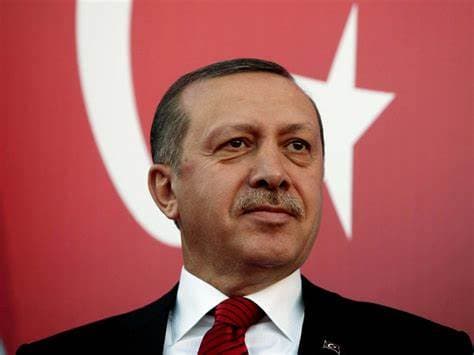
**Turkey's ruling Justice and Development Party (AKP) and its nationalist ally, the Nationalist Movement Party (MHP), control roughly 326 seats in the 600-seat parliament—short of the 360-vote threshold needed to call early elections under Article 116 of the constitution.** Government officials, including Justice Minister Akın Gürlek, have explicitly stated that presidential and parliamentary elections will occur in 2028, with recent comments ruling out even a 2027 vote. A top presidential adviser, Mehmet Ucum, has instead highlighted April 16, 2028, as the likely date, a modest advance that would symbolically align with the 2017 referendum and enable Recep Tayyip Erdoğan to seek another term while complying with term-limit rules. Opposition figures have repeatedly demanded earlier voting amid legal actions against rivals such as Istanbul Mayor Ekrem İmamoğlu, yet the governing alliance has consistently rejected those calls and emphasized preparation for the scheduled 2028 contest. With no recent parliamentary moves, official announcements, or coalition statements pointing to a 2026 vote, trader consensus reflects the absence of any credible catalyst for snap elections this year.
Experimentelle KI-generierte Zusammenfassung mit Polymarket-Daten. Dies ist keine Handelsberatung und spielt keine Rolle bei der Auflösung dieses Marktes. · Aktualisiert$170,986 Vol.
$170,986 Vol.
$170,986 Vol.
$170,986 Vol.
A qualifying announcement requires an official public announcement by the Turkish government, the Presidency of Turkey, the Grand National Assembly of Turkey, or the Supreme Election Council of Turkey (YSK) establishing, approving, scheduling, or formally initiating a presidential election to occur before the currently scheduled 2028 election.
Announcements of discussions, proposals, negotiations, speculation, or calls for early elections by politicians, parties, media, or commentators, without official action to schedule or initiate such elections, will not qualify.
If early presidential elections are officially announced before the resolution date, this market will resolve to "Yes" regardless of whether the elections are later postponed, canceled, or ultimately held.
The primary resolution source for this market will be official information from Turkish government authorities or the Supreme Election Council of Turkey (YSK); however, a consensus of credible reporting may also be used.
Markt eröffnet: May 24, 2026, 9:53 PM ET
Abwickler
0x65070BE91...A qualifying announcement requires an official public announcement by the Turkish government, the Presidency of Turkey, the Grand National Assembly of Turkey, or the Supreme Election Council of Turkey (YSK) establishing, approving, scheduling, or formally initiating a presidential election to occur before the currently scheduled 2028 election.
Announcements of discussions, proposals, negotiations, speculation, or calls for early elections by politicians, parties, media, or commentators, without official action to schedule or initiate such elections, will not qualify.
If early presidential elections are officially announced before the resolution date, this market will resolve to "Yes" regardless of whether the elections are later postponed, canceled, or ultimately held.
The primary resolution source for this market will be official information from Turkish government authorities or the Supreme Election Council of Turkey (YSK); however, a consensus of credible reporting may also be used.
Abwickler
0x65070BE91...**Turkey's ruling Justice and Development Party (AKP) and its nationalist ally, the Nationalist Movement Party (MHP), control roughly 326 seats in the 600-seat parliament—short of the 360-vote threshold needed to call early elections under Article 116 of the constitution.** Government officials, including Justice Minister Akın Gürlek, have explicitly stated that presidential and parliamentary elections will occur in 2028, with recent comments ruling out even a 2027 vote. A top presidential adviser, Mehmet Ucum, has instead highlighted April 16, 2028, as the likely date, a modest advance that would symbolically align with the 2017 referendum and enable Recep Tayyip Erdoğan to seek another term while complying with term-limit rules. Opposition figures have repeatedly demanded earlier voting amid legal actions against rivals such as Istanbul Mayor Ekrem İmamoğlu, yet the governing alliance has consistently rejected those calls and emphasized preparation for the scheduled 2028 contest. With no recent parliamentary moves, official announcements, or coalition statements pointing to a 2026 vote, trader consensus reflects the absence of any credible catalyst for snap elections this year.
Experimentelle KI-generierte Zusammenfassung mit Polymarket-Daten. Dies ist keine Handelsberatung und spielt keine Rolle bei der Auflösung dieses Marktes. · Aktualisiert

Vorsicht bei externen Links.
Vorsicht bei externen Links.
Häufig gestellte Fragen