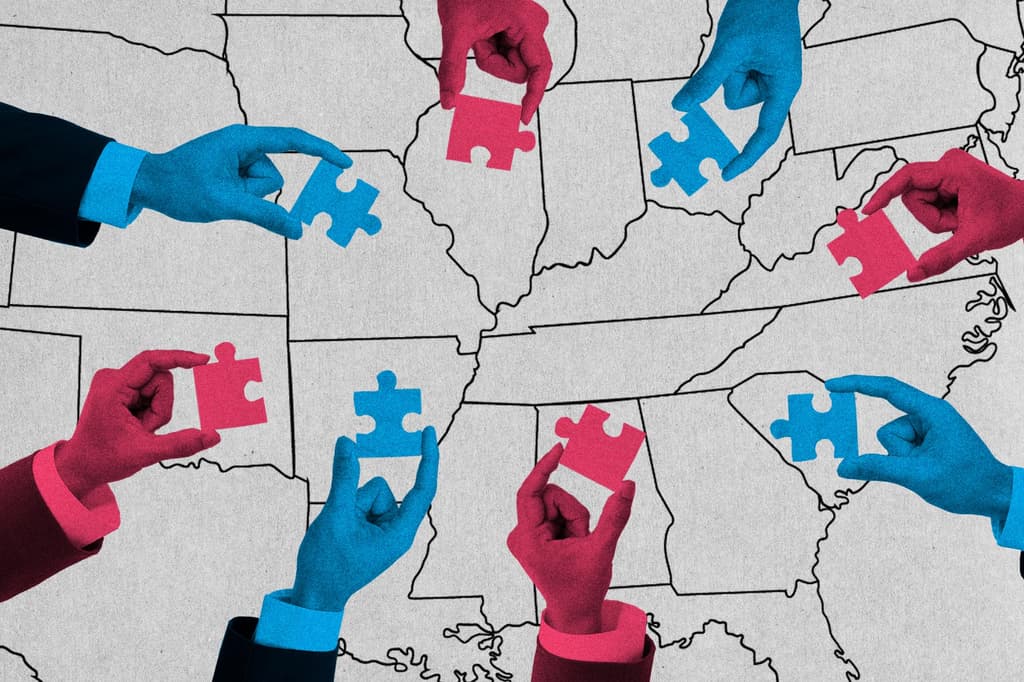
Ten states—Alabama, California, Florida, Louisiana, Missouri, North Carolina, Ohio, Tennessee, Texas, and Utah—have enacted new congressional maps since mid-2025, marking an unusually active round of mid-decade redistricting ahead of the 2026 midterms. These changes stem primarily from state legislative actions, a November 2025 California ballot measure, and federal court rulings including the Supreme Court’s Louisiana v. Callais decision, which altered standards for evaluating race in districting and enabled reversals of prior injunctions. Partisan map-drawing in Republican-led states and responses to Voting Rights Act litigation have produced expected seat shifts favoring one party or the other in most cases, while a handful of additional states explored but did not complete changes before the election cycle. Most maps are now finalized or in effect for primaries and the November 2026 contests, though residual litigation in a few jurisdictions could still trigger adjustments before ballots are fully settled.
Resumo experimental gerado por IA com dados do Polymarket. Isto não é aconselhamento de trading e não tem qualquer papel na resolução deste mercado. · AtualizadoWhich states will use new congressional maps in the midterms?
Which states will use new congressional maps in the midterms?
$395,136 Vol.
California
98%
Texas
98%
North Carolina
96%
Ohio
95%
Utah
91%
Florida
98%
Louisiana
93%
Missouri
93%
Virginia
5%
Alabama
91%
South Carolina
<1%
Georgia
6%
Kansas
<1%
New Jersey
4%
Indiana
5%
Washington
4%
Nebraska
5%
Illinois
2%
Minnesota
5%
New York
4%
Maryland
4%
Wisconsin
2%
$395,136 Vol.
California
98%
Texas
98%
North Carolina
96%
Ohio
95%
Utah
91%
Florida
98%
Louisiana
93%
Missouri
93%
Virginia
5%
Alabama
91%
South Carolina
<1%
Georgia
6%
Kansas
<1%
New Jersey
4%
Indiana
5%
Washington
4%
Nebraska
5%
Illinois
2%
Minnesota
5%
New York
4%
Maryland
4%
Wisconsin
2%
To qualify, after the 2024 United States congressional elections, the listed state must have adopted a new congressional district map that is:
- Formally adopted and enacted into law by the appropriate legislative or redistricting authority;
- Not enjoined, vacated or otherwise fully struck down prior to the 2026 United States Midterm elections; and
- In effect for use in the 2026 United States midterm elections.
Maps that are temporarily stayed pending appeal but later upheld will qualify if they are in effect for use in the 2026 United States midterm elections.
Maps that are completely redrawn by a court, special master, or legislature before implementation will not qualify, unless the redrawn map is itself a new map used in the 2026 United States midterm elections.
If the 2026 United States midterm elections occur and no new qualifying map is in use, this market will resolve to “No”.
The primary resolution sources for this market will be official information from the listed state and a consensus of credible reporting.
Mercado Aberto: Apr 30, 2026, 2:25 PM ET
Resolver
0x65070BE91...To qualify, after the 2024 United States congressional elections, the listed state must have adopted a new congressional district map that is:
- Formally adopted and enacted into law by the appropriate legislative or redistricting authority;
- Not enjoined, vacated or otherwise fully struck down prior to the 2026 United States Midterm elections; and
- In effect for use in the 2026 United States midterm elections.
Maps that are temporarily stayed pending appeal but later upheld will qualify if they are in effect for use in the 2026 United States midterm elections.
Maps that are completely redrawn by a court, special master, or legislature before implementation will not qualify, unless the redrawn map is itself a new map used in the 2026 United States midterm elections.
If the 2026 United States midterm elections occur and no new qualifying map is in use, this market will resolve to “No”.
The primary resolution sources for this market will be official information from the listed state and a consensus of credible reporting.
Resolver
0x65070BE91...Ten states—Alabama, California, Florida, Louisiana, Missouri, North Carolina, Ohio, Tennessee, Texas, and Utah—have enacted new congressional maps since mid-2025, marking an unusually active round of mid-decade redistricting ahead of the 2026 midterms. These changes stem primarily from state legislative actions, a November 2025 California ballot measure, and federal court rulings including the Supreme Court’s Louisiana v. Callais decision, which altered standards for evaluating race in districting and enabled reversals of prior injunctions. Partisan map-drawing in Republican-led states and responses to Voting Rights Act litigation have produced expected seat shifts favoring one party or the other in most cases, while a handful of additional states explored but did not complete changes before the election cycle. Most maps are now finalized or in effect for primaries and the November 2026 contests, though residual litigation in a few jurisdictions could still trigger adjustments before ballots are fully settled.
Resumo experimental gerado por IA com dados do Polymarket. Isto não é aconselhamento de trading e não tem qualquer papel na resolução deste mercado. · AtualizadoRelacionado

As eleições de meio de mandato de 2026 acontecerão conforme o previsto?

Os titulares democratas da Câmara não vencerão em entre dez e doze eleições de nomeação no ciclo de 2026?

Haverá entre 120 milhões e 125 milhões de votos nas eleições de meio de mandato para a Câmara dos Deputados dos EUA em 2026?
Cuidado com os links externos.
Cuidado com os links externos.
Frequently Asked Questions