

Major technology firms and startups are advancing orbital AI compute through early demonstrations and regulatory filings, driven by terrestrial power and land constraints for large language model training and inference. Starcloud launched an Nvidia H100-equipped satellite in late 2025, followed by in-orbit LLM training, while Lonestar deployed small lunar servers; Google’s Project Suncatcher and SpaceX’s million-satellite FCC filing target prototype clusters by early 2027, with Blue Origin’s Project Sunrise pursuing similar sun-synchronous orbits. Cooling patents and solar-power designs from Caltech and Sophia Space address key thermal challenges, yet full-scale economic viability hinges on launch cost reductions and radiation-hardened hardware scaling. Traders are watching 2027 test launches and Starship progress as near-term catalysts that could shift timelines for meaningful orbital capacity.
Resumen experimental generado por IA con datos de Polymarket. Esto no es asesoramiento de trading y no influye en cómo se resuelve este mercado. · Actualizado$55,655 Vol.
December 31, 2026
2%
December 31, 2027
20%
$55,655 Vol.
December 31, 2026
2%
December 31, 2027
20%
“Orbital data center” refers to any spacecraft, satellite, or equivalent technology carrying computing infrastructure that is launched into Earth’s orbit for the purpose of providing data-center, cloud-computing, or artificial intelligence computing services and which includes at least 100 data-center-grade AI accelerators, GPUs, TPUs, or substantially equivalent compute processors, (e.g. NVIDIA H100 GPUs, Google TPUs, or equivalent or successor chips).
“Successfully launched” refers to any launch which successfully places a qualifying orbital data center into Earth’s orbit.
The primary resolution source for this market will be a consensus of credible reporting.
Mercado abierto: May 14, 2026, 1:45 PM ET
Resolver
0x65070BE91...“Orbital data center” refers to any spacecraft, satellite, or equivalent technology carrying computing infrastructure that is launched into Earth’s orbit for the purpose of providing data-center, cloud-computing, or artificial intelligence computing services and which includes at least 100 data-center-grade AI accelerators, GPUs, TPUs, or substantially equivalent compute processors, (e.g. NVIDIA H100 GPUs, Google TPUs, or equivalent or successor chips).
“Successfully launched” refers to any launch which successfully places a qualifying orbital data center into Earth’s orbit.
The primary resolution source for this market will be a consensus of credible reporting.
Resolver
0x65070BE91...Major technology firms and startups are advancing orbital AI compute through early demonstrations and regulatory filings, driven by terrestrial power and land constraints for large language model training and inference. Starcloud launched an Nvidia H100-equipped satellite in late 2025, followed by in-orbit LLM training, while Lonestar deployed small lunar servers; Google’s Project Suncatcher and SpaceX’s million-satellite FCC filing target prototype clusters by early 2027, with Blue Origin’s Project Sunrise pursuing similar sun-synchronous orbits. Cooling patents and solar-power designs from Caltech and Sophia Space address key thermal challenges, yet full-scale economic viability hinges on launch cost reductions and radiation-hardened hardware scaling. Traders are watching 2027 test launches and Starship progress as near-term catalysts that could shift timelines for meaningful orbital capacity.
Resumen experimental generado por IA con datos de Polymarket. Esto no es asesoramiento de trading y no influye en cómo se resuelve este mercado. · Actualizado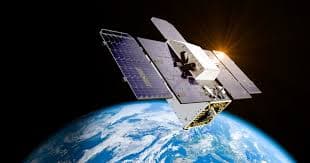


Cuidado con los enlaces externos.
Cuidado con los enlaces externos.
Preguntas frecuentes