icon for Will a hurricane make landfall in Hawaii before 2027?

Will a hurricane make landfall in Hawaii before 2027?

icon for Will a hurricane make landfall in Hawaii before 2027?

Will a hurricane make landfall in Hawaii before 2027?

28% chance
Polymarket
NEW
28% chance
Polymarket
NEW
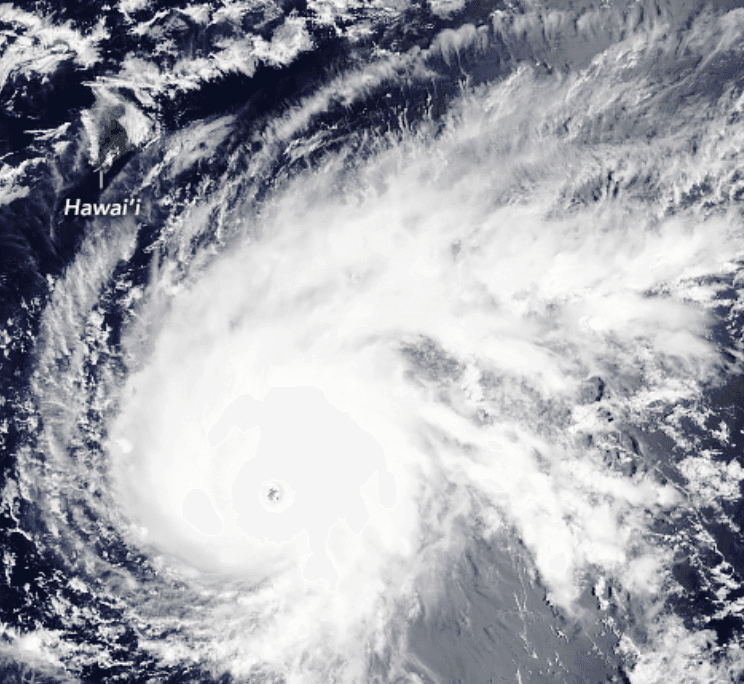
This market will resolve to "Yes" if any storm makes landfall in the State of Hawaii at Category 1 strength or higher, as reported in official Central Pacific Hurricane Center advisories (https://www.nhc.noaa.gov/cphc/), between market creation and December 31, 2026, 11:59:59 PM ET. Otherwise, this market will resolve to "No". A landfall counts toward this determination only if it occurs within this window; the time of the physical landfall governs, not the time any confirming advisory is issued. A hurricane is a tropical cyclone with maximum sustained winds of 74 mph or greater (Category 1 or higher on the Saffir-Simpson Hurricane Wind Scale), as described at https://www.nhc.noaa.gov/aboutsshws.php, and a hurricane landfall is said to occur when the hurricane's surface center intersects with the coastline, as described at https://www.nhc.noaa.gov/aboutgloss.shtml#LANDFALL. A storm must hold hurricane strength (Category 1 or higher on the Saffir-Simpson scale) at the moment its surface center intersects the coastline for that landfall to qualify. "Hawaii" means the entire State of Hawaii as recognized under U.S. law, including the main Hawaiian Islands (Hawaiʻi, Maui, Oʻahu, Kauaʻi, Molokaʻi, Lānaʻi, Niʻihau, and Kahoʻolawe) and the Northwestern Hawaiian Islands (including Midway Atoll and the Papahānaumokuākea Marine National Monument). The wind speed at the moment of landfall will be determined from the CPHC advisory or Special Advisory in effect at the time closest to the reported landfall time; where no advisory covers that exact moment, the most recent advisory issued prior to landfall governs. This market may resolve based on the initial CPHC advisory reporting a qualifying landfall regardless of any later advisory, retraction, best-track revision, or reanalysis that revises that storm's intensity downward at the time of landfall. However, if a subsequent advisory or correction identifies a qualifying landfall that was not reflected in initial reporting, this market will resolve to "Yes" based on that correction.Hawaii's position in the central Pacific, combined with prevailing easterly trade winds and typical storm tracks, has made direct hurricane landfalls exceptionally rare, with only two or three recorded since the mid-20th century despite an average of four to five tropical cyclones forming in the basin annually. The small island chain presents a narrow target, and most systems are deflected westward or northward before reaching it, as seen in recent seasons with close passes but limited impacts. The 2026 central Pacific outlook calls for above-normal activity through November, yet current modeling for early systems like Hurricane Fausto shows tracks favoring misses north of the islands. Trader consensus at 94% for no landfall before 2027 reflects this climatology and the limited remaining window, though an atypical steering pattern or late-season intensification could still produce a direct hit.

This market will resolve to "Yes" if any storm makes landfall in the State of Hawaii at Category 1 strength or higher, as reported in official Central Pacific Hurricane Center advisories (https://www.nhc.noaa.gov/cphc/), between market creation and December 31, 2026, 11:59:59 PM ET. Otherwise, this market will resolve to "No". A landfall counts toward this determination only if it occurs within this window; the time of the physical landfall governs, not the time any confirming advisory is issued.

A hurricane is a tropical cyclone with maximum sustained winds of 74 mph or greater (Category 1 or higher on the Saffir-Simpson Hurricane Wind Scale), as described at https://www.nhc.noaa.gov/aboutsshws.php, and a hurricane landfall is said to occur when the hurricane's surface center intersects with the coastline, as described at https://www.nhc.noaa.gov/aboutgloss.shtml#LANDFALL. A storm must hold hurricane strength (Category 1 or higher on the Saffir-Simpson scale) at the moment its surface center intersects the coastline for that landfall to qualify.

"Hawaii" means the entire State of Hawaii as recognized under U.S. law, including the main Hawaiian Islands (Hawaiʻi, Maui, Oʻahu, Kauaʻi, Molokaʻi, Lānaʻi, Niʻihau, and Kahoʻolawe) and the Northwestern Hawaiian Islands (including Midway Atoll and the Papahānaumokuākea Marine National Monument).

The wind speed at the moment of landfall will be determined from the CPHC advisory or Special Advisory in effect at the time closest to the reported landfall time; where no advisory covers that exact moment, the most recent advisory issued prior to landfall governs.

This market may resolve based on the initial CPHC advisory reporting a qualifying landfall regardless of any later advisory, retraction, best-track revision, or reanalysis that revises that storm's intensity downward at the time of landfall. However, if a subsequent advisory or correction identifies a qualifying landfall that was not reflected in initial reporting, this market will resolve to "Yes" based on that correction.
Volume
$65
End Date
Jan 1, 2027
Market Opened
Jul 24, 2026, 11:28 AM ET
This market will resolve to "Yes" if any storm makes landfall in the State of Hawaii at Category 1 strength or higher, as reported in official Central Pacific Hurricane Center advisories (https://www.nhc.noaa.gov/cphc/), between market creation and December 31, 2026, 11:59:59 PM ET. Otherwise, this market will resolve to "No". A landfall counts toward this determination only if it occurs within this window; the time of the physical landfall governs, not the time any confirming advisory is issued. A hurricane is a tropical cyclone with maximum sustained winds of 74 mph or greater (Category 1 or higher on the Saffir-Simpson Hurricane Wind Scale), as described at https://www.nhc.noaa.gov/aboutsshws.php, and a hurricane landfall is said to occur when the hurricane's surface center intersects with the coastline, as described at https://www.nhc.noaa.gov/aboutgloss.shtml#LANDFALL. A storm must hold hurricane strength (Category 1 or higher on the Saffir-Simpson scale) at the moment its surface center intersects the coastline for that landfall to qualify. "Hawaii" means the entire State of Hawaii as recognized under U.S. law, including the main Hawaiian Islands (Hawaiʻi, Maui, Oʻahu, Kauaʻi, Molokaʻi, Lānaʻi, Niʻihau, and Kahoʻolawe) and the Northwestern Hawaiian Islands (including Midway Atoll and the Papahānaumokuākea Marine National Monument). The wind speed at the moment of landfall will be determined from the CPHC advisory or Special Advisory in effect at the time closest to the reported landfall time; where no advisory covers that exact moment, the most recent advisory issued prior to landfall governs. This market may resolve based on the initial CPHC advisory reporting a qualifying landfall regardless of any later advisory, retraction, best-track revision, or reanalysis that revises that storm's intensity downward at the time of landfall. However, if a subsequent advisory or correction identifies a qualifying landfall that was not reflected in initial reporting, this market will resolve to "Yes" based on that correction.
This market will resolve to "Yes" if any storm makes landfall in the State of Hawaii at Category 1 strength or higher, as reported in official Central Pacific Hurricane Center advisories (https://www.nhc.noaa.gov/cphc/), between market creation and December 31, 2026, 11:59:59 PM ET. Otherwise, this market will resolve to "No". A landfall counts toward this determination only if it occurs within this window; the time of the physical landfall governs, not the time any confirming advisory is issued. A hurricane is a tropical cyclone with maximum sustained winds of 74 mph or greater (Category 1 or higher on the Saffir-Simpson Hurricane Wind Scale), as described at https://www.nhc.noaa.gov/aboutsshws.php, and a hurricane landfall is said to occur when the hurricane's surface center intersects with the coastline, as described at https://www.nhc.noaa.gov/aboutgloss.shtml#LANDFALL. A storm must hold hurricane strength (Category 1 or higher on the Saffir-Simpson scale) at the moment its surface center intersects the coastline for that landfall to qualify. "Hawaii" means the entire State of Hawaii as recognized under U.S. law, including the main Hawaiian Islands (Hawaiʻi, Maui, Oʻahu, Kauaʻi, Molokaʻi, Lānaʻi, Niʻihau, and Kahoʻolawe) and the Northwestern Hawaiian Islands (including Midway Atoll and the Papahānaumokuākea Marine National Monument). The wind speed at the moment of landfall will be determined from the CPHC advisory or Special Advisory in effect at the time closest to the reported landfall time; where no advisory covers that exact moment, the most recent advisory issued prior to landfall governs. This market may resolve based on the initial CPHC advisory reporting a qualifying landfall regardless of any later advisory, retraction, best-track revision, or reanalysis that revises that storm's intensity downward at the time of landfall. However, if a subsequent advisory or correction identifies a qualifying landfall that was not reflected in initial reporting, this market will resolve to "Yes" based on that correction.Hawaii's position in the central Pacific, combined with prevailing easterly trade winds and typical storm tracks, has made direct hurricane landfalls exceptionally rare, with only two or three recorded since the mid-20th century despite an average of four to five tropical cyclones forming in the basin annually. The small island chain presents a narrow target, and most systems are deflected westward or northward before reaching it, as seen in recent seasons with close passes but limited impacts. The 2026 central Pacific outlook calls for above-normal activity through November, yet current modeling for early systems like Hurricane Fausto shows tracks favoring misses north of the islands. Trader consensus at 94% for no landfall before 2027 reflects this climatology and the limited remaining window, though an atypical steering pattern or late-season intensification could still produce a direct hit.

This market will resolve to "Yes" if any storm makes landfall in the State of Hawaii at Category 1 strength or higher, as reported in official Central Pacific Hurricane Center advisories (https://www.nhc.noaa.gov/cphc/), between market creation and December 31, 2026, 11:59:59 PM ET. Otherwise, this market will resolve to "No". A landfall counts toward this determination only if it occurs within this window; the time of the physical landfall governs, not the time any confirming advisory is issued.

A hurricane is a tropical cyclone with maximum sustained winds of 74 mph or greater (Category 1 or higher on the Saffir-Simpson Hurricane Wind Scale), as described at https://www.nhc.noaa.gov/aboutsshws.php, and a hurricane landfall is said to occur when the hurricane's surface center intersects with the coastline, as described at https://www.nhc.noaa.gov/aboutgloss.shtml#LANDFALL. A storm must hold hurricane strength (Category 1 or higher on the Saffir-Simpson scale) at the moment its surface center intersects the coastline for that landfall to qualify.

"Hawaii" means the entire State of Hawaii as recognized under U.S. law, including the main Hawaiian Islands (Hawaiʻi, Maui, Oʻahu, Kauaʻi, Molokaʻi, Lānaʻi, Niʻihau, and Kahoʻolawe) and the Northwestern Hawaiian Islands (including Midway Atoll and the Papahānaumokuākea Marine National Monument).

The wind speed at the moment of landfall will be determined from the CPHC advisory or Special Advisory in effect at the time closest to the reported landfall time; where no advisory covers that exact moment, the most recent advisory issued prior to landfall governs.

This market may resolve based on the initial CPHC advisory reporting a qualifying landfall regardless of any later advisory, retraction, best-track revision, or reanalysis that revises that storm's intensity downward at the time of landfall. However, if a subsequent advisory or correction identifies a qualifying landfall that was not reflected in initial reporting, this market will resolve to "Yes" based on that correction.
Volume
$65
End Date
Jan 1, 2027
Market Opened
Jul 24, 2026, 11:28 AM ET
This market will resolve to "Yes" if any storm makes landfall in the State of Hawaii at Category 1 strength or higher, as reported in official Central Pacific Hurricane Center advisories (https://www.nhc.noaa.gov/cphc/), between market creation and December 31, 2026, 11:59:59 PM ET. Otherwise, this market will resolve to "No". A landfall counts toward this determination only if it occurs within this window; the time of the physical landfall governs, not the time any confirming advisory is issued. A hurricane is a tropical cyclone with maximum sustained winds of 74 mph or greater (Category 1 or higher on the Saffir-Simpson Hurricane Wind Scale), as described at https://www.nhc.noaa.gov/aboutsshws.php, and a hurricane landfall is said to occur when the hurricane's surface center intersects with the coastline, as described at https://www.nhc.noaa.gov/aboutgloss.shtml#LANDFALL. A storm must hold hurricane strength (Category 1 or higher on the Saffir-Simpson scale) at the moment its surface center intersects the coastline for that landfall to qualify. "Hawaii" means the entire State of Hawaii as recognized under U.S. law, including the main Hawaiian Islands (Hawaiʻi, Maui, Oʻahu, Kauaʻi, Molokaʻi, Lānaʻi, Niʻihau, and Kahoʻolawe) and the Northwestern Hawaiian Islands (including Midway Atoll and the Papahānaumokuākea Marine National Monument). The wind speed at the moment of landfall will be determined from the CPHC advisory or Special Advisory in effect at the time closest to the reported landfall time; where no advisory covers that exact moment, the most recent advisory issued prior to landfall governs. This market may resolve based on the initial CPHC advisory reporting a qualifying landfall regardless of any later advisory, retraction, best-track revision, or reanalysis that revises that storm's intensity downward at the time of landfall. However, if a subsequent advisory or correction identifies a qualifying landfall that was not reflected in initial reporting, this market will resolve to "Yes" based on that correction.

Beware of external links.

Frequently Asked Questions

"Will a hurricane make landfall in Hawaii before 2027?" is a prediction market on Polymarket where traders buy and sell "Yes" or "No" shares based on whether they believe this event will happen. The current crowd-sourced probability is 28% for "Yes." For example, if "Yes" is priced at 28¢, the market collectively assigns a 28% chance that this event will occur. These odds shift continuously as traders react to new developments and information. Shares in the correct outcome are redeemable for $1 each upon market resolution.

"Will a hurricane make landfall in Hawaii before 2027?" is a newly created market on Polymarket, launched on Jul 24, 2026. As an early market, this is your opportunity to be among the first traders to set the odds and establish the market's initial price signals. You can also bookmark this page to track volume and trading activity as the market gains traction over time.

To trade on "Will a hurricane make landfall in Hawaii before 2027?," simply choose whether you believe the answer is "Yes" or "No." Each side has a current price that reflects the market's implied probability. Enter your amount and click "Trade." If you buy "Yes" shares and the outcome resolves as "Yes," each share pays out $1. If it resolves as "No," your "Yes" shares pay $0. You can also sell your shares at any time before resolution if you want to lock in a profit or cut a loss.

The current probability for "Will a hurricane make landfall in Hawaii before 2027?" is 28% for "Yes." This means the Polymarket crowd currently believes there is a 28% chance that this event will occur. These odds update in real-time based on actual trades, providing a continuously updated signal of what the market expects to happen.

The resolution rules for "Will a hurricane make landfall in Hawaii before 2027?" define exactly what needs to happen for each outcome to be declared a winner — including the official data sources used to determine the result. You can review the complete resolution criteria in the "Rules" section on this page above the comments. We recommend reading the rules carefully before trading, as they specify the precise conditions, edge cases, and sources that govern how this market is settled.