หากต้องการเทรดในสหรัฐฯ ไปที่ polymarket.us

icon for Will a hurricane make landfall in Hawaii before 2027?

Will a hurricane make landfall in Hawaii before 2027?

icon for Will a hurricane make landfall in Hawaii before 2027?

Will a hurricane make landfall in Hawaii before 2027?

14% โอกาส
Polymarket

$45,241 ปริมาณ

14% โอกาส
Polymarket

$45,241 ปริมาณ

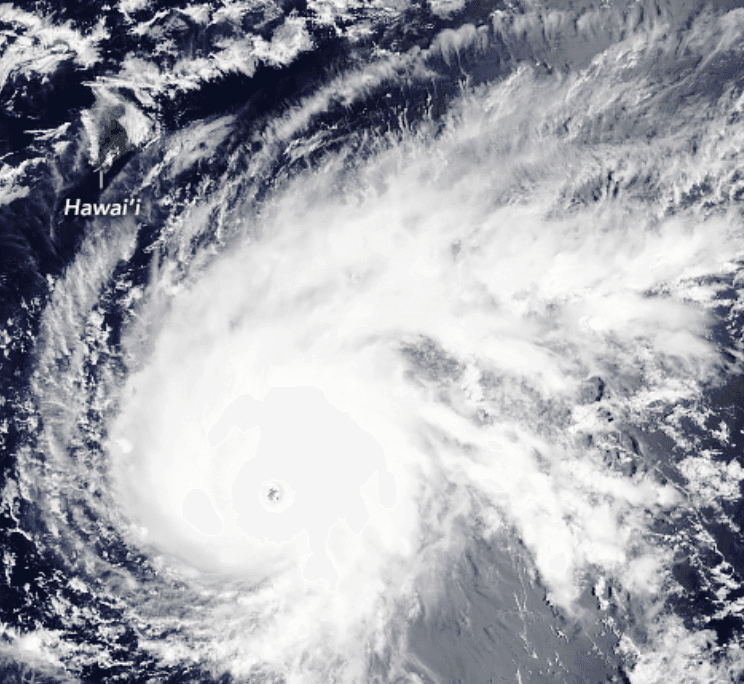
This market will resolve to "Yes" if any storm makes landfall in the State of Hawaii at Category 1 strength or higher, as reported in official Central Pacific Hurricane Center advisories (https://www.nhc.noaa.gov/cphc/), between market creation and December 31, 2026, 11:59:59 PM ET. Otherwise, this market will resolve to "No". A landfall counts toward this determination only if it occurs within this window; the time of the physical landfall governs, not the time any confirming advisory is issued. A hurricane is a tropical cyclone with maximum sustained winds of 74 mph or greater (Category 1 or higher on the Saffir-Simpson Hurricane Wind Scale), as described at https://www.nhc.noaa.gov/aboutsshws.php, and a hurricane landfall is said to occur when the hurricane's surface center intersects with the coastline, as described at https://www.nhc.noaa.gov/aboutgloss.shtml#LANDFALL. A storm must hold hurricane strength (Category 1 or higher on the Saffir-Simpson scale) at the moment its surface center intersects the coastline for that landfall to qualify. "Hawaii" means the entire State of Hawaii as recognized under U.S. law, including the main Hawaiian Islands (Hawaiʻi, Maui, Oʻahu, Kauaʻi, Molokaʻi, Lānaʻi, Niʻihau, and Kahoʻolawe) and the Northwestern Hawaiian Islands (including Midway Atoll and the Papahānaumokuākea Marine National Monument). The wind speed at the moment of landfall will be determined from the CPHC advisory or Special Advisory in effect at the time closest to the reported landfall time; where no advisory covers that exact moment, the most recent advisory issued prior to landfall governs. This market may resolve based on the initial CPHC advisory reporting a qualifying landfall regardless of any later advisory, retraction, best-track revision, or reanalysis that revises that storm's intensity downward at the time of landfall. However, if a subsequent advisory or correction identifies a qualifying landfall that was not reflected in initial reporting, this market will resolve to "Yes" based on that correction.Hawaii’s historically low hurricane landfall rate—only two direct events (Dot in 1959 and Iniki in 1992) in the modern record—underpins the 86.5% market-implied probability of no landfall before 2027. Protective factors including cooler sea-surface temperatures east of the islands, persistent trade-wind shear, and a semi-permanent high-pressure ridge typically steer or weaken approaching systems. In 2026, an active El Niño season produced multiple close approaches, including Hurricane Lala in August and Hurricane Lowell in September, both of which delivered heavy rain and gusts yet missed official landfall criteria by passing just offshore. With the Central Pacific season waning and forecast models showing limited late-season formation near the islands, traders see little remaining window for the eye to intersect land before year-end.

This market will resolve to "Yes" if any storm makes landfall in the State of Hawaii at Category 1 strength or higher, as reported in official Central Pacific Hurricane Center advisories (https://www.nhc.noaa.gov/cphc/), between market creation and December 31, 2026, 11:59:59 PM ET. Otherwise, this market will resolve to "No". A landfall counts toward this determination only if it occurs within this window; the time of the physical landfall governs, not the time any confirming advisory is issued.

A hurricane is a tropical cyclone with maximum sustained winds of 74 mph or greater (Category 1 or higher on the Saffir-Simpson Hurricane Wind Scale), as described at https://www.nhc.noaa.gov/aboutsshws.php, and a hurricane landfall is said to occur when the hurricane's surface center intersects with the coastline, as described at https://www.nhc.noaa.gov/aboutgloss.shtml#LANDFALL. A storm must hold hurricane strength (Category 1 or higher on the Saffir-Simpson scale) at the moment its surface center intersects the coastline for that landfall to qualify.

"Hawaii" means the entire State of Hawaii as recognized under U.S. law, including the main Hawaiian Islands (Hawaiʻi, Maui, Oʻahu, Kauaʻi, Molokaʻi, Lānaʻi, Niʻihau, and Kahoʻolawe) and the Northwestern Hawaiian Islands (including Midway Atoll and the Papahānaumokuākea Marine National Monument).

The wind speed at the moment of landfall will be determined from the CPHC advisory or Special Advisory in effect at the time closest to the reported landfall time; where no advisory covers that exact moment, the most recent advisory issued prior to landfall governs.

This market may resolve based on the initial CPHC advisory reporting a qualifying landfall regardless of any later advisory, retraction, best-track revision, or reanalysis that revises that storm's intensity downward at the time of landfall. However, if a subsequent advisory or correction identifies a qualifying landfall that was not reflected in initial reporting, this market will resolve to "Yes" based on that correction.
This market will resolve to "Yes" if any storm makes landfall in the State of Hawaii at Category 1 strength or higher, as reported in official Central Pacific Hurricane Center advisories (https://www.nhc.noaa.gov/cphc/), between market creation and December 31, 2026, 11:59:59 PM ET. Otherwise, this market will resolve to "No". A landfall counts toward this determination only if it occurs within this window; the time of the physical landfall governs, not the time any confirming advisory is issued. A hurricane is a tropical cyclone with maximum sustained winds of 74 mph or greater (Category 1 or higher on the Saffir-Simpson Hurricane Wind Scale), as described at https://www.nhc.noaa.gov/aboutsshws.php, and a hurricane landfall is said to occur when the hurricane's surface center intersects with the coastline, as described at https://www.nhc.noaa.gov/aboutgloss.shtml#LANDFALL. A storm must hold hurricane strength (Category 1 or higher on the Saffir-Simpson scale) at the moment its surface center intersects the coastline for that landfall to qualify. "Hawaii" means the entire State of Hawaii as recognized under U.S. law, including the main Hawaiian Islands (Hawaiʻi, Maui, Oʻahu, Kauaʻi, Molokaʻi, Lānaʻi, Niʻihau, and Kahoʻolawe) and the Northwestern Hawaiian Islands (including Midway Atoll and the Papahānaumokuākea Marine National Monument). The wind speed at the moment of landfall will be determined from the CPHC advisory or Special Advisory in effect at the time closest to the reported landfall time; where no advisory covers that exact moment, the most recent advisory issued prior to landfall governs. This market may resolve based on the initial CPHC advisory reporting a qualifying landfall regardless of any later advisory, retraction, best-track revision, or reanalysis that revises that storm's intensity downward at the time of landfall. However, if a subsequent advisory or correction identifies a qualifying landfall that was not reflected in initial reporting, this market will resolve to "Yes" based on that correction.
ปริมาณการซื้อขาย
$45,241
วันสิ้นสุด
Dec 31, 2026
ตลาดเปิดเมื่อ
Jul 24, 2026, 11:28 AM ET

ผู้ตัดสินผล

0x65070BE91...
This market will resolve to "Yes" if any storm makes landfall in the State of Hawaii at Category 1 strength or higher, as reported in official Central Pacific Hurricane Center advisories (https://www.nhc.noaa.gov/cphc/), between market creation and December 31, 2026, 11:59:59 PM ET. Otherwise, this market will resolve to "No". A landfall counts toward this determination only if it occurs within this window; the time of the physical landfall governs, not the time any confirming advisory is issued. A hurricane is a tropical cyclone with maximum sustained winds of 74 mph or greater (Category 1 or higher on the Saffir-Simpson Hurricane Wind Scale), as described at https://www.nhc.noaa.gov/aboutsshws.php, and a hurricane landfall is said to occur when the hurricane's surface center intersects with the coastline, as described at https://www.nhc.noaa.gov/aboutgloss.shtml#LANDFALL. A storm must hold hurricane strength (Category 1 or higher on the Saffir-Simpson scale) at the moment its surface center intersects the coastline for that landfall to qualify. "Hawaii" means the entire State of Hawaii as recognized under U.S. law, including the main Hawaiian Islands (Hawaiʻi, Maui, Oʻahu, Kauaʻi, Molokaʻi, Lānaʻi, Niʻihau, and Kahoʻolawe) and the Northwestern Hawaiian Islands (including Midway Atoll and the Papahānaumokuākea Marine National Monument). The wind speed at the moment of landfall will be determined from the CPHC advisory or Special Advisory in effect at the time closest to the reported landfall time; where no advisory covers that exact moment, the most recent advisory issued prior to landfall governs. This market may resolve based on the initial CPHC advisory reporting a qualifying landfall regardless of any later advisory, retraction, best-track revision, or reanalysis that revises that storm's intensity downward at the time of landfall. However, if a subsequent advisory or correction identifies a qualifying landfall that was not reflected in initial reporting, this market will resolve to "Yes" based on that correction.Hawaii’s historically low hurricane landfall rate—only two direct events (Dot in 1959 and Iniki in 1992) in the modern record—underpins the 86.5% market-implied probability of no landfall before 2027. Protective factors including cooler sea-surface temperatures east of the islands, persistent trade-wind shear, and a semi-permanent high-pressure ridge typically steer or weaken approaching systems. In 2026, an active El Niño season produced multiple close approaches, including Hurricane Lala in August and Hurricane Lowell in September, both of which delivered heavy rain and gusts yet missed official landfall criteria by passing just offshore. With the Central Pacific season waning and forecast models showing limited late-season formation near the islands, traders see little remaining window for the eye to intersect land before year-end.

This market will resolve to "Yes" if any storm makes landfall in the State of Hawaii at Category 1 strength or higher, as reported in official Central Pacific Hurricane Center advisories (https://www.nhc.noaa.gov/cphc/), between market creation and December 31, 2026, 11:59:59 PM ET. Otherwise, this market will resolve to "No". A landfall counts toward this determination only if it occurs within this window; the time of the physical landfall governs, not the time any confirming advisory is issued.

A hurricane is a tropical cyclone with maximum sustained winds of 74 mph or greater (Category 1 or higher on the Saffir-Simpson Hurricane Wind Scale), as described at https://www.nhc.noaa.gov/aboutsshws.php, and a hurricane landfall is said to occur when the hurricane's surface center intersects with the coastline, as described at https://www.nhc.noaa.gov/aboutgloss.shtml#LANDFALL. A storm must hold hurricane strength (Category 1 or higher on the Saffir-Simpson scale) at the moment its surface center intersects the coastline for that landfall to qualify.

"Hawaii" means the entire State of Hawaii as recognized under U.S. law, including the main Hawaiian Islands (Hawaiʻi, Maui, Oʻahu, Kauaʻi, Molokaʻi, Lānaʻi, Niʻihau, and Kahoʻolawe) and the Northwestern Hawaiian Islands (including Midway Atoll and the Papahānaumokuākea Marine National Monument).

The wind speed at the moment of landfall will be determined from the CPHC advisory or Special Advisory in effect at the time closest to the reported landfall time; where no advisory covers that exact moment, the most recent advisory issued prior to landfall governs.

This market may resolve based on the initial CPHC advisory reporting a qualifying landfall regardless of any later advisory, retraction, best-track revision, or reanalysis that revises that storm's intensity downward at the time of landfall. However, if a subsequent advisory or correction identifies a qualifying landfall that was not reflected in initial reporting, this market will resolve to "Yes" based on that correction.
This market will resolve to "Yes" if any storm makes landfall in the State of Hawaii at Category 1 strength or higher, as reported in official Central Pacific Hurricane Center advisories (https://www.nhc.noaa.gov/cphc/), between market creation and December 31, 2026, 11:59:59 PM ET. Otherwise, this market will resolve to "No". A landfall counts toward this determination only if it occurs within this window; the time of the physical landfall governs, not the time any confirming advisory is issued. A hurricane is a tropical cyclone with maximum sustained winds of 74 mph or greater (Category 1 or higher on the Saffir-Simpson Hurricane Wind Scale), as described at https://www.nhc.noaa.gov/aboutsshws.php, and a hurricane landfall is said to occur when the hurricane's surface center intersects with the coastline, as described at https://www.nhc.noaa.gov/aboutgloss.shtml#LANDFALL. A storm must hold hurricane strength (Category 1 or higher on the Saffir-Simpson scale) at the moment its surface center intersects the coastline for that landfall to qualify. "Hawaii" means the entire State of Hawaii as recognized under U.S. law, including the main Hawaiian Islands (Hawaiʻi, Maui, Oʻahu, Kauaʻi, Molokaʻi, Lānaʻi, Niʻihau, and Kahoʻolawe) and the Northwestern Hawaiian Islands (including Midway Atoll and the Papahānaumokuākea Marine National Monument). The wind speed at the moment of landfall will be determined from the CPHC advisory or Special Advisory in effect at the time closest to the reported landfall time; where no advisory covers that exact moment, the most recent advisory issued prior to landfall governs. This market may resolve based on the initial CPHC advisory reporting a qualifying landfall regardless of any later advisory, retraction, best-track revision, or reanalysis that revises that storm's intensity downward at the time of landfall. However, if a subsequent advisory or correction identifies a qualifying landfall that was not reflected in initial reporting, this market will resolve to "Yes" based on that correction.
ปริมาณการซื้อขาย
$45,241
วันสิ้นสุด
Dec 31, 2026
ตลาดเปิดเมื่อ
Jul 24, 2026, 11:28 AM ET

ผู้ตัดสินผล

0x65070BE91...

ระวังลิงก์ภายนอก

คำถามที่พบบ่อย

"Will a hurricane make landfall in Hawaii before 2027?" เป็นตลาดทำนายผลบน Polymarket ที่นักเทรดซื้อและขายหุ้น "Yes" หรือ "No" ตามความเชื่อว่าเหตุการณ์นี้จะเกิดขึ้นหรือไม่ ความน่าจะเป็นจากฝูงชนในปัจจุบันคือ 14% สำหรับ "Yes" ตัวอย่างเช่น ถ้า "Yes" มีราคา 14¢ แปลว่าตลาดให้โอกาส 14% ที่เหตุการณ์นี้จะเกิดขึ้น อัตราเหล่านี้เปลี่ยนแปลงตลอดเวลาตามที่นักเทรดตอบสนองต่อข้อมูลและพัฒนาการใหม่ หุ้นในผลลัพธ์ที่ถูกต้องสามารถแลกได้ $1 ต่อหุ้นเมื่อตลาดตัดสินผล

ณ วันนี้ "Will a hurricane make landfall in Hawaii before 2027?" มีปริมาณการซื้อขายรวม $45.2K ตั้งแต่ตลาดเปิดเมื่อ Jul 24, 2026 ระดับการซื้อขายนี้สะท้อนถึงการมีส่วนร่วมอย่างมากจากชุมชน Polymarket และช่วยให้อัตราปัจจุบันได้รับข้อมูลจากผู้เข้าร่วมตลาดจำนวนมาก คุณสามารถติดตามการเคลื่อนไหวของราคาแบบสดและเทรดผลลัพธ์ใดก็ได้จากหน้านี้โดยตรง

ในการเทรด "Will a hurricane make landfall in Hawaii before 2027?" เพียงเลือกว่าคุณเชื่อว่าคำตอบคือ "Yes" หรือ "No" แต่ละฝั่งมีราคาปัจจุบันที่สะท้อนความน่าจะเป็นโดยนัยของตลาด ใส่จำนวนเงินแล้วกด "Trade" ถ้าคุณซื้อหุ้น "Yes" และผลลัพธ์ตัดสินเป็น "Yes" แต่ละหุ้นจ่าย $1 ถ้าตัดสินเป็น "No" หุ้น "Yes" ของคุณจ่าย $0 คุณยังสามารถขายหุ้นได้ตลอดเวลาก่อนการตัดสินผลหากต้องการล็อกกำไรหรือตัดขาดทุน

ความน่าจะเป็นปัจจุบันสำหรับ "Will a hurricane make landfall in Hawaii before 2027?" คือ 14% สำหรับ "Yes" นั่นหมายความว่าฝูงชน Polymarket เชื่อว่ามีโอกาส 14% ที่เหตุการณ์นี้จะเกิดขึ้น อัตราเหล่านี้อัปเดตแบบเรียลไทม์ตามการเทรดจริง ให้สัญญาณที่อัปเดตต่อเนื่องว่าตลาดคาดว่าอะไรจะเกิดขึ้น

กฎการตัดสินผลของ "Will a hurricane make landfall in Hawaii before 2027?" กำหนดอย่างชัดเจนว่าต้องเกิดอะไรขึ้นเพื่อให้แต่ละผลลัพธ์ถูกประกาศเป็นผู้ชนะ รวมถึงแหล่งข้อมูลอย่างเป็นทางการที่ใช้ตัดสินผล คุณสามารถตรวจสอบเกณฑ์การตัดสินผลทั้งหมดได้ในส่วน "กฎ" บนหน้านี้เหนือความคิดเห็น เราแนะนำให้อ่านกฎอย่างละเอียดก่อนเทรด เพราะกฎระบุเงื่อนไขเฉพาะ กรณีพิเศษ และแหล่งข้อมูลที่ควบคุมการตัดสินตลาดนี้