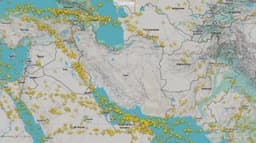
Ongoing US and Israeli military strikes on Iranian targets through June and July 2026, followed by Iranian missile and drone responses, have sustained elevated risks across the OIIX/Tehran FIR, prompting repeated EASA conflict-zone advisories and partial airspace restrictions into August. These exchanges interrupted phased reopenings that began earlier in the year, with only limited eastern sectors permitting overflights while western areas stayed closed. Trader consensus on later resolution dates reflects the absence of a sustained ceasefire or de-escalation agreement, alongside recurring NOTAMs tied to regional strikes and retaliatory actions. Scheduled diplomatic or military developments in the coming weeks could alter closure patterns if they reduce active threats to civil aviation.
Tóm tắt AI thử nghiệm tham chiếu dữ liệu Polymarket. Đây không phải tư vấn giao dịch và không ảnh hưởng đến cách thị trường này được giải quyết. · Cập nhậtIran full airspace closure by...?
Iran full airspace closure by...?
$8,411,008 KL.
August 31
6%
September 30
13%
December 31
34%
$8,411,008 KL.
August 31
6%
September 30
13%
December 31
34%
A “general closure” refers to a cancellation or suspension of aviation which is generally applicable to all commercial flights transiting Iranian airspace (“Tehran FIR”). A qualifying closure must apply generally to all of Iran or the Tehran FIR; limited cancellations, delays, or partial closures will not qualify. A closure which applies generally to commercial aviation across Iranian airspace, with limited exceptions for certain categories of flights, however, will qualify (e.g. exceptions for certain flights pre-approved by the Iranian Civil Aviation Authority may be permitted).
Qualifying previous examples include the February 28, 2026 total closure of Iranian airspace (https://www.iranintl.com/en/202602289115) and the January 2026 total closure of Iranian airspace except to international flights with express governmental permission (https://www.reuters.com/world/middle-east/iran-shuts-airspace-most-flights-flightradar24-says-2026-01-14/). Non-qualifying examples include the January 27, 2026 partial closure of Iranian airspace around the Strait of Hormuz (https://www.aa.com.tr/en/middle-east/iran-issues-airspace-notice-for-military-drills-near-strait-of-hormuz/3812508), the April 2024 closure of Iran’s western airspace (https://www.reuters.com/world/middle-east/iranian-airports-cancel-flights-until-monday-morning-2024-04-14/), and the January 25 - April 25, 2026 VFR (Visual Flight Rules) flights suspension which did not broadly close commercial aviation in Iran (https://www.intellinews.com/iran-suspends-general-aviation-and-vfr-flights-in-new-airspace-directive-421997/).
Warnings, No-Fly-Zones, or other flight restrictions imposed by airlines or countries other than Iran will not be sufficient for a “Yes” resolution.
Airspace closures which occur solely due to weather conditions, earthquakes, or volcanic eruptions, will not qualify.
The primary resolution sources for this market will be official information from Iranian aviation authorities and a consensus of credible reporting.
Thị trường mở: Jun 25, 2026, 7:21 PM ET
Resolver
0x65070BE91...A “general closure” refers to a cancellation or suspension of aviation which is generally applicable to all commercial flights transiting Iranian airspace (“Tehran FIR”). A qualifying closure must apply generally to all of Iran or the Tehran FIR; limited cancellations, delays, or partial closures will not qualify. A closure which applies generally to commercial aviation across Iranian airspace, with limited exceptions for certain categories of flights, however, will qualify (e.g. exceptions for certain flights pre-approved by the Iranian Civil Aviation Authority may be permitted).
Qualifying previous examples include the February 28, 2026 total closure of Iranian airspace (https://www.iranintl.com/en/202602289115) and the January 2026 total closure of Iranian airspace except to international flights with express governmental permission (https://www.reuters.com/world/middle-east/iran-shuts-airspace-most-flights-flightradar24-says-2026-01-14/). Non-qualifying examples include the January 27, 2026 partial closure of Iranian airspace around the Strait of Hormuz (https://www.aa.com.tr/en/middle-east/iran-issues-airspace-notice-for-military-drills-near-strait-of-hormuz/3812508), the April 2024 closure of Iran’s western airspace (https://www.reuters.com/world/middle-east/iranian-airports-cancel-flights-until-monday-morning-2024-04-14/), and the January 25 - April 25, 2026 VFR (Visual Flight Rules) flights suspension which did not broadly close commercial aviation in Iran (https://www.intellinews.com/iran-suspends-general-aviation-and-vfr-flights-in-new-airspace-directive-421997/).
Warnings, No-Fly-Zones, or other flight restrictions imposed by airlines or countries other than Iran will not be sufficient for a “Yes” resolution.
Airspace closures which occur solely due to weather conditions, earthquakes, or volcanic eruptions, will not qualify.
The primary resolution sources for this market will be official information from Iranian aviation authorities and a consensus of credible reporting.
Resolver
0x65070BE91...Ongoing US and Israeli military strikes on Iranian targets through June and July 2026, followed by Iranian missile and drone responses, have sustained elevated risks across the OIIX/Tehran FIR, prompting repeated EASA conflict-zone advisories and partial airspace restrictions into August. These exchanges interrupted phased reopenings that began earlier in the year, with only limited eastern sectors permitting overflights while western areas stayed closed. Trader consensus on later resolution dates reflects the absence of a sustained ceasefire or de-escalation agreement, alongside recurring NOTAMs tied to regional strikes and retaliatory actions. Scheduled diplomatic or military developments in the coming weeks could alter closure patterns if they reduce active threats to civil aviation.
Tóm tắt AI thử nghiệm tham chiếu dữ liệu Polymarket. Đây không phải tư vấn giao dịch và không ảnh hưởng đến cách thị trường này được giải quyết. · Cập nhật


Cẩn thận với liên kết bên ngoài.
Cẩn thận với liên kết bên ngoài.
Câu hỏi thường gặp