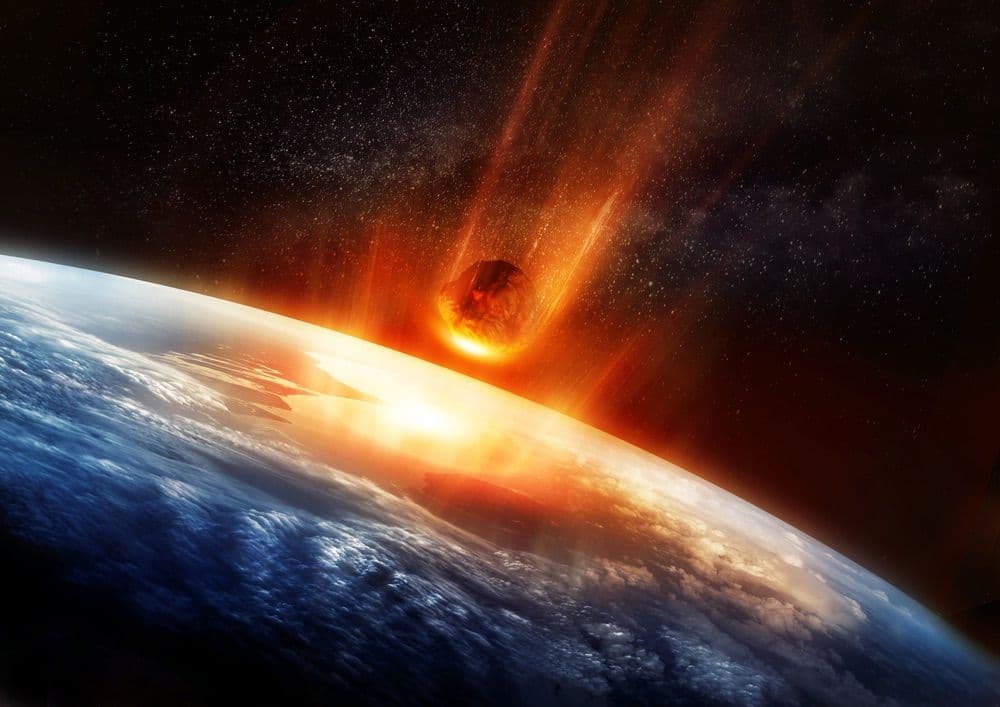
NASA’s Center for Near-Earth Object Studies and ESA monitoring confirm no known asteroids or comets on trajectories capable of delivering 100 kilotons TNT-equivalent energy during 2026, driving the 96.6% market-implied probability for “No.” Sentry and Scout systems show zero credible short-term risks through the decade, consistent with low historical impact frequencies for objects roughly 20 meters or larger. Continuous optical, radar, and infrared surveys from programs like ATLAS and Pan-STARRS make undetected arrivals highly unlikely before year-end. The sole realistic variables remain discovery of an extremely faint long-period comet at the final moment or a post-detection orbital revision, both of which would undergo immediate multi-observatory verification before altering resolution criteria.
Polymarket डेटा का संदर्भ देने वाला प्रयोगात्मक AI-जनरेटेड सारांश। यह ट्रेडिंग सलाह नहीं है और इस बाज़ार के समाधान में कोई भूमिका नहीं निभाता। · अपडेट किया गया100kt meteor strike in 2026?
100kt meteor strike in 2026?
The object must be classified as a natural meteoroid; events involving artificial objects or reentry vehicles do not qualify.
The primary resolution source will be the NASA JPL Fireball and Bolide Data repository: https://cneos.jpl.nasa.gov/fireballs/. The relevant field for determining impact energy is the “Impact Energy (kt)” column. If this dataset has not been updated to include all relevant dates by February 28, 2027, or if the NASA JPL Fireball and Bolide Data repository becomes permanently unavailable, this market may resolve based on a consensus of credible sources including the European Space Agency (ESA), the International Asteroid Warning Network (IAWN), the U.S. Department of Defense, or credible reporting of a scientific consensus, such as a NASA press release.
बाज़ार खुला: Jan 2, 2026, 2:23 PM ET
Resolver
0x65070BE91...The object must be classified as a natural meteoroid; events involving artificial objects or reentry vehicles do not qualify.
The primary resolution source will be the NASA JPL Fireball and Bolide Data repository: https://cneos.jpl.nasa.gov/fireballs/. The relevant field for determining impact energy is the “Impact Energy (kt)” column. If this dataset has not been updated to include all relevant dates by February 28, 2027, or if the NASA JPL Fireball and Bolide Data repository becomes permanently unavailable, this market may resolve based on a consensus of credible sources including the European Space Agency (ESA), the International Asteroid Warning Network (IAWN), the U.S. Department of Defense, or credible reporting of a scientific consensus, such as a NASA press release.
Resolver
0x65070BE91...NASA’s Center for Near-Earth Object Studies and ESA monitoring confirm no known asteroids or comets on trajectories capable of delivering 100 kilotons TNT-equivalent energy during 2026, driving the 96.6% market-implied probability for “No.” Sentry and Scout systems show zero credible short-term risks through the decade, consistent with low historical impact frequencies for objects roughly 20 meters or larger. Continuous optical, radar, and infrared surveys from programs like ATLAS and Pan-STARRS make undetected arrivals highly unlikely before year-end. The sole realistic variables remain discovery of an extremely faint long-period comet at the final moment or a post-detection orbital revision, both of which would undergo immediate multi-observatory verification before altering resolution criteria.
Polymarket डेटा का संदर्भ देने वाला प्रयोगात्मक AI-जनरेटेड सारांश। यह ट्रेडिंग सलाह नहीं है और इस बाज़ार के समाधान में कोई भूमिका नहीं निभाता। · अपडेट किया गया
बाहरी लिंक से सावधान रहें।
बाहरी लिंक से सावधान रहें।
अक्सर पूछे जाने वाले प्रश्न