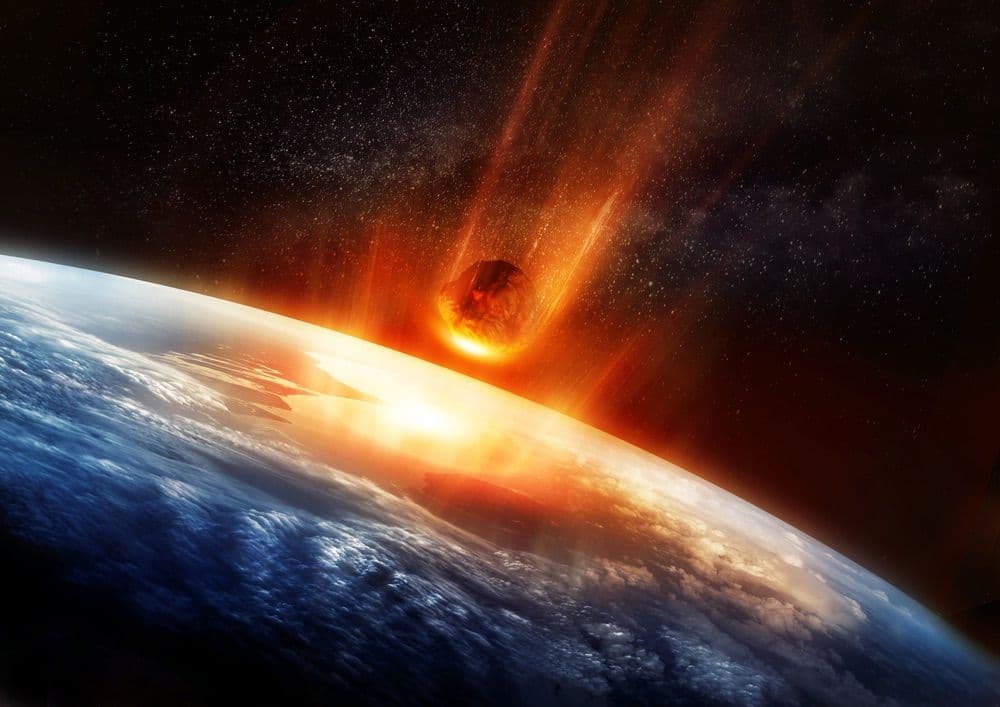
NASA’s Center for Near-Earth Object Studies (CNEOS) and Sentry impact-monitoring system report no known asteroids or meteoroids on collision courses capable of a 10-kiloton-or-greater airburst or impact through the end of 2026. Multiple documented close approaches this year, including 2026 JH2 in May and larger objects in June, all passed safely at distances well beyond any risk threshold. Ongoing sky surveys continue to shrink the pool of undetected objects large enough to produce such energy release, while historical records show events at this scale occur only once every few decades on average. With roughly four months remaining, trader consensus heavily favors “No” because any qualifying strike would require an undetected object to evade current detection networks entirely.
Polymarket डेटा का संदर्भ देने वाला प्रयोगात्मक AI-जनरेटेड सारांश। यह ट्रेडिंग सलाह नहीं है और इस बाज़ार के समाधान में कोई भूमिका नहीं निभाता। · अपडेट किया गया2026 में प्रमुख उल्का हड़ताल (10kt +)?
2026 में प्रमुख उल्का हड़ताल (10kt +)?
हाँ
$178,784 वॉल्यूम
$178,784 वॉल्यूम
हाँ
$178,784 वॉल्यूम
$178,784 वॉल्यूम
The object must be classified as a natural meteoroid; events involving artificial objects or reentry vehicles do not qualify.
The primary resolution source will be the NASA JPL Fireball and Bolide Data repository: https://cneos.jpl.nasa.gov/fireballs/. The relevant field for determining impact energy is the “Impact Energy (kt)” column. If this dataset has not been updated to include all relevant dates by February 28, 2027, or if the NASA JPL Fireball and Bolide Data repository becomes permanently unavailable, this market may resolve based on a consensus of credible sources including the European Space Agency (ESA), the International Asteroid Warning Network (IAWN), the U.S. Department of Defense, or credible reporting of a scientific consensus, such as a NASA press release.
बाज़ार खुला: Dec 31, 2025, 1:18 PM ET
Resolver
0x65070BE91...The object must be classified as a natural meteoroid; events involving artificial objects or reentry vehicles do not qualify.
The primary resolution source will be the NASA JPL Fireball and Bolide Data repository: https://cneos.jpl.nasa.gov/fireballs/. The relevant field for determining impact energy is the “Impact Energy (kt)” column. If this dataset has not been updated to include all relevant dates by February 28, 2027, or if the NASA JPL Fireball and Bolide Data repository becomes permanently unavailable, this market may resolve based on a consensus of credible sources including the European Space Agency (ESA), the International Asteroid Warning Network (IAWN), the U.S. Department of Defense, or credible reporting of a scientific consensus, such as a NASA press release.
Resolver
0x65070BE91...NASA’s Center for Near-Earth Object Studies (CNEOS) and Sentry impact-monitoring system report no known asteroids or meteoroids on collision courses capable of a 10-kiloton-or-greater airburst or impact through the end of 2026. Multiple documented close approaches this year, including 2026 JH2 in May and larger objects in June, all passed safely at distances well beyond any risk threshold. Ongoing sky surveys continue to shrink the pool of undetected objects large enough to produce such energy release, while historical records show events at this scale occur only once every few decades on average. With roughly four months remaining, trader consensus heavily favors “No” because any qualifying strike would require an undetected object to evade current detection networks entirely.
Polymarket डेटा का संदर्भ देने वाला प्रयोगात्मक AI-जनरेटेड सारांश। यह ट्रेडिंग सलाह नहीं है और इस बाज़ार के समाधान में कोई भूमिका नहीं निभाता। · अपडेट किया गया
बाहरी लिंक से सावधान रहें।
बाहरी लिंक से सावधान रहें।
अक्सर पूछे जाने वाले प्रश्न