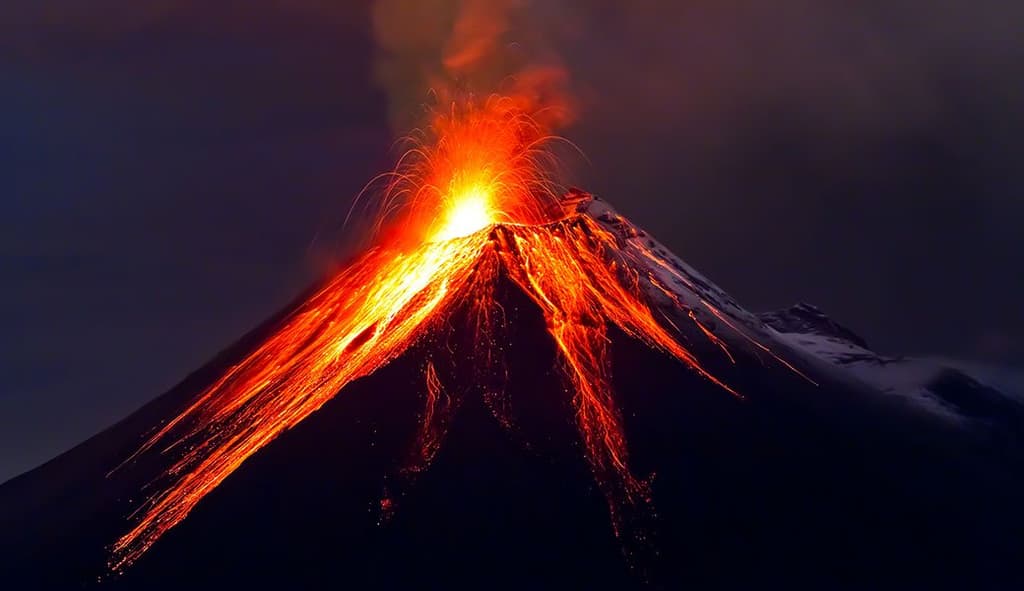
No confirmed VEI ≥4 eruptions have occurred through mid-August 2026, driving trader consensus toward zero events at 52.5% implied probability. VEI 4 requires at least 0.1 km³ of tephra and sustained explosive plumes reaching 10–25 km, thresholds met only a few times per year on average worldwide. Smithsonian Global Volcanism Program data show 47 total eruptions so far, nearly all lower-intensity or effusive, including Kīlauea lava flows and minor unrest at arc volcanoes; a Bismarck Sea submarine event and Dukono activity remain below threshold. With roughly four months remaining and typical VEI assignment lags, the low baseline rate and lack of precursors for explosive escalation keep probabilities for one or more events modest.
Polymarket डेटा का संदर्भ देने वाला प्रयोगात्मक AI-जनरेटेड सारांश। यह ट्रेडिंग सलाह नहीं है और इस बाज़ार के समाधान में कोई भूमिका नहीं निभाता। · अपडेट किया गया2026 में कितने बड़े ज्वालामुखी विस्फोट (VEI ≥4) हुए?
2026 में कितने बड़े ज्वालामुखी विस्फोट (VEI ≥4) हुए?
0 51%
1 20%
2 3.6%
5+ 1.0%
$1,156,015 वॉल्यूम
$1,156,015 वॉल्यूम
31 दिस, 2026
0
51%
1
20%
2
4%
3
1%
4
1%
5+
1%
0 51%
1 20%
2 3.6%
5+ 1.0%
$1,156,015 वॉल्यूम
$1,156,015 वॉल्यूम
31 दिस, 2026
0
$499,077 वॉल्यूम
51%
1
$273,903 वॉल्यूम
20%
2
$40,867 वॉल्यूम
4%
3
$31,649 वॉल्यूम
1%
4
$35,000 वॉल्यूम
1%
5+
$275,520 वॉल्यूम
1%
This market will resolve according to the number of natural volcanic eruptions with a Volcanic Explosivity Index (VEI) of 4 or higher between January 1 and December 31, 2026, 11:59 PM ET.
The primary resolution source will be the Smithsonian Institution Global Volcanism Program (GVP: https://volcano.si.edu/), specifically the cumulative figures for 2026 for VEI 4, VEI 5, and VEI 6 released on the page currently titled "Eruptions Avg 2000-2024 (N/T)" (https://volcano.si.edu/faq/index.cfm?question=eruptionsbyyear) as of March 31, 2027, 12 PM ET. Any prior updates will not be considered finalized.
If this dataset has not been updated to include all relevant events by March 31, 2027, or if the Smithsonian GVP becomes permanently unavailable, this market may resolve based on a consensus of credible scientific sources, including the U.S. Geological Survey (USGS), national or regional volcanic observatories, or credible reporting of a scientific consensus.
Note: Smithsonian Institution Global Volcanism Program databases, which include eruptions that reached the relevant threshold prior to this market’s timeframe (e.g., https://volcano.si.edu/faq/index.cfm?question=eruptionsbyyear&checkyear=2025), will not be considered.No confirmed VEI ≥4 eruptions have occurred through mid-August 2026, driving trader consensus toward zero events at 52.5% implied probability. VEI 4 requires at least 0.1 km³ of tephra and sustained explosive plumes reaching 10–25 km, thresholds met only a few times per year on average worldwide. Smithsonian Global Volcanism Program data show 47 total eruptions so far, nearly all lower-intensity or effusive, including Kīlauea lava flows and minor unrest at arc volcanoes; a Bismarck Sea submarine event and Dukono activity remain below threshold. With roughly four months remaining and typical VEI assignment lags, the low baseline rate and lack of precursors for explosive escalation keep probabilities for one or more events modest.
This market will resolve according to the number of natural volcanic eruptions with a Volcanic Explosivity Index (VEI) of 4 or higher between January 1 and December 31, 2026, 11:59 PM ET.
The primary resolution source will be the Smithsonian Institution Global Volcanism Program (GVP: https://volcano.si.edu/), specifically the cumulative figures for 2026 for VEI 4, VEI 5, and VEI 6 released on the page currently titled "Eruptions Avg 2000-2024 (N/T)" (https://volcano.si.edu/faq/index.cfm?question=eruptionsbyyear) as of March 31, 2027, 12 PM ET. Any prior updates will not be considered finalized.
If this dataset has not been updated to include all relevant events by March 31, 2027, or if the Smithsonian GVP becomes permanently unavailable, this market may resolve based on a consensus of credible scientific sources, including the U.S. Geological Survey (USGS), national or regional volcanic observatories, or credible reporting of a scientific consensus.
Note: Smithsonian Institution Global Volcanism Program databases, which include eruptions that reached the relevant threshold prior to this market’s timeframe (e.g., https://volcano.si.edu/faq/index.cfm?question=eruptionsbyyear&checkyear=2025), will not be considered.
The primary resolution source will be the Smithsonian Institution Global Volcanism Program (GVP: https://volcano.si.edu/), specifically the cumulative figures for 2026 for VEI 4, VEI 5, and VEI 6 released on the page currently titled "Eruptions Avg 2000-2024 (N/T)" (https://volcano.si.edu/faq/index.cfm?question=eruptionsbyyear) as of March 31, 2027, 12 PM ET. Any prior updates will not be considered finalized.
If this dataset has not been updated to include all relevant events by March 31, 2027, or if the Smithsonian GVP becomes permanently unavailable, this market may resolve based on a consensus of credible scientific sources, including the U.S. Geological Survey (USGS), national or regional volcanic observatories, or credible reporting of a scientific consensus.
Note: Smithsonian Institution Global Volcanism Program databases, which include eruptions that reached the relevant threshold prior to this market’s timeframe (e.g., https://volcano.si.edu/faq/index.cfm?question=eruptionsbyyear&checkyear=2025), will not be considered.
बाज़ार खुला: Jan 2, 2026, 1:48 PM ET
वॉल्यूम
$1,156,015समाप्ति तिथि
31 मार्च, 2027बाज़ार खुला
Jan 2, 2026, 1:48 PM ETResolver
0x2F5e3684c...This market will resolve according to the number of natural volcanic eruptions with a Volcanic Explosivity Index (VEI) of 4 or higher between January 1 and December 31, 2026, 11:59 PM ET.
The primary resolution source will be the Smithsonian Institution Global Volcanism Program (GVP: https://volcano.si.edu/), specifically the cumulative figures for 2026 for VEI 4, VEI 5, and VEI 6 released on the page currently titled "Eruptions Avg 2000-2024 (N/T)" (https://volcano.si.edu/faq/index.cfm?question=eruptionsbyyear) as of March 31, 2027, 12 PM ET. Any prior updates will not be considered finalized.
If this dataset has not been updated to include all relevant events by March 31, 2027, or if the Smithsonian GVP becomes permanently unavailable, this market may resolve based on a consensus of credible scientific sources, including the U.S. Geological Survey (USGS), national or regional volcanic observatories, or credible reporting of a scientific consensus.
Note: Smithsonian Institution Global Volcanism Program databases, which include eruptions that reached the relevant threshold prior to this market’s timeframe (e.g., https://volcano.si.edu/faq/index.cfm?question=eruptionsbyyear&checkyear=2025), will not be considered.No confirmed VEI ≥4 eruptions have occurred through mid-August 2026, driving trader consensus toward zero events at 52.5% implied probability. VEI 4 requires at least 0.1 km³ of tephra and sustained explosive plumes reaching 10–25 km, thresholds met only a few times per year on average worldwide. Smithsonian Global Volcanism Program data show 47 total eruptions so far, nearly all lower-intensity or effusive, including Kīlauea lava flows and minor unrest at arc volcanoes; a Bismarck Sea submarine event and Dukono activity remain below threshold. With roughly four months remaining and typical VEI assignment lags, the low baseline rate and lack of precursors for explosive escalation keep probabilities for one or more events modest.
This market will resolve according to the number of natural volcanic eruptions with a Volcanic Explosivity Index (VEI) of 4 or higher between January 1 and December 31, 2026, 11:59 PM ET.
The primary resolution source will be the Smithsonian Institution Global Volcanism Program (GVP: https://volcano.si.edu/), specifically the cumulative figures for 2026 for VEI 4, VEI 5, and VEI 6 released on the page currently titled "Eruptions Avg 2000-2024 (N/T)" (https://volcano.si.edu/faq/index.cfm?question=eruptionsbyyear) as of March 31, 2027, 12 PM ET. Any prior updates will not be considered finalized.
If this dataset has not been updated to include all relevant events by March 31, 2027, or if the Smithsonian GVP becomes permanently unavailable, this market may resolve based on a consensus of credible scientific sources, including the U.S. Geological Survey (USGS), national or regional volcanic observatories, or credible reporting of a scientific consensus.
Note: Smithsonian Institution Global Volcanism Program databases, which include eruptions that reached the relevant threshold prior to this market’s timeframe (e.g., https://volcano.si.edu/faq/index.cfm?question=eruptionsbyyear&checkyear=2025), will not be considered.
The primary resolution source will be the Smithsonian Institution Global Volcanism Program (GVP: https://volcano.si.edu/), specifically the cumulative figures for 2026 for VEI 4, VEI 5, and VEI 6 released on the page currently titled "Eruptions Avg 2000-2024 (N/T)" (https://volcano.si.edu/faq/index.cfm?question=eruptionsbyyear) as of March 31, 2027, 12 PM ET. Any prior updates will not be considered finalized.
If this dataset has not been updated to include all relevant events by March 31, 2027, or if the Smithsonian GVP becomes permanently unavailable, this market may resolve based on a consensus of credible scientific sources, including the U.S. Geological Survey (USGS), national or regional volcanic observatories, or credible reporting of a scientific consensus.
Note: Smithsonian Institution Global Volcanism Program databases, which include eruptions that reached the relevant threshold prior to this market’s timeframe (e.g., https://volcano.si.edu/faq/index.cfm?question=eruptionsbyyear&checkyear=2025), will not be considered.
वॉल्यूम
$1,156,015समाप्ति तिथि
31 मार्च, 2027बाज़ार खुला
Jan 2, 2026, 1:48 PM ETResolver
0x2F5e3684c...No confirmed VEI ≥4 eruptions have occurred through mid-August 2026, driving trader consensus toward zero events at 52.5% implied probability. VEI 4 requires at least 0.1 km³ of tephra and sustained explosive plumes reaching 10–25 km, thresholds met only a few times per year on average worldwide. Smithsonian Global Volcanism Program data show 47 total eruptions so far, nearly all lower-intensity or effusive, including Kīlauea lava flows and minor unrest at arc volcanoes; a Bismarck Sea submarine event and Dukono activity remain below threshold. With roughly four months remaining and typical VEI assignment lags, the low baseline rate and lack of precursors for explosive escalation keep probabilities for one or more events modest.
Polymarket डेटा का संदर्भ देने वाला प्रयोगात्मक AI-जनरेटेड सारांश। यह ट्रेडिंग सलाह नहीं है और इस बाज़ार के समाधान में कोई भूमिका नहीं निभाता। · अपडेट किया गया

बाहरी लिंक से सावधान रहें।
बाहरी लिंक से सावधान रहें।
अक्सर पूछे जाने वाले प्रश्न