
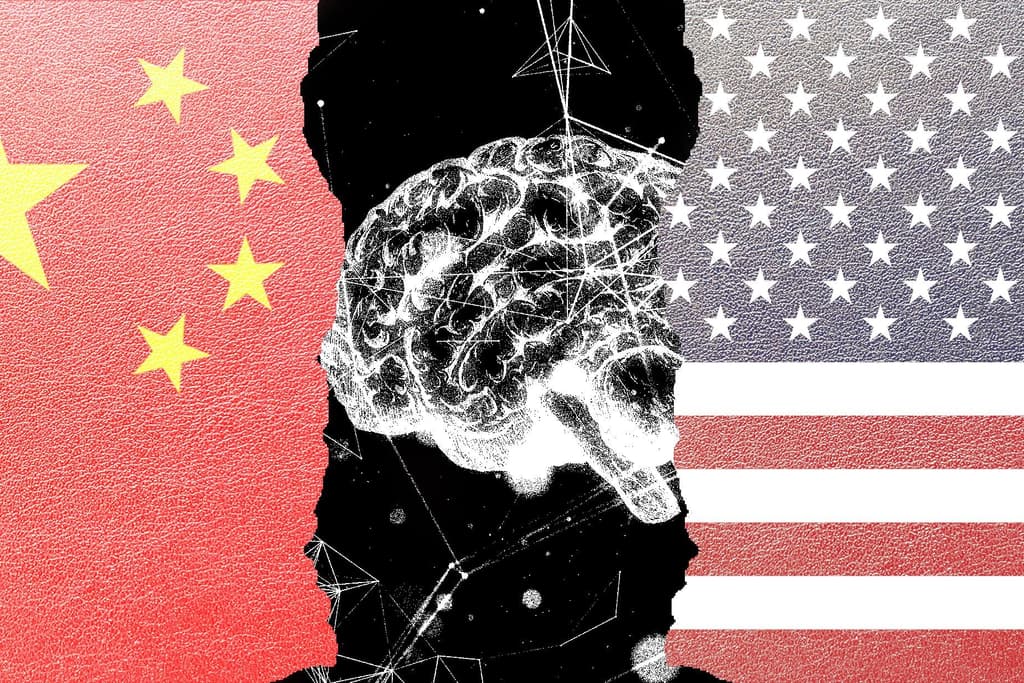
The high 92% market-implied probability that the US government will not ban any open-source AI model in 2026 reflects the absence of such restrictions to date, despite heightened scrutiny. Recent executive orders and Commerce Department actions have targeted closed frontier models from labs like Anthropic and OpenAI through export controls and pre-release reviews, while explicitly exempting open-weight models from those frameworks. An introduced Open-Source AI Leadership Act further signals support by directing federal promotion of American open models and clarifying no authority exists to restrict them. Ongoing debates center on Chinese open-source releases and distillation concerns, yet policymakers have favored targeted pressure over outright bans. A sudden shift could occur if a major security incident or capability breakthrough prompts new legislation before year-end.
基於Polymarket數據的AI實驗性摘要。這不是交易建議,也不影響該市場的結算方式。 · 更新於是
是
“Open source AI model" refers to a general-purpose large language or multimodal foundation model whose weights and source are publicly downloadable and usable on user-controlled hardware (e.g., Llama, Mistral, DeepSeek, Qwen). "Source available" AI models will qualify regardless of any licensing restrictions on acceptable use. Narrow or special-purpose models (e.g., embedding, moderation, or single-modality media generation models) and deprecated, research-only, or preview-only models will not qualify.
To qualify, a ban must target ordinary public access to the model across ordinary public channels within the US. A ban with the intention to remove access from a single channel is not sufficient.
A qualifying ban may target a specific model or a slate of models, so long as at least one open source model is restricted.
A qualifying ban enacted or issued by the resolution date will qualify regardless of if or when it takes effect.
Both temporary bans, including those with a defined end date, and indefinite bans will qualify.
Non-binding or preliminary actions, including non-binding resolutions, recommendations, proposed or pending legislation, investigations, and hearings, will not qualify on their own.
The resolution source for this market is official information and announcements from the United States government and the maintainer or developer of the relevant open source AI model. However, a consensus of credible reporting may also be used.
市場開放時間: Jul 13, 2026, 10:13 PM ET
“Open source AI model" refers to a general-purpose large language or multimodal foundation model whose weights and source are publicly downloadable and usable on user-controlled hardware (e.g., Llama, Mistral, DeepSeek, Qwen). "Source available" AI models will qualify regardless of any licensing restrictions on acceptable use. Narrow or special-purpose models (e.g., embedding, moderation, or single-modality media generation models) and deprecated, research-only, or preview-only models will not qualify.
To qualify, a ban must target ordinary public access to the model across ordinary public channels within the US. A ban with the intention to remove access from a single channel is not sufficient.
A qualifying ban may target a specific model or a slate of models, so long as at least one open source model is restricted.
A qualifying ban enacted or issued by the resolution date will qualify regardless of if or when it takes effect.
Both temporary bans, including those with a defined end date, and indefinite bans will qualify.
Non-binding or preliminary actions, including non-binding resolutions, recommendations, proposed or pending legislation, investigations, and hearings, will not qualify on their own.
The resolution source for this market is official information and announcements from the United States government and the maintainer or developer of the relevant open source AI model. However, a consensus of credible reporting may also be used.
The high 92% market-implied probability that the US government will not ban any open-source AI model in 2026 reflects the absence of such restrictions to date, despite heightened scrutiny. Recent executive orders and Commerce Department actions have targeted closed frontier models from labs like Anthropic and OpenAI through export controls and pre-release reviews, while explicitly exempting open-weight models from those frameworks. An introduced Open-Source AI Leadership Act further signals support by directing federal promotion of American open models and clarifying no authority exists to restrict them. Ongoing debates center on Chinese open-source releases and distillation concerns, yet policymakers have favored targeted pressure over outright bans. A sudden shift could occur if a major security incident or capability breakthrough prompts new legislation before year-end.
基於Polymarket數據的AI實驗性摘要。這不是交易建議,也不影響該市場的結算方式。 · 更新於
警惕外部連結哦。
警惕外部連結哦。
Frequently Asked Questions