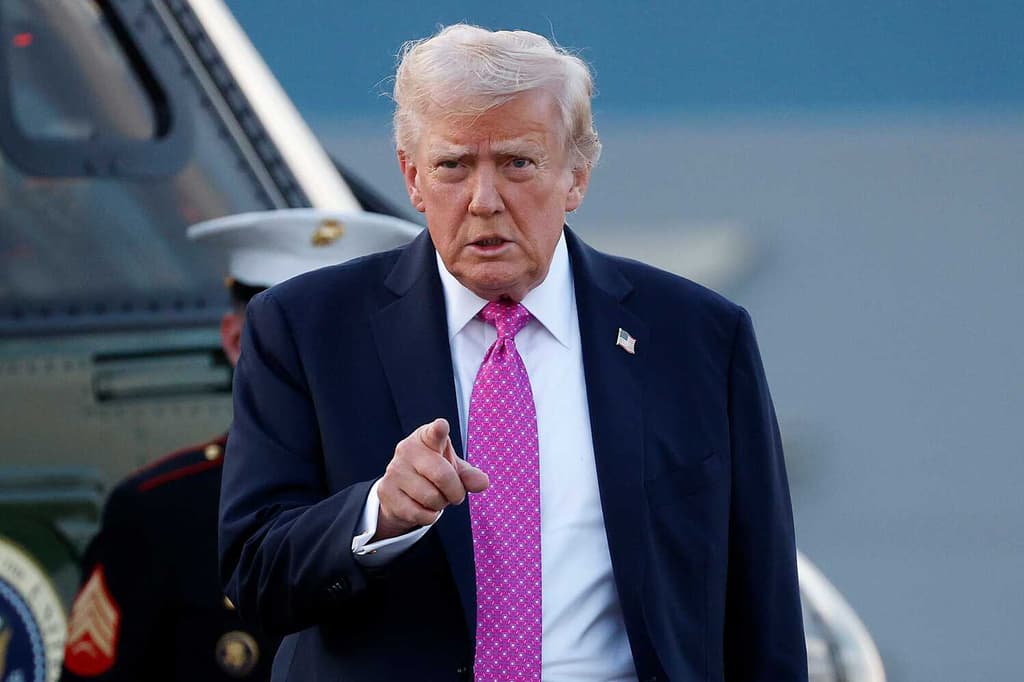
Recent developments in Donald Trump's public appearances highlight his tendency to use pointed criticism against rivals and institutions. During speeches and interviews, he has targeted Democrats, former officials, and journalists with strong language. This rhetorical style aligns with his established approach in political discourse. Key upcoming events, such as scheduled rallies or media appearances, may offer opportunities for additional comments. Market participants assess these patterns alongside his history of engaging directly with audiences on platforms like Truth Social. The frequency of such statements depends on campaign dynamics and current events shaping the political environment.
Resumen experimental generado por IA con datos de Polymarket. Esto no es asesoramiento de trading y no influye en cómo se resuelve este mercado. · ActualizadoWill Trump publicly insult someone on...?
Will Trump publicly insult someone on...?
$503,447 Vol.
31 may 2026
May 17
100%
May 18
90%
May 19
93%
May 20
91%
May 21
90%
May 22
93%
May 23
91%
May 24
89%
May 25
91%
May 26
91%
May 27
92%
May 28
91%
May 29
91%
May 30
91%
May 31
90%
$503,447 Vol.
May 17
$27,657 Vol.
100%
May 18
$3,708 Vol.
90%
May 19
$1,932 Vol.
93%
May 20
$1,663 Vol.
91%
May 21
$647 Vol.
90%
May 22
$947 Vol.
93%
May 23
$147 Vol.
91%
May 24
$479 Vol.
89%
May 25
$626 Vol.
91%
May 26
$735 Vol.
91%
May 27
$1,015 Vol.
92%
May 28
$523 Vol.
91%
May 29
$383 Vol.
91%
May 30
$97 Vol.
91%
May 31
$399 Vol.
90%
This market will resolve to "Yes" if Donald Trump makes any public statement in which he insults, mocks, or attacks any non-fictional individual personally or professionally in a clearly negative manner on the specified date (ET). Otherwise, this market will resolve to "No".
This includes calling the individual weak, stupid, disloyal, a failure, using an insulting nickname, using other derogatory language, or using the negative form of a positive trait in a derogatory personal way (e.g., “He/She isn’t smart”). Negative forms used in reference to the individual's professional actions, policies, or decisions (e.g., “He/She isn’t being smart about this policy”) will not count. Policy disagreements stated without disparaging language will not count.
A direct reference will qualify even if the individual is not named, so long as it is reasonably clear from context that they are the subject.
Any written, verbal, or recorded public statement by Trump qualifies.
The resolution source will be a consensus of credible reporting.Recent developments in Donald Trump's public appearances highlight his tendency to use pointed criticism against rivals and institutions. During speeches and interviews, he has targeted Democrats, former officials, and journalists with strong language. This rhetorical style aligns with his established approach in political discourse. Key upcoming events, such as scheduled rallies or media appearances, may offer opportunities for additional comments. Market participants assess these patterns alongside his history of engaging directly with audiences on platforms like Truth Social. The frequency of such statements depends on campaign dynamics and current events shaping the political environment.
This market will resolve to "Yes" if Donald Trump makes any public statement in which he insults, mocks, or attacks any non-fictional individual personally or professionally in a clearly negative manner on the specified date (ET). Otherwise, this market will resolve to "No".
This includes calling the individual weak, stupid, disloyal, a failure, using an insulting nickname, using other derogatory language, or using the negative form of a positive trait in a derogatory personal way (e.g., “He/She isn’t smart”). Negative forms used in reference to the individual's professional actions, policies, or decisions (e.g., “He/She isn’t being smart about this policy”) will not count. Policy disagreements stated without disparaging language will not count.
A direct reference will qualify even if the individual is not named, so long as it is reasonably clear from context that they are the subject.
Any written, verbal, or recorded public statement by Trump qualifies.
The resolution source will be a consensus of credible reporting.
This includes calling the individual weak, stupid, disloyal, a failure, using an insulting nickname, using other derogatory language, or using the negative form of a positive trait in a derogatory personal way (e.g., “He/She isn’t smart”). Negative forms used in reference to the individual's professional actions, policies, or decisions (e.g., “He/She isn’t being smart about this policy”) will not count. Policy disagreements stated without disparaging language will not count.
A direct reference will qualify even if the individual is not named, so long as it is reasonably clear from context that they are the subject.
Any written, verbal, or recorded public statement by Trump qualifies.
The resolution source will be a consensus of credible reporting.
Mercado abierto: Apr 30, 2026, 11:29 AM ET
Volumen
$503,447Fecha de finalización
31 may 2026Mercado abierto
Apr 30, 2026, 11:29 AM ETResolver
0x65070BE91...This market will resolve to "Yes" if Donald Trump makes any public statement in which he insults, mocks, or attacks any non-fictional individual personally or professionally in a clearly negative manner on the specified date (ET). Otherwise, this market will resolve to "No".
This includes calling the individual weak, stupid, disloyal, a failure, using an insulting nickname, using other derogatory language, or using the negative form of a positive trait in a derogatory personal way (e.g., “He/She isn’t smart”). Negative forms used in reference to the individual's professional actions, policies, or decisions (e.g., “He/She isn’t being smart about this policy”) will not count. Policy disagreements stated without disparaging language will not count.
A direct reference will qualify even if the individual is not named, so long as it is reasonably clear from context that they are the subject.
Any written, verbal, or recorded public statement by Trump qualifies.
The resolution source will be a consensus of credible reporting.Recent developments in Donald Trump's public appearances highlight his tendency to use pointed criticism against rivals and institutions. During speeches and interviews, he has targeted Democrats, former officials, and journalists with strong language. This rhetorical style aligns with his established approach in political discourse. Key upcoming events, such as scheduled rallies or media appearances, may offer opportunities for additional comments. Market participants assess these patterns alongside his history of engaging directly with audiences on platforms like Truth Social. The frequency of such statements depends on campaign dynamics and current events shaping the political environment.
This market will resolve to "Yes" if Donald Trump makes any public statement in which he insults, mocks, or attacks any non-fictional individual personally or professionally in a clearly negative manner on the specified date (ET). Otherwise, this market will resolve to "No".
This includes calling the individual weak, stupid, disloyal, a failure, using an insulting nickname, using other derogatory language, or using the negative form of a positive trait in a derogatory personal way (e.g., “He/She isn’t smart”). Negative forms used in reference to the individual's professional actions, policies, or decisions (e.g., “He/She isn’t being smart about this policy”) will not count. Policy disagreements stated without disparaging language will not count.
A direct reference will qualify even if the individual is not named, so long as it is reasonably clear from context that they are the subject.
Any written, verbal, or recorded public statement by Trump qualifies.
The resolution source will be a consensus of credible reporting.
This includes calling the individual weak, stupid, disloyal, a failure, using an insulting nickname, using other derogatory language, or using the negative form of a positive trait in a derogatory personal way (e.g., “He/She isn’t smart”). Negative forms used in reference to the individual's professional actions, policies, or decisions (e.g., “He/She isn’t being smart about this policy”) will not count. Policy disagreements stated without disparaging language will not count.
A direct reference will qualify even if the individual is not named, so long as it is reasonably clear from context that they are the subject.
Any written, verbal, or recorded public statement by Trump qualifies.
The resolution source will be a consensus of credible reporting.
Volumen
$503,447Fecha de finalización
31 may 2026Mercado abierto
Apr 30, 2026, 11:29 AM ETResolver
0x65070BE91...Recent developments in Donald Trump's public appearances highlight his tendency to use pointed criticism against rivals and institutions. During speeches and interviews, he has targeted Democrats, former officials, and journalists with strong language. This rhetorical style aligns with his established approach in political discourse. Key upcoming events, such as scheduled rallies or media appearances, may offer opportunities for additional comments. Market participants assess these patterns alongside his history of engaging directly with audiences on platforms like Truth Social. The frequency of such statements depends on campaign dynamics and current events shaping the political environment.
Resumen experimental generado por IA con datos de Polymarket. Esto no es asesoramiento de trading y no influye en cómo se resuelve este mercado. · Actualizado
Cuidado con los enlaces externos.
Cuidado con los enlaces externos.
Preguntas frecuentes