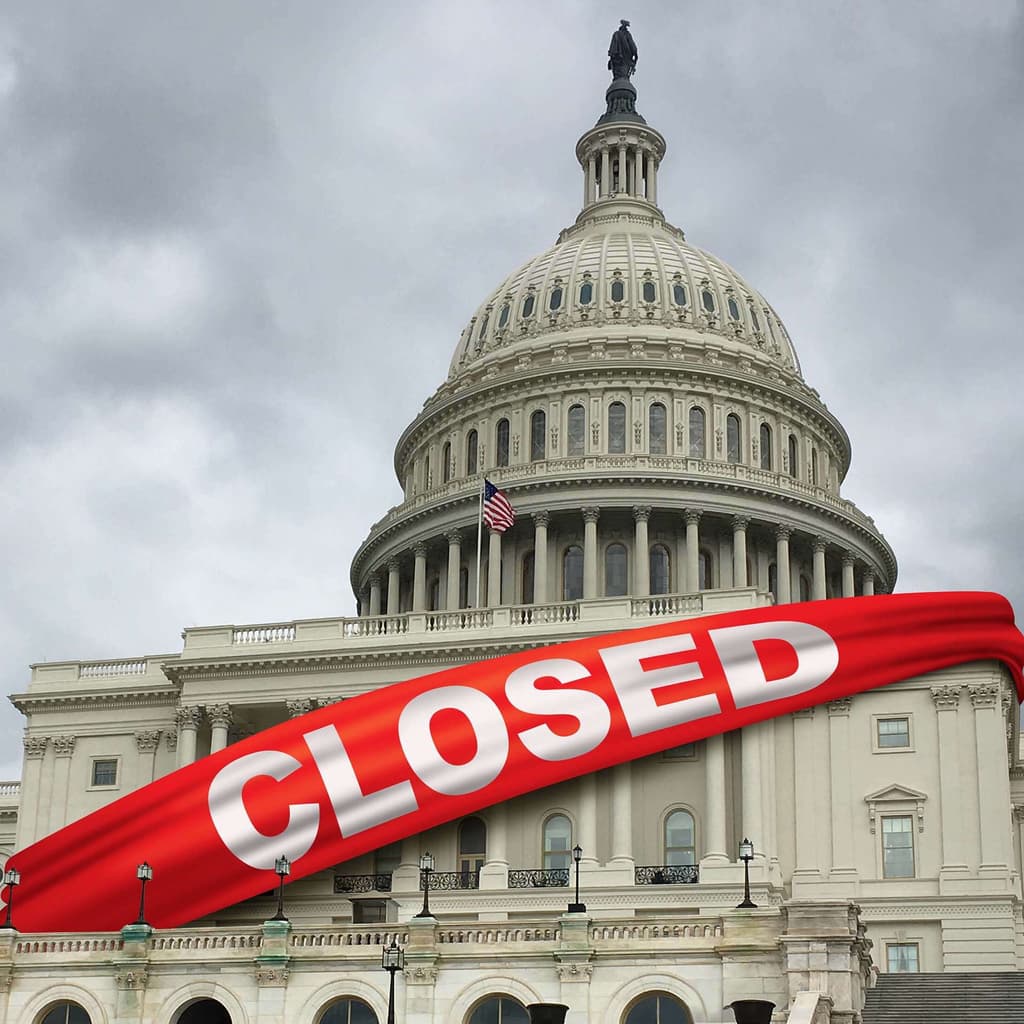
icon for 10월 1일까지 정부 셧다운?

10월 1일까지 정부 셧다운?

icon for 10월 1일까지 정부 셧다운?

10월 1일까지 정부 셧다운?

45% 확률
Polymarket
신규

45% 확률
Polymarket
신규
This market will resolve to "Yes" if the United States federal government enters a shutdown due to a lapse in appropriations by the specified date, 11:59 PM ET. Otherwise, this market will resolve to "No". A U.S. federal government shutdown is considered to have gone into effect when there is a lapse in appropriations that results in federal government agencies suspending non-excepted operations, typically including the furlough of non-excepted federal employees. A lapse in appropriations occurs when Congress fails to enact, or the President fails to sign into law, legislation providing funding authority for federal government operations by an applicable deadline, resulting in a funding lapse. A lapse in appropriations where no federal agencies cease or suspend non-excepted operations will not qualify as a shutdown. Partial shutdowns qualify. A shutdown affecting one or more, but not all, federal agencies constitutes a shutdown. The following will qualify as a shutdown: - An official directive from the Office of Management and Budget (OMB) ordering heads of affected agencies to execute shutdown plans (e.g., an instruction to "execute plans for an orderly shutdown") that is in effect by the specified date and time - An official operating status published by the U.S. Office of Personnel Management (OPM) indicating that, due to a lapse in appropriations, federal government operations are suspended, reduced, or vary by agency (e.g., a notice that "due to a partial lapse in appropriations, Federal Government operations vary by agency") The following will not qualify as a shutdown: - A technical lapse in appropriations where OMB or other authorized authority directs agencies to continue normal or substantially normal operations - Government closures or operating status changes resulting solely from Federal holidays, inclement weather, natural disasters, or other emergencies, unless such closures coincide with a qualifying shutdown caused by a lapse in appropriations The primary resolution source for this market will be official information from the United States government, including the U.S. Office of Personnel Management (OPM); however, a consensus of credible reporting may also be used.Recent partisan divides over spending priorities, particularly immigration enforcement and border security funding, have left the FY2027 appropriations process in its early stages with roughly three months until the September 30 deadline. Congress has advanced several House bills through committee since April, yet full passage remains distant and negotiations often hinge on continuing resolutions or must-pass packages. The 2026 record of partial shutdowns tied to DHS and ICE reforms illustrates how immigration-related riders can stall progress and elevate shutdown risks. With traders assigning only a modest edge to avoiding a lapse by October 1, outcomes depend on whether bipartisan deals emerge on discretionary caps or if disputes over enforcement reforms trigger extended talks or short-term funding gaps.

This market will resolve to "Yes" if the United States federal government enters a shutdown due to a lapse in appropriations by the specified date, 11:59 PM ET. Otherwise, this market will resolve to "No".

A U.S. federal government shutdown is considered to have gone into effect when there is a lapse in appropriations that results in federal government agencies suspending non-excepted operations, typically including the furlough of non-excepted federal employees.

A lapse in appropriations occurs when Congress fails to enact, or the President fails to sign into law, legislation providing funding authority for federal government operations by an applicable deadline, resulting in a funding lapse. A lapse in appropriations where no federal agencies cease or suspend non-excepted operations will not qualify as a shutdown.

Partial shutdowns qualify. A shutdown affecting one or more, but not all, federal agencies constitutes a shutdown.

The following will qualify as a shutdown:

- An official directive from the Office of Management and Budget (OMB) ordering heads of affected agencies to execute shutdown plans (e.g., an instruction to "execute plans for an orderly shutdown") that is in effect by the specified date and time
- An official operating status published by the U.S. Office of Personnel Management (OPM) indicating that, due to a lapse in appropriations, federal government operations are suspended, reduced, or vary by agency (e.g., a notice that "due to a partial lapse in appropriations, Federal Government operations vary by agency")

The following will not qualify as a shutdown:

- A technical lapse in appropriations where OMB or other authorized authority directs agencies to continue normal or substantially normal operations
- Government closures or operating status changes resulting solely from Federal holidays, inclement weather, natural disasters, or other emergencies, unless such closures coincide with a qualifying shutdown caused by a lapse in appropriations

The primary resolution source for this market will be official information from the United States government, including the U.S. Office of Personnel Management (OPM); however, a consensus of credible reporting may also be used.
거래량
$6
종료일
2026.10.02
마켓 개설일
Jun 10, 2026, 12:27 PM ET
This market will resolve to "Yes" if the United States federal government enters a shutdown due to a lapse in appropriations by the specified date, 11:59 PM ET. Otherwise, this market will resolve to "No". A U.S. federal government shutdown is considered to have gone into effect when there is a lapse in appropriations that results in federal government agencies suspending non-excepted operations, typically including the furlough of non-excepted federal employees. A lapse in appropriations occurs when Congress fails to enact, or the President fails to sign into law, legislation providing funding authority for federal government operations by an applicable deadline, resulting in a funding lapse. A lapse in appropriations where no federal agencies cease or suspend non-excepted operations will not qualify as a shutdown. Partial shutdowns qualify. A shutdown affecting one or more, but not all, federal agencies constitutes a shutdown. The following will qualify as a shutdown: - An official directive from the Office of Management and Budget (OMB) ordering heads of affected agencies to execute shutdown plans (e.g., an instruction to "execute plans for an orderly shutdown") that is in effect by the specified date and time - An official operating status published by the U.S. Office of Personnel Management (OPM) indicating that, due to a lapse in appropriations, federal government operations are suspended, reduced, or vary by agency (e.g., a notice that "due to a partial lapse in appropriations, Federal Government operations vary by agency") The following will not qualify as a shutdown: - A technical lapse in appropriations where OMB or other authorized authority directs agencies to continue normal or substantially normal operations - Government closures or operating status changes resulting solely from Federal holidays, inclement weather, natural disasters, or other emergencies, unless such closures coincide with a qualifying shutdown caused by a lapse in appropriations The primary resolution source for this market will be official information from the United States government, including the U.S. Office of Personnel Management (OPM); however, a consensus of credible reporting may also be used.
This market will resolve to "Yes" if the United States federal government enters a shutdown due to a lapse in appropriations by the specified date, 11:59 PM ET. Otherwise, this market will resolve to "No". A U.S. federal government shutdown is considered to have gone into effect when there is a lapse in appropriations that results in federal government agencies suspending non-excepted operations, typically including the furlough of non-excepted federal employees. A lapse in appropriations occurs when Congress fails to enact, or the President fails to sign into law, legislation providing funding authority for federal government operations by an applicable deadline, resulting in a funding lapse. A lapse in appropriations where no federal agencies cease or suspend non-excepted operations will not qualify as a shutdown. Partial shutdowns qualify. A shutdown affecting one or more, but not all, federal agencies constitutes a shutdown. The following will qualify as a shutdown: - An official directive from the Office of Management and Budget (OMB) ordering heads of affected agencies to execute shutdown plans (e.g., an instruction to "execute plans for an orderly shutdown") that is in effect by the specified date and time - An official operating status published by the U.S. Office of Personnel Management (OPM) indicating that, due to a lapse in appropriations, federal government operations are suspended, reduced, or vary by agency (e.g., a notice that "due to a partial lapse in appropriations, Federal Government operations vary by agency") The following will not qualify as a shutdown: - A technical lapse in appropriations where OMB or other authorized authority directs agencies to continue normal or substantially normal operations - Government closures or operating status changes resulting solely from Federal holidays, inclement weather, natural disasters, or other emergencies, unless such closures coincide with a qualifying shutdown caused by a lapse in appropriations The primary resolution source for this market will be official information from the United States government, including the U.S. Office of Personnel Management (OPM); however, a consensus of credible reporting may also be used.Recent partisan divides over spending priorities, particularly immigration enforcement and border security funding, have left the FY2027 appropriations process in its early stages with roughly three months until the September 30 deadline. Congress has advanced several House bills through committee since April, yet full passage remains distant and negotiations often hinge on continuing resolutions or must-pass packages. The 2026 record of partial shutdowns tied to DHS and ICE reforms illustrates how immigration-related riders can stall progress and elevate shutdown risks. With traders assigning only a modest edge to avoiding a lapse by October 1, outcomes depend on whether bipartisan deals emerge on discretionary caps or if disputes over enforcement reforms trigger extended talks or short-term funding gaps.

This market will resolve to "Yes" if the United States federal government enters a shutdown due to a lapse in appropriations by the specified date, 11:59 PM ET. Otherwise, this market will resolve to "No".

A U.S. federal government shutdown is considered to have gone into effect when there is a lapse in appropriations that results in federal government agencies suspending non-excepted operations, typically including the furlough of non-excepted federal employees.

A lapse in appropriations occurs when Congress fails to enact, or the President fails to sign into law, legislation providing funding authority for federal government operations by an applicable deadline, resulting in a funding lapse. A lapse in appropriations where no federal agencies cease or suspend non-excepted operations will not qualify as a shutdown.

Partial shutdowns qualify. A shutdown affecting one or more, but not all, federal agencies constitutes a shutdown.

The following will qualify as a shutdown:

- An official directive from the Office of Management and Budget (OMB) ordering heads of affected agencies to execute shutdown plans (e.g., an instruction to "execute plans for an orderly shutdown") that is in effect by the specified date and time
- An official operating status published by the U.S. Office of Personnel Management (OPM) indicating that, due to a lapse in appropriations, federal government operations are suspended, reduced, or vary by agency (e.g., a notice that "due to a partial lapse in appropriations, Federal Government operations vary by agency")

The following will not qualify as a shutdown:

- A technical lapse in appropriations where OMB or other authorized authority directs agencies to continue normal or substantially normal operations
- Government closures or operating status changes resulting solely from Federal holidays, inclement weather, natural disasters, or other emergencies, unless such closures coincide with a qualifying shutdown caused by a lapse in appropriations

The primary resolution source for this market will be official information from the United States government, including the U.S. Office of Personnel Management (OPM); however, a consensus of credible reporting may also be used.
거래량
$6
종료일
2026.10.02
마켓 개설일
Jun 10, 2026, 12:27 PM ET
This market will resolve to "Yes" if the United States federal government enters a shutdown due to a lapse in appropriations by the specified date, 11:59 PM ET. Otherwise, this market will resolve to "No". A U.S. federal government shutdown is considered to have gone into effect when there is a lapse in appropriations that results in federal government agencies suspending non-excepted operations, typically including the furlough of non-excepted federal employees. A lapse in appropriations occurs when Congress fails to enact, or the President fails to sign into law, legislation providing funding authority for federal government operations by an applicable deadline, resulting in a funding lapse. A lapse in appropriations where no federal agencies cease or suspend non-excepted operations will not qualify as a shutdown. Partial shutdowns qualify. A shutdown affecting one or more, but not all, federal agencies constitutes a shutdown. The following will qualify as a shutdown: - An official directive from the Office of Management and Budget (OMB) ordering heads of affected agencies to execute shutdown plans (e.g., an instruction to "execute plans for an orderly shutdown") that is in effect by the specified date and time - An official operating status published by the U.S. Office of Personnel Management (OPM) indicating that, due to a lapse in appropriations, federal government operations are suspended, reduced, or vary by agency (e.g., a notice that "due to a partial lapse in appropriations, Federal Government operations vary by agency") The following will not qualify as a shutdown: - A technical lapse in appropriations where OMB or other authorized authority directs agencies to continue normal or substantially normal operations - Government closures or operating status changes resulting solely from Federal holidays, inclement weather, natural disasters, or other emergencies, unless such closures coincide with a qualifying shutdown caused by a lapse in appropriations The primary resolution source for this market will be official information from the United States government, including the U.S. Office of Personnel Management (OPM); however, a consensus of credible reporting may also be used.

외부 링크에 주의하세요.

자주 묻는 질문

"10월 1일까지 정부 셧다운?"은 2개의 가능한 결과가 있는 Polymarket의 예측 마켓으로, 트레이더들이 어떤 결과가 발생할지에 따라 주식을 매수 및 매도합니다. 현재 선두 결과는 46%의 "10월 1일까지 정부 셧다운이 있을까요?"입니다. 가격은 실시간 크라우드소싱 확률을 반영합니다. 예를 들어 46¢에 거래되는 주식은 마켓이 해당 결과에 46%의 확률을 부여함을 의미합니다. 이 확률은 트레이더들이 새로운 진전과 정보에 반응함에 따라 지속적으로 변화합니다. 정확한 결과의 주식은 마켓 정산 시 각 $1에 교환 가능합니다.

"10월 1일까지 정부 셧다운?"은 Polymarket에서 새로 생성된 마켓입니다, Jun 10, 2026에 시작됨. 초기 마켓으로서 확률을 설정하고 마켓의 초기 가격 신호를 수립하는 첫 번째 트레이더 중 하나가 될 기회입니다. 이 페이지를 북마크하여 마켓이 성장함에 따라 거래량과 거래 활동을 추적할 수도 있습니다.

"10월 1일까지 정부 셧다운?"에서 거래하려면 이 페이지에 나열된 2개의 가용 결과를 탐색하세요. 각 결과에는 마켓의 내재 확률을 나타내는 현재 가격이 표시됩니다. 포지션을 잡으려면 가장 가능성이 높다고 생각하는 결과를 선택하고, 찬성이면 "Yes", 반대이면 "No"를 선택하고, 금액을 입력하고 "거래"를 클릭하세요. 마켓이 정산될 때 선택한 결과가 맞으면 "Yes" 주식은 각 $1을 지급합니다. 틀리면 $0을 지급합니다. 수익을 확정하거나 손실을 줄이고 싶다면 정산 전 언제든지 주식을 매도할 수 있습니다.

"10월 1일까지 정부 셧다운?"의 현재 유력 후보는 46%의 "10월 1일까지 정부 셧다운이 있을까요?"이며, 마켓이 해당 결과에 46%의 확률을 부여합니다. 이 확률은 트레이더들의 주식 매수 및 매도에 따라 실시간으로 업데이트되어 가장 가능성 있는 결과에 대한 최신 집단 시각을 반영합니다. 새로운 정보가 나타남에 따라 확률이 어떻게 변화하는지 자주 확인하거나 이 페이지를 북마크하세요.

"10월 1일까지 정부 셧다운?"의 정산 규칙은 각 결과가 승자로 선언되기 위해 정확히 무엇이 일어나야 하는지를 정의합니다 — 결과를 결정하는 데 사용되는 공식 데이터 소스를 포함합니다. 이 페이지의 댓글 위 "규칙" 섹션에서 완전한 정산 기준을 검토할 수 있습니다. 거래 전 규칙을 주의 깊게 읽는 것을 권장합니다. 이 마켓이 어떻게 정산되는지를 관리하는 정확한 조건, 예외 사항, 출처를 명시하고 있습니다.