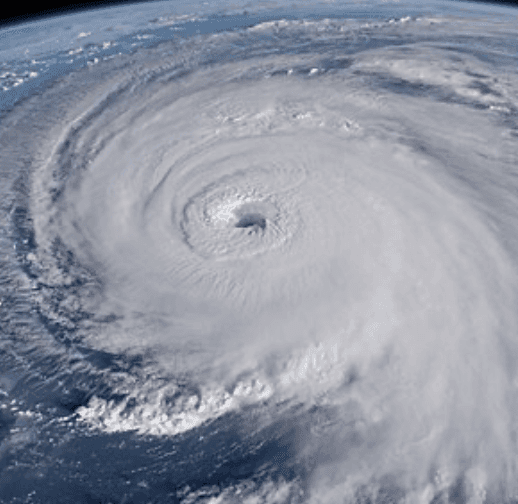
Recent National Hurricane Center monitoring shows Tropical Storm Lala in the central Pacific, designated around August 13 and positioned for likely intensification into a hurricane within days amid favorable sea surface temperatures and reduced wind shear during the seasonal peak. Official guidance highlights this system’s organization and steering patterns that support rapid strengthening before mid-August, aligning with the dominant market-implied odds for formation in the August 13–16 window. In the eastern Pacific, Tropical Depression Hernan is forecast to weaken without reaching hurricane thresholds. Broader basin conditions, including above-average early activity following Genevieve, reinforce trader consensus on near-term development while underscoring forecast uncertainty from evolving model runs and steering influences.
Resumo experimental gerado por IA com dados do Polymarket. Isto não é aconselhamento de trading e não tem qualquer papel na resolução deste mercado. · AtualizadoQuando se formará o próximo furacão no Pacífico?
Quando se formará o próximo furacão no Pacífico?
13 a 16 de agosto de 2026 61%
27 de agosto a 31 de agosto de 2026 29%
17 a 21 de agosto de 2026 16%
22 a 26 de agosto de 2026 7%
13 a 16 de agosto de 2026
75%
17 a 21 de agosto de 2026
27%
22 a 26 de agosto de 2026
9%
27 de agosto a 31 de agosto de 2026
18%
Nenhum furacão no Pacífico se formará em agosto de 2026
2%
13 a 16 de agosto de 2026 61%
27 de agosto a 31 de agosto de 2026 29%
17 a 21 de agosto de 2026 16%
22 a 26 de agosto de 2026 7%
13 a 16 de agosto de 2026
75%
17 a 21 de agosto de 2026
27%
22 a 26 de agosto de 2026
9%
27 de agosto a 31 de agosto de 2026
18%
Nenhum furacão no Pacífico se formará em agosto de 2026
2%
A tropical cyclone is considered a hurricane when it has maximum sustained winds of 74 mph or greater (Category 1 or higher on the Saffir-Simpson Hurricane Wind Scale). For this market, the "Pacific" comprises the Eastern Pacific basin and the Central Pacific basin as tracked by the NHC and CPHC. Systems classified as typhoons do not count. A system is considered to have "formed" as a hurricane at the date and time of the first NHC or CPHC public advisory that classifies a system in these basins as a hurricane. Resolution is based on that first advisory, regardless of any later downward revision or reclassification. The sole determinant of when the hurricane formed is the issuance timestamp of that first classifying advisory, not the estimated time at which the system's winds first reached 74 mph; for a system that straddles midnight between August 31 and September 1, 2026, the applicable bracket is determined solely by whether that advisory's issuance timestamp falls before or after 12:00 AM ET on September 1, 2026.
The bracket "No Pacific hurricane will form in August 2026" will resolve "Yes" if no NHC or CPHC advisory classifies any Eastern Pacific or Central Pacific system as a hurricane at any time from 12:00 AM ET on August 13, 2026 through 11:59 PM ET on August 31, 2026.
The resolution sources for this market are the U.S. National Hurricane Center (NHC), available here: https://www.nhc.noaa.gov/, and the Central Pacific Hurricane Center (CPHC), available here: https://www.nhc.noaa.gov/?cpac
Mercado Aberto: Aug 12, 2026, 11:19 AM ET
Fonte de resolução
https://www.nhc.noaa.gov/Resolver
0x69c47De9D...A tropical cyclone is considered a hurricane when it has maximum sustained winds of 74 mph or greater (Category 1 or higher on the Saffir-Simpson Hurricane Wind Scale). For this market, the "Pacific" comprises the Eastern Pacific basin and the Central Pacific basin as tracked by the NHC and CPHC. Systems classified as typhoons do not count. A system is considered to have "formed" as a hurricane at the date and time of the first NHC or CPHC public advisory that classifies a system in these basins as a hurricane. Resolution is based on that first advisory, regardless of any later downward revision or reclassification. The sole determinant of when the hurricane formed is the issuance timestamp of that first classifying advisory, not the estimated time at which the system's winds first reached 74 mph; for a system that straddles midnight between August 31 and September 1, 2026, the applicable bracket is determined solely by whether that advisory's issuance timestamp falls before or after 12:00 AM ET on September 1, 2026.
The bracket "No Pacific hurricane will form in August 2026" will resolve "Yes" if no NHC or CPHC advisory classifies any Eastern Pacific or Central Pacific system as a hurricane at any time from 12:00 AM ET on August 13, 2026 through 11:59 PM ET on August 31, 2026.
The resolution sources for this market are the U.S. National Hurricane Center (NHC), available here: https://www.nhc.noaa.gov/, and the Central Pacific Hurricane Center (CPHC), available here: https://www.nhc.noaa.gov/?cpac
Fonte de resolução
https://www.nhc.noaa.gov/Resolver
0x69c47De9D...Recent National Hurricane Center monitoring shows Tropical Storm Lala in the central Pacific, designated around August 13 and positioned for likely intensification into a hurricane within days amid favorable sea surface temperatures and reduced wind shear during the seasonal peak. Official guidance highlights this system’s organization and steering patterns that support rapid strengthening before mid-August, aligning with the dominant market-implied odds for formation in the August 13–16 window. In the eastern Pacific, Tropical Depression Hernan is forecast to weaken without reaching hurricane thresholds. Broader basin conditions, including above-average early activity following Genevieve, reinforce trader consensus on near-term development while underscoring forecast uncertainty from evolving model runs and steering influences.
Resumo experimental gerado por IA com dados do Polymarket. Isto não é aconselhamento de trading e não tem qualquer papel na resolução deste mercado. · Atualizado
Cuidado com os links externos.
Cuidado com os links externos.
Frequently Asked Questions