
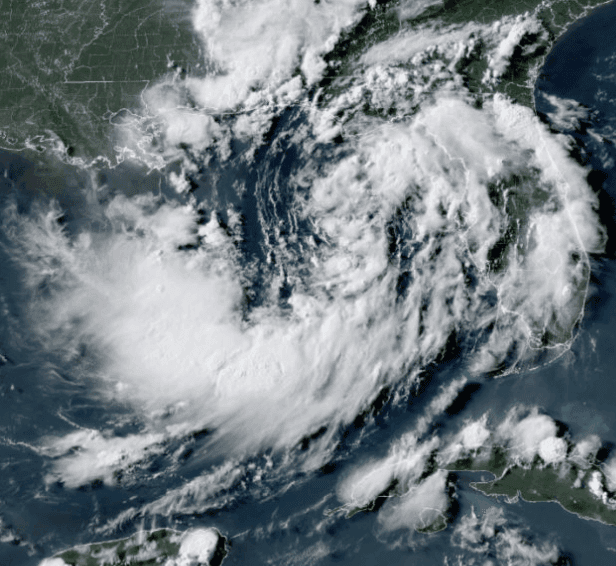
A record-quiet 2026 Atlantic hurricane season, with zero hurricanes formed through mid-September despite passing the climatological peak, underpins the market's heavy weighting toward 0 or 1-3 outcomes. A strong El Niño has produced persistent high wind shear and dry, stable air across the main development region, limiting intensification of the five named tropical storms recorded so far and driving accumulated cyclone energy to roughly 7% of average. NOAA’s August outlook continues to project 2-6 hurricanes for the full season, with most activity expected in the remaining weeks, while NHC guidance shows low near-term formation risk. Late-season windows in October could still add one or two systems if shear relaxes, but current conditions and historical analogs under similar El Niño regimes make totals above three improbable.
Resumo experimental gerado por IA com dados do Polymarket. Isto não é aconselhamento de trading e não tem qualquer papel na resolução deste mercado. · AtualizadoQuantos furacões se formarão durante a temporada de furacões do Atlântico em 2026?
Quantos furacões se formarão durante a temporada de furacões do Atlântico em 2026?
1-3 62%
0 36%
4-6 3.5%
7+ <1%
$31,080 Vol.
$31,080 Vol.
0
36%
1-3
62%
4-6
3%
7+
<1%
1-3 62%
0 36%
4-6 3.5%
7+ <1%
$31,080 Vol.
$31,080 Vol.
0
36%
1-3
62%
4-6
3%
7+
<1%
If there is no storm categorized as a hurricane in the Atlantic during the specified timeframe this market will resolve to "0".
A hurricane is a tropical cyclone with maximum sustained winds of 74 mph or greater (Category 1 or higher on the Saffir-Simpson Hurricane Wind Scale), as described at https://www.nhc.noaa.gov/aboutsshws.php.
This market may resolve based on the initial NHC advisory reporting a qualifying hurricane regardless of any later advisory, retraction, best-track revision, or reanalysis that revises that storm's intensity downward. The official count will be determined by the NHC (nhc.noaa.gov) advisories.
Mercado Aberto: Jul 28, 2026, 4:49 PM ET
Resolver
0x69c47De9D...If there is no storm categorized as a hurricane in the Atlantic during the specified timeframe this market will resolve to "0".
A hurricane is a tropical cyclone with maximum sustained winds of 74 mph or greater (Category 1 or higher on the Saffir-Simpson Hurricane Wind Scale), as described at https://www.nhc.noaa.gov/aboutsshws.php.
This market may resolve based on the initial NHC advisory reporting a qualifying hurricane regardless of any later advisory, retraction, best-track revision, or reanalysis that revises that storm's intensity downward. The official count will be determined by the NHC (nhc.noaa.gov) advisories.
Resolver
0x69c47De9D...A record-quiet 2026 Atlantic hurricane season, with zero hurricanes formed through mid-September despite passing the climatological peak, underpins the market's heavy weighting toward 0 or 1-3 outcomes. A strong El Niño has produced persistent high wind shear and dry, stable air across the main development region, limiting intensification of the five named tropical storms recorded so far and driving accumulated cyclone energy to roughly 7% of average. NOAA’s August outlook continues to project 2-6 hurricanes for the full season, with most activity expected in the remaining weeks, while NHC guidance shows low near-term formation risk. Late-season windows in October could still add one or two systems if shear relaxes, but current conditions and historical analogs under similar El Niño regimes make totals above three improbable.
Resumo experimental gerado por IA com dados do Polymarket. Isto não é aconselhamento de trading e não tem qualquer papel na resolução deste mercado. · Atualizado

Cuidado com os links externos.
Cuidado com os links externos.
Frequently Asked Questions