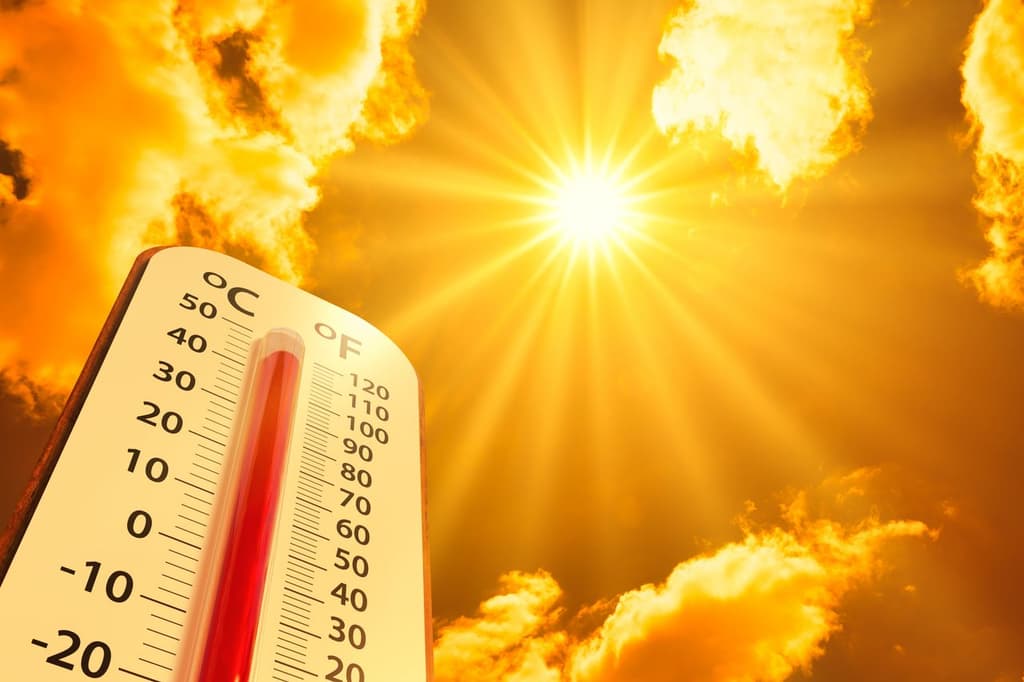
A strengthening El Niño event, with Niño 3.4 anomalies already exceeding +2.7°C and forecasts pointing toward a record peak near +4°C by late 2026, is the dominant driver pushing August 2026 global mean surface temperatures toward the 1.38–1.41°C anomaly bin (relative to 1850–1900). Background anthropogenic warming, combined with record ocean heat content and marine heatwaves, has sustained elevated anomalies through the northern summer, as confirmed by ERA5, ECMWF, and Berkeley Earth analyses showing July at ~1.56°C and August on pace for the warmest or second-warmest month on record. Model ensembles and near-real-time observations indicate limited downside risk below 1.38°C, though final monthly averages carry small uncertainty from late-month variability and dataset differences. Upcoming Copernicus and NOAA releases will refine resolution criteria for these market-implied probabilities.
สรุปจาก AI ทดลองที่อ้างอิงข้อมูลจาก Polymarket ไม่ใช่คำแนะนำในการเทรดและไม่มีผลต่อการตัดสินตลาดนี้ · อัปเดตแล้วAugust 2026 Temperature Increase (ºC) (HIGHER STRIKES)
August 2026 Temperature Increase (ºC) (HIGHER STRIKES)
1.38–1.41ºC 80%
1.42–1.45ºC 18%
>1.45ºC 3.4%
1.34–1.37ºC 1.7%
$13,074 ปริมาณ
$13,074 ปริมาณ
<1.30ºC
<1%
1.30–1.33ºC
1%
1.34–1.37ºC
2%
1.38–1.41ºC
80%
1.42–1.45ºC
18%
>1.45ºC
3%
1.38–1.41ºC 80%
1.42–1.45ºC 18%
>1.45ºC 3.4%
1.34–1.37ºC 1.7%
$13,074 ปริมาณ
$13,074 ปริมาณ
<1.30ºC
<1%
1.30–1.33ºC
1%
1.34–1.37ºC
2%
1.38–1.41ºC
80%
1.42–1.45ºC
18%
>1.45ºC
3%
An anomaly within a named bracket for August 2026 is necessary and sufficient to resolve this market immediately once the data becomes available, regardless of whether the figure for August 2026 is later revised.
The primary resolution source for this market will be the figure found in the table titled "GLOBAL Land-Ocean Temperature Index in 0.01 degrees Celsius" under the column "Aug" in the row "2026" (https://data.giss.nasa.gov/gistemp/tabledata_v4/GLB.Ts+dSST.txt).
If NASA’s “Global Temperature Index” is rendered permanently unavailable, other information from NASA may be used.
If no information for August 2026 is provided by NASA by October 1, 2026, 11:59 PM ET, this market will resolve to the lowest range bracket.
ตลาดเปิดเมื่อ: Aug 14, 2026, 2:30 PM ET
ผู้ตัดสินผล
0x69c47De9D...An anomaly within a named bracket for August 2026 is necessary and sufficient to resolve this market immediately once the data becomes available, regardless of whether the figure for August 2026 is later revised.
The primary resolution source for this market will be the figure found in the table titled "GLOBAL Land-Ocean Temperature Index in 0.01 degrees Celsius" under the column "Aug" in the row "2026" (https://data.giss.nasa.gov/gistemp/tabledata_v4/GLB.Ts+dSST.txt).
If NASA’s “Global Temperature Index” is rendered permanently unavailable, other information from NASA may be used.
If no information for August 2026 is provided by NASA by October 1, 2026, 11:59 PM ET, this market will resolve to the lowest range bracket.
ผู้ตัดสินผล
0x69c47De9D...A strengthening El Niño event, with Niño 3.4 anomalies already exceeding +2.7°C and forecasts pointing toward a record peak near +4°C by late 2026, is the dominant driver pushing August 2026 global mean surface temperatures toward the 1.38–1.41°C anomaly bin (relative to 1850–1900). Background anthropogenic warming, combined with record ocean heat content and marine heatwaves, has sustained elevated anomalies through the northern summer, as confirmed by ERA5, ECMWF, and Berkeley Earth analyses showing July at ~1.56°C and August on pace for the warmest or second-warmest month on record. Model ensembles and near-real-time observations indicate limited downside risk below 1.38°C, though final monthly averages carry small uncertainty from late-month variability and dataset differences. Upcoming Copernicus and NOAA releases will refine resolution criteria for these market-implied probabilities.
สรุปจาก AI ทดลองที่อ้างอิงข้อมูลจาก Polymarket ไม่ใช่คำแนะนำในการเทรดและไม่มีผลต่อการตัดสินตลาดนี้ · อัปเดตแล้ว

ระวังลิงก์ภายนอก
ระวังลิงก์ภายนอก
คำถามที่พบบ่อย