

**Israeli airspace closures stem primarily from security threats tied to the Israel-Iran conflict and associated missile or drone activity from Iran and allied groups such as Hezbollah.** Strikes and retaliatory barrages since February 2026, including major Iranian attacks in June, have repeatedly prompted temporary suspensions or broad restrictions at Ben Gurion Airport and across civilian airspace, distinct from holiday-related measures. A fragile April ceasefire allowed partial reopenings and limited foreign carrier operations under controlled restrictions, yet warnings from EASA and other regulators highlight ongoing risks through September 2026. As of mid-September, authorities maintain restricted but not fully suspended civilian flights, with some international services resuming in October and November. Trader consensus on near-term closure probabilities reflects the potential for any significant escalation—via new attacks or responses—to trigger a qualifying broad suspension before the resolution window, consistent with prior NOTAM patterns and wartime protocols. Diplomatic or military developments in the coming weeks remain key variables.
Eksperimental na AI-generated summary na nire-reference ang Polymarket data. Hindi ito trading advice at wala itong papel sa kung paano nire-resolve ang market na ito. · Na-update$27,619 Vol.
September 30
5%
October 31
13%
December 31
22%
$27,619 Vol.
September 30
5%
October 31
13%
December 31
22%
A qualifying closure occurs when the aviation or governmental authority responsible for overseeing the specified airspace region issues a Notice to Airmen (NOTAM), or other official order under the regulations of the jurisdiction responsible for that airspace region, which generally cancels or suspends commercial aviation across the specified airspace region, and such closure is not excluded under the exclusions provision below. A qualifying closure must apply generally to commercial flights transiting, arriving in, and departing from the specified airspace region. A closure is not disqualified because the order permits limited exceptions, including humanitarian, medical, repatriation, or emergency flights, or select flights authorized by the responsible authority, provided that commercial flights are prohibited by default, rather than permitted subject to conditions or restrictions.
The following are not qualifying closures: (i) closures due to weather, including volcanic and seismic activity; (ii) closures for holidays or religious observances; (iii) closures planned or announced before Contract Issuance; (iv) closures occurring on a regular cadence whose occurrence was determined before Contract Issuance, even if not announced; (v) closures resulting from the failure or malfunction of air traffic control, navigation, communications, power, or other technical systems; (vi) restrictions applying to aircraft by nationality, state of registry, operator, or ownership rather than to commercial traffic generally; (vii) closures of a subset of the specified airspace region, including geographic sectors and altitude bands; (viii) ground stops, flow restrictions, capacity reductions, or other air traffic management measures that delay or restrict traffic without closing the specified airspace region to commercial aviation; and (ix) warnings, no-fly zones, flight suspensions, or other restrictions imposed by any party other than the aviation or governmental authorities responsible for overseeing the specified airspace region.
A qualifying closure is deemed to occur at the time the closure takes effect, regardless of when the closure is announced or the order is issued. Where no effective time is included in the order, the closure is deemed to take effect at the time the order is issued.
The resolution sources for this market will be official information from the Israeli government, including the Ministry of Transport, the Civil Aviation Authority, and the Israel Airports Authority, and a consensus of credible reporting.
Binuksan ang Market: Sep 15, 2026, 5:29 PM ET
Resolver
0x65070BE91...A qualifying closure occurs when the aviation or governmental authority responsible for overseeing the specified airspace region issues a Notice to Airmen (NOTAM), or other official order under the regulations of the jurisdiction responsible for that airspace region, which generally cancels or suspends commercial aviation across the specified airspace region, and such closure is not excluded under the exclusions provision below. A qualifying closure must apply generally to commercial flights transiting, arriving in, and departing from the specified airspace region. A closure is not disqualified because the order permits limited exceptions, including humanitarian, medical, repatriation, or emergency flights, or select flights authorized by the responsible authority, provided that commercial flights are prohibited by default, rather than permitted subject to conditions or restrictions.
The following are not qualifying closures: (i) closures due to weather, including volcanic and seismic activity; (ii) closures for holidays or religious observances; (iii) closures planned or announced before Contract Issuance; (iv) closures occurring on a regular cadence whose occurrence was determined before Contract Issuance, even if not announced; (v) closures resulting from the failure or malfunction of air traffic control, navigation, communications, power, or other technical systems; (vi) restrictions applying to aircraft by nationality, state of registry, operator, or ownership rather than to commercial traffic generally; (vii) closures of a subset of the specified airspace region, including geographic sectors and altitude bands; (viii) ground stops, flow restrictions, capacity reductions, or other air traffic management measures that delay or restrict traffic without closing the specified airspace region to commercial aviation; and (ix) warnings, no-fly zones, flight suspensions, or other restrictions imposed by any party other than the aviation or governmental authorities responsible for overseeing the specified airspace region.
A qualifying closure is deemed to occur at the time the closure takes effect, regardless of when the closure is announced or the order is issued. Where no effective time is included in the order, the closure is deemed to take effect at the time the order is issued.
The resolution sources for this market will be official information from the Israeli government, including the Ministry of Transport, the Civil Aviation Authority, and the Israel Airports Authority, and a consensus of credible reporting.
Resolver
0x65070BE91...**Israeli airspace closures stem primarily from security threats tied to the Israel-Iran conflict and associated missile or drone activity from Iran and allied groups such as Hezbollah.** Strikes and retaliatory barrages since February 2026, including major Iranian attacks in June, have repeatedly prompted temporary suspensions or broad restrictions at Ben Gurion Airport and across civilian airspace, distinct from holiday-related measures. A fragile April ceasefire allowed partial reopenings and limited foreign carrier operations under controlled restrictions, yet warnings from EASA and other regulators highlight ongoing risks through September 2026. As of mid-September, authorities maintain restricted but not fully suspended civilian flights, with some international services resuming in October and November. Trader consensus on near-term closure probabilities reflects the potential for any significant escalation—via new attacks or responses—to trigger a qualifying broad suspension before the resolution window, consistent with prior NOTAM patterns and wartime protocols. Diplomatic or military developments in the coming weeks remain key variables.
Eksperimental na AI-generated summary na nire-reference ang Polymarket data. Hindi ito trading advice at wala itong papel sa kung paano nire-resolve ang market na ito. · Na-update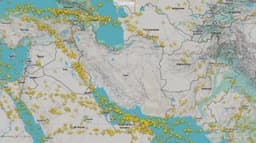

Mag-ingat sa mga external link.
Mag-ingat sa mga external link.
Mga Madalas na Tanong