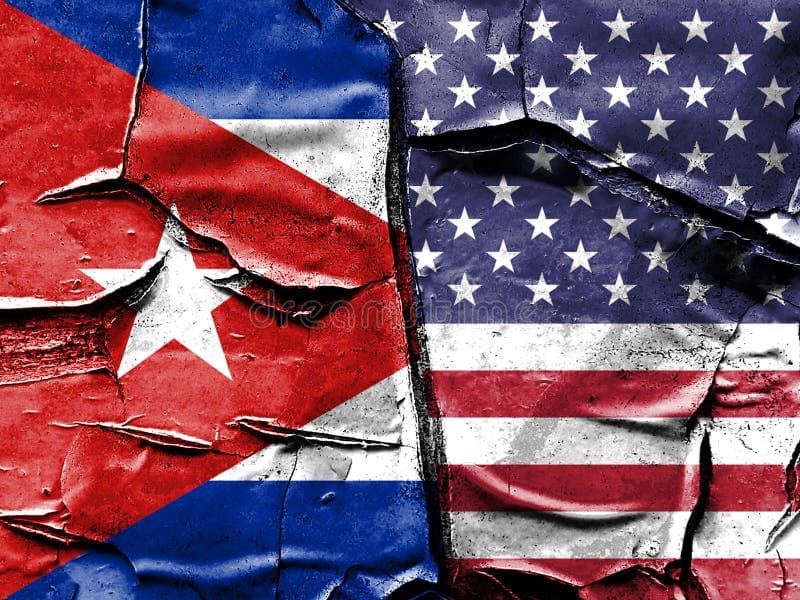
The 2026 Cuban crisis, triggered by U.S. efforts to halt Venezuelan oil supplies after the January capture of Nicolás Maduro, centers on sustained economic pressure through fuel blockades, tariffs on third-country shipments, and expanded sanctions targeting energy sectors since June. These measures have deepened Cuba's shortages and blackouts while U.S. officials, including Defense Secretary Pete Hegseth, have issued warnings over Cuban drone acquisitions from Russia and Iran. Naval assets such as the USS Nimitz carrier strike group deployed to the Caribbean in May alongside increased surveillance flights, Marine rotations, and an indictment of Raúl Castro. Cuba has rejected negotiations tied to regime change, mobilized civilians, and received limited humanitarian aid. Scheduled U.S. Southern Command activities and any diplomatic shifts or escalation signals through late 2026 remain key variables for traders assessing timelines for military options.
Eksperimental na AI-generated summary na nire-reference ang Polymarket data. Hindi ito trading advice at wala itong papel sa kung paano nire-resolve ang market na ito. · Na-updateAksyong militar ng US laban sa Cuba sa pamamagitan ng...?
Aksyong militar ng US laban sa Cuba sa pamamagitan ng...?
$7,285,521 Vol.
Disyembre 31
18%
$7,285,521 Vol.
Disyembre 31
18%
For the purposes of this market, a qualifying "strike" is defined as the use of aerial bombs, drones, or missiles (including FPV and ATGM strikes as well as cruise or ballistic missiles) launched by any United States operatives, including military forces, intelligence agencies, or other U.S. government operatives, that physically impact ground territory within the listed country.
A strike on any area within the terrestrial territory (including rivers, lakes, ports, but excluding territorial sea) of the listed country counts.
Missiles or drones that are intercepted and surface-to-air missile strikes will not be sufficient for a "Yes" resolution, regardless of whether they land territory or cause damage.
Actions such as artillery fire, small arms fire, ground incursions, naval shelling, or cyberattacks will not qualify.
Any strike occurring during this market’s timeframe that is claimed by either Donald Trump or the U.S. government will qualify.
The primary resolution source will be a consensus of credible reporting.
This market will remain open until the end of the second day after the resolution time. If the date/time of a qualifying strike cannot be confirmed by a consensus of credible reporting by that time, it will resolve to "No" regardless of whether a strike was later confirmed to have taken place.
Binuksan ang Market: Jan 4, 2026, 3:08 PM ET
Resolver
0x65070BE91...For the purposes of this market, a qualifying "strike" is defined as the use of aerial bombs, drones, or missiles (including FPV and ATGM strikes as well as cruise or ballistic missiles) launched by any United States operatives, including military forces, intelligence agencies, or other U.S. government operatives, that physically impact ground territory within the listed country.
A strike on any area within the terrestrial territory (including rivers, lakes, ports, but excluding territorial sea) of the listed country counts.
Missiles or drones that are intercepted and surface-to-air missile strikes will not be sufficient for a "Yes" resolution, regardless of whether they land territory or cause damage.
Actions such as artillery fire, small arms fire, ground incursions, naval shelling, or cyberattacks will not qualify.
Any strike occurring during this market’s timeframe that is claimed by either Donald Trump or the U.S. government will qualify.
The primary resolution source will be a consensus of credible reporting.
This market will remain open until the end of the second day after the resolution time. If the date/time of a qualifying strike cannot be confirmed by a consensus of credible reporting by that time, it will resolve to "No" regardless of whether a strike was later confirmed to have taken place.
Resolver
0x65070BE91...The 2026 Cuban crisis, triggered by U.S. efforts to halt Venezuelan oil supplies after the January capture of Nicolás Maduro, centers on sustained economic pressure through fuel blockades, tariffs on third-country shipments, and expanded sanctions targeting energy sectors since June. These measures have deepened Cuba's shortages and blackouts while U.S. officials, including Defense Secretary Pete Hegseth, have issued warnings over Cuban drone acquisitions from Russia and Iran. Naval assets such as the USS Nimitz carrier strike group deployed to the Caribbean in May alongside increased surveillance flights, Marine rotations, and an indictment of Raúl Castro. Cuba has rejected negotiations tied to regime change, mobilized civilians, and received limited humanitarian aid. Scheduled U.S. Southern Command activities and any diplomatic shifts or escalation signals through late 2026 remain key variables for traders assessing timelines for military options.
Eksperimental na AI-generated summary na nire-reference ang Polymarket data. Hindi ito trading advice at wala itong papel sa kung paano nire-resolve ang market na ito. · Na-update


Mag-ingat sa mga external link.
Mag-ingat sa mga external link.
Mga Madalas na Tanong