
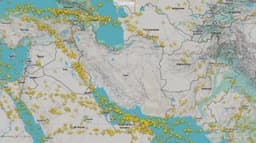
US sanctions announced in early September and set to take effect September 23, 2026, target remaining Iranian airlines and foreign providers of fuel, landing services, and ticketing, with secondary penalties threatening exclusion from the dollar system. These steps build on earlier designations and have already prompted Turkish carriers to suspend services through at least March 2027. Iranian airspace (Tehran FIR) remains only partially open, with the western sector largely restricted and EASA maintaining a no-fly advisory through September 30 amid fragile US-Iran ceasefire terms, recent strikes on IRGC targets, and risks around the Strait of Hormuz. Regulators and airlines continue rerouting to avoid misidentification or escalation, sustaining elevated barriers to full commercial operations.
基于Polymarket数据的AI实验性摘要。这不是交易建议,也不影响该市场的结算方式。 · 更新于伊朗在……之前全面关闭领空?
伊朗在……之前全面关闭领空?
$9,699,909 交易量
9月30日
4%
10月31日
13%
12月31日
26%
$9,699,909 交易量
9月30日
4%
10月31日
13%
12月31日
26%
A “general closure” refers to a cancellation or suspension of aviation which is generally applicable to all commercial flights transiting Iranian airspace (“Tehran FIR”). A qualifying closure must apply generally to all of Iran or the Tehran FIR; limited cancellations, delays, or partial closures will not qualify. A closure which applies generally to commercial aviation across Iranian airspace, with limited exceptions for certain categories of flights, however, will qualify (e.g. exceptions for certain flights pre-approved by the Iranian Civil Aviation Authority may be permitted).
Qualifying previous examples include the February 28, 2026 total closure of Iranian airspace (https://www.iranintl.com/en/202602289115) and the January 2026 total closure of Iranian airspace except to international flights with express governmental permission (https://www.reuters.com/world/middle-east/iran-shuts-airspace-most-flights-flightradar24-says-2026-01-14/). Non-qualifying examples include the January 27, 2026 partial closure of Iranian airspace around the Strait of Hormuz (https://www.aa.com.tr/en/middle-east/iran-issues-airspace-notice-for-military-drills-near-strait-of-hormuz/3812508), the April 2024 closure of Iran’s western airspace (https://www.reuters.com/world/middle-east/iranian-airports-cancel-flights-until-monday-morning-2024-04-14/), and the January 25 - April 25, 2026 VFR (Visual Flight Rules) flights suspension which did not broadly close commercial aviation in Iran (https://www.intellinews.com/iran-suspends-general-aviation-and-vfr-flights-in-new-airspace-directive-421997/).
Warnings, No-Fly-Zones, or other flight restrictions imposed by airlines or countries other than Iran will not be sufficient for a “Yes” resolution.
Airspace closures which occur solely due to weather conditions, earthquakes, or volcanic eruptions, will not qualify.
The primary resolution sources for this market will be official information from Iranian aviation authorities and a consensus of credible reporting.
市场开放时间: Jul 27, 2026, 1:36 PM ET
A “general closure” refers to a cancellation or suspension of aviation which is generally applicable to all commercial flights transiting Iranian airspace (“Tehran FIR”). A qualifying closure must apply generally to all of Iran or the Tehran FIR; limited cancellations, delays, or partial closures will not qualify. A closure which applies generally to commercial aviation across Iranian airspace, with limited exceptions for certain categories of flights, however, will qualify (e.g. exceptions for certain flights pre-approved by the Iranian Civil Aviation Authority may be permitted).
Qualifying previous examples include the February 28, 2026 total closure of Iranian airspace (https://www.iranintl.com/en/202602289115) and the January 2026 total closure of Iranian airspace except to international flights with express governmental permission (https://www.reuters.com/world/middle-east/iran-shuts-airspace-most-flights-flightradar24-says-2026-01-14/). Non-qualifying examples include the January 27, 2026 partial closure of Iranian airspace around the Strait of Hormuz (https://www.aa.com.tr/en/middle-east/iran-issues-airspace-notice-for-military-drills-near-strait-of-hormuz/3812508), the April 2024 closure of Iran’s western airspace (https://www.reuters.com/world/middle-east/iranian-airports-cancel-flights-until-monday-morning-2024-04-14/), and the January 25 - April 25, 2026 VFR (Visual Flight Rules) flights suspension which did not broadly close commercial aviation in Iran (https://www.intellinews.com/iran-suspends-general-aviation-and-vfr-flights-in-new-airspace-directive-421997/).
Warnings, No-Fly-Zones, or other flight restrictions imposed by airlines or countries other than Iran will not be sufficient for a “Yes” resolution.
Airspace closures which occur solely due to weather conditions, earthquakes, or volcanic eruptions, will not qualify.
The primary resolution sources for this market will be official information from Iranian aviation authorities and a consensus of credible reporting.
US sanctions announced in early September and set to take effect September 23, 2026, target remaining Iranian airlines and foreign providers of fuel, landing services, and ticketing, with secondary penalties threatening exclusion from the dollar system. These steps build on earlier designations and have already prompted Turkish carriers to suspend services through at least March 2027. Iranian airspace (Tehran FIR) remains only partially open, with the western sector largely restricted and EASA maintaining a no-fly advisory through September 30 amid fragile US-Iran ceasefire terms, recent strikes on IRGC targets, and risks around the Strait of Hormuz. Regulators and airlines continue rerouting to avoid misidentification or escalation, sustaining elevated barriers to full commercial operations.
基于Polymarket数据的AI实验性摘要。这不是交易建议,也不影响该市场的结算方式。 · 更新于

警惕外部链接哦。
警惕外部链接哦。
常见问题