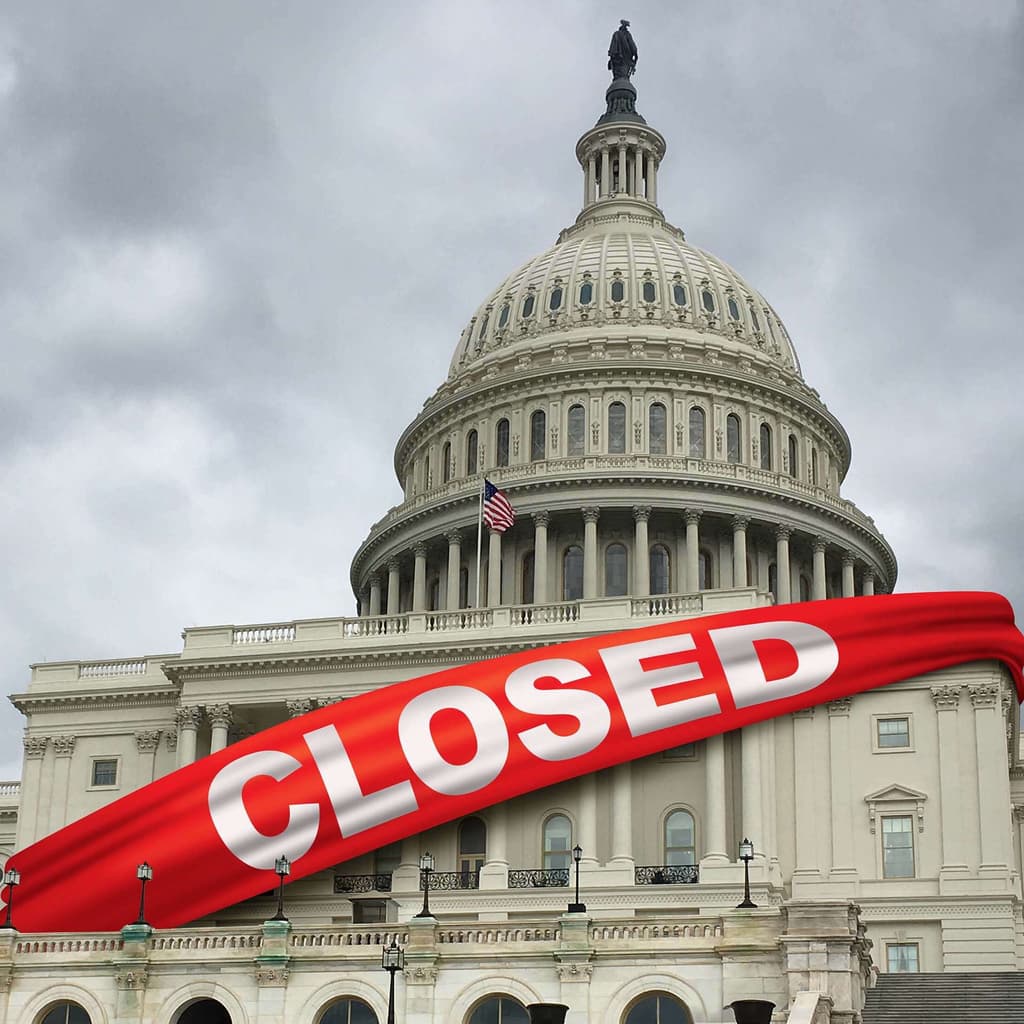
Congress has several months before the October 1, 2026, start of fiscal year 2027 to advance the 12 annual appropriations bills or enact a continuing resolution. Recent resolution of prior funding disputes, including the end of a partial Department of Homeland Security shutdown on April 30, has reduced immediate pressure and allowed lawmakers to shift focus to longer-term budget negotiations. With no major new legislative deadlines or unresolved must-pass measures in the immediate term, trader consensus reflected in the 57.5% probability for no shutdown by that date aligns with the extended window for bipartisan agreement on spending levels.
Experimentelle KI-generierte Zusammenfassung mit Polymarket-Daten. Dies ist keine Handelsberatung und spielt keine Rolle bei der Auflösung dieses Marktes. · AktualisiertJa
NEU
NEU
2. Okt. 2026
Ja
NEU
NEU
2. Okt. 2026
This market will resolve to "Yes" if the United States federal government enters a shutdown due to a lapse in appropriations by the specified date, 11:59 PM ET. Otherwise, this market will resolve to "No".
A U.S. federal government shutdown is considered to have gone into effect when there is a lapse in appropriations that results in federal government agencies suspending non-excepted operations, typically including the furlough of non-excepted federal employees.
A lapse in appropriations occurs when Congress fails to enact, or the President fails to sign into law, legislation providing funding authority for federal government operations by an applicable deadline, resulting in a funding lapse. A lapse in appropriations where no federal agencies cease or suspend non-excepted operations will not qualify as a shutdown.
Partial shutdowns qualify. A shutdown affecting one or more, but not all, federal agencies constitutes a shutdown.
The following will qualify as a shutdown:
- An official directive from the Office of Management and Budget (OMB) ordering heads of affected agencies to execute shutdown plans (e.g., an instruction to "execute plans for an orderly shutdown") that is in effect by the specified date and time
- An official operating status published by the U.S. Office of Personnel Management (OPM) indicating that, due to a lapse in appropriations, federal government operations are suspended, reduced, or vary by agency (e.g., a notice that "due to a partial lapse in appropriations, Federal Government operations vary by agency")
The following will not qualify as a shutdown:
- A technical lapse in appropriations where OMB or other authorized authority directs agencies to continue normal or substantially normal operations
- Government closures or operating status changes resulting solely from Federal holidays, inclement weather, natural disasters, or other emergencies, unless such closures coincide with a qualifying shutdown caused by a lapse in appropriations
The primary resolution source for this market will be official information from the United States government, including the U.S. Office of Personnel Management (OPM); however, a consensus of credible reporting may also be used.Congress has several months before the October 1, 2026, start of fiscal year 2027 to advance the 12 annual appropriations bills or enact a continuing resolution. Recent resolution of prior funding disputes, including the end of a partial Department of Homeland Security shutdown on April 30, has reduced immediate pressure and allowed lawmakers to shift focus to longer-term budget negotiations. With no major new legislative deadlines or unresolved must-pass measures in the immediate term, trader consensus reflected in the 57.5% probability for no shutdown by that date aligns with the extended window for bipartisan agreement on spending levels.
This market will resolve to "Yes" if the United States federal government enters a shutdown due to a lapse in appropriations by the specified date, 11:59 PM ET. Otherwise, this market will resolve to "No".
A U.S. federal government shutdown is considered to have gone into effect when there is a lapse in appropriations that results in federal government agencies suspending non-excepted operations, typically including the furlough of non-excepted federal employees.
A lapse in appropriations occurs when Congress fails to enact, or the President fails to sign into law, legislation providing funding authority for federal government operations by an applicable deadline, resulting in a funding lapse. A lapse in appropriations where no federal agencies cease or suspend non-excepted operations will not qualify as a shutdown.
Partial shutdowns qualify. A shutdown affecting one or more, but not all, federal agencies constitutes a shutdown.
The following will qualify as a shutdown:
- An official directive from the Office of Management and Budget (OMB) ordering heads of affected agencies to execute shutdown plans (e.g., an instruction to "execute plans for an orderly shutdown") that is in effect by the specified date and time
- An official operating status published by the U.S. Office of Personnel Management (OPM) indicating that, due to a lapse in appropriations, federal government operations are suspended, reduced, or vary by agency (e.g., a notice that "due to a partial lapse in appropriations, Federal Government operations vary by agency")
The following will not qualify as a shutdown:
- A technical lapse in appropriations where OMB or other authorized authority directs agencies to continue normal or substantially normal operations
- Government closures or operating status changes resulting solely from Federal holidays, inclement weather, natural disasters, or other emergencies, unless such closures coincide with a qualifying shutdown caused by a lapse in appropriations
The primary resolution source for this market will be official information from the United States government, including the U.S. Office of Personnel Management (OPM); however, a consensus of credible reporting may also be used.
A U.S. federal government shutdown is considered to have gone into effect when there is a lapse in appropriations that results in federal government agencies suspending non-excepted operations, typically including the furlough of non-excepted federal employees.
A lapse in appropriations occurs when Congress fails to enact, or the President fails to sign into law, legislation providing funding authority for federal government operations by an applicable deadline, resulting in a funding lapse. A lapse in appropriations where no federal agencies cease or suspend non-excepted operations will not qualify as a shutdown.
Partial shutdowns qualify. A shutdown affecting one or more, but not all, federal agencies constitutes a shutdown.
The following will qualify as a shutdown:
- An official directive from the Office of Management and Budget (OMB) ordering heads of affected agencies to execute shutdown plans (e.g., an instruction to "execute plans for an orderly shutdown") that is in effect by the specified date and time
- An official operating status published by the U.S. Office of Personnel Management (OPM) indicating that, due to a lapse in appropriations, federal government operations are suspended, reduced, or vary by agency (e.g., a notice that "due to a partial lapse in appropriations, Federal Government operations vary by agency")
The following will not qualify as a shutdown:
- A technical lapse in appropriations where OMB or other authorized authority directs agencies to continue normal or substantially normal operations
- Government closures or operating status changes resulting solely from Federal holidays, inclement weather, natural disasters, or other emergencies, unless such closures coincide with a qualifying shutdown caused by a lapse in appropriations
The primary resolution source for this market will be official information from the United States government, including the U.S. Office of Personnel Management (OPM); however, a consensus of credible reporting may also be used.
Markt eröffnet: Jun 10, 2026, 12:27 PM ET
Volumen
$6Enddatum
2. Okt. 2026Markt eröffnet
Jun 10, 2026, 12:27 PM ETResolver
0x65070BE91...This market will resolve to "Yes" if the United States federal government enters a shutdown due to a lapse in appropriations by the specified date, 11:59 PM ET. Otherwise, this market will resolve to "No".
A U.S. federal government shutdown is considered to have gone into effect when there is a lapse in appropriations that results in federal government agencies suspending non-excepted operations, typically including the furlough of non-excepted federal employees.
A lapse in appropriations occurs when Congress fails to enact, or the President fails to sign into law, legislation providing funding authority for federal government operations by an applicable deadline, resulting in a funding lapse. A lapse in appropriations where no federal agencies cease or suspend non-excepted operations will not qualify as a shutdown.
Partial shutdowns qualify. A shutdown affecting one or more, but not all, federal agencies constitutes a shutdown.
The following will qualify as a shutdown:
- An official directive from the Office of Management and Budget (OMB) ordering heads of affected agencies to execute shutdown plans (e.g., an instruction to "execute plans for an orderly shutdown") that is in effect by the specified date and time
- An official operating status published by the U.S. Office of Personnel Management (OPM) indicating that, due to a lapse in appropriations, federal government operations are suspended, reduced, or vary by agency (e.g., a notice that "due to a partial lapse in appropriations, Federal Government operations vary by agency")
The following will not qualify as a shutdown:
- A technical lapse in appropriations where OMB or other authorized authority directs agencies to continue normal or substantially normal operations
- Government closures or operating status changes resulting solely from Federal holidays, inclement weather, natural disasters, or other emergencies, unless such closures coincide with a qualifying shutdown caused by a lapse in appropriations
The primary resolution source for this market will be official information from the United States government, including the U.S. Office of Personnel Management (OPM); however, a consensus of credible reporting may also be used.Congress has several months before the October 1, 2026, start of fiscal year 2027 to advance the 12 annual appropriations bills or enact a continuing resolution. Recent resolution of prior funding disputes, including the end of a partial Department of Homeland Security shutdown on April 30, has reduced immediate pressure and allowed lawmakers to shift focus to longer-term budget negotiations. With no major new legislative deadlines or unresolved must-pass measures in the immediate term, trader consensus reflected in the 57.5% probability for no shutdown by that date aligns with the extended window for bipartisan agreement on spending levels.
This market will resolve to "Yes" if the United States federal government enters a shutdown due to a lapse in appropriations by the specified date, 11:59 PM ET. Otherwise, this market will resolve to "No".
A U.S. federal government shutdown is considered to have gone into effect when there is a lapse in appropriations that results in federal government agencies suspending non-excepted operations, typically including the furlough of non-excepted federal employees.
A lapse in appropriations occurs when Congress fails to enact, or the President fails to sign into law, legislation providing funding authority for federal government operations by an applicable deadline, resulting in a funding lapse. A lapse in appropriations where no federal agencies cease or suspend non-excepted operations will not qualify as a shutdown.
Partial shutdowns qualify. A shutdown affecting one or more, but not all, federal agencies constitutes a shutdown.
The following will qualify as a shutdown:
- An official directive from the Office of Management and Budget (OMB) ordering heads of affected agencies to execute shutdown plans (e.g., an instruction to "execute plans for an orderly shutdown") that is in effect by the specified date and time
- An official operating status published by the U.S. Office of Personnel Management (OPM) indicating that, due to a lapse in appropriations, federal government operations are suspended, reduced, or vary by agency (e.g., a notice that "due to a partial lapse in appropriations, Federal Government operations vary by agency")
The following will not qualify as a shutdown:
- A technical lapse in appropriations where OMB or other authorized authority directs agencies to continue normal or substantially normal operations
- Government closures or operating status changes resulting solely from Federal holidays, inclement weather, natural disasters, or other emergencies, unless such closures coincide with a qualifying shutdown caused by a lapse in appropriations
The primary resolution source for this market will be official information from the United States government, including the U.S. Office of Personnel Management (OPM); however, a consensus of credible reporting may also be used.
A U.S. federal government shutdown is considered to have gone into effect when there is a lapse in appropriations that results in federal government agencies suspending non-excepted operations, typically including the furlough of non-excepted federal employees.
A lapse in appropriations occurs when Congress fails to enact, or the President fails to sign into law, legislation providing funding authority for federal government operations by an applicable deadline, resulting in a funding lapse. A lapse in appropriations where no federal agencies cease or suspend non-excepted operations will not qualify as a shutdown.
Partial shutdowns qualify. A shutdown affecting one or more, but not all, federal agencies constitutes a shutdown.
The following will qualify as a shutdown:
- An official directive from the Office of Management and Budget (OMB) ordering heads of affected agencies to execute shutdown plans (e.g., an instruction to "execute plans for an orderly shutdown") that is in effect by the specified date and time
- An official operating status published by the U.S. Office of Personnel Management (OPM) indicating that, due to a lapse in appropriations, federal government operations are suspended, reduced, or vary by agency (e.g., a notice that "due to a partial lapse in appropriations, Federal Government operations vary by agency")
The following will not qualify as a shutdown:
- A technical lapse in appropriations where OMB or other authorized authority directs agencies to continue normal or substantially normal operations
- Government closures or operating status changes resulting solely from Federal holidays, inclement weather, natural disasters, or other emergencies, unless such closures coincide with a qualifying shutdown caused by a lapse in appropriations
The primary resolution source for this market will be official information from the United States government, including the U.S. Office of Personnel Management (OPM); however, a consensus of credible reporting may also be used.
Volumen
$6Enddatum
2. Okt. 2026Markt eröffnet
Jun 10, 2026, 12:27 PM ETResolver
0x65070BE91...Congress has several months before the October 1, 2026, start of fiscal year 2027 to advance the 12 annual appropriations bills or enact a continuing resolution. Recent resolution of prior funding disputes, including the end of a partial Department of Homeland Security shutdown on April 30, has reduced immediate pressure and allowed lawmakers to shift focus to longer-term budget negotiations. With no major new legislative deadlines or unresolved must-pass measures in the immediate term, trader consensus reflected in the 57.5% probability for no shutdown by that date aligns with the extended window for bipartisan agreement on spending levels.
Experimentelle KI-generierte Zusammenfassung mit Polymarket-Daten. Dies ist keine Handelsberatung und spielt keine Rolle bei der Auflösung dieses Marktes. · Aktualisiert
Vorsicht bei externen Links.
Häufig gestellte Fragen