Um in den USA zu traden, geh zu polymarket.us

icon for Iran erhebt Hormuz-Gebühren bis...?

Iran erhebt Hormuz-Gebühren bis...?

icon for Iran erhebt Hormuz-Gebühren bis...?

Iran erhebt Hormuz-Gebühren bis...?

$3,047,831 Vol.

30. Sep. 2026
Polymarket

$3,047,831 Vol.

Polymarket

30. September

$178,018 Vol.

5%

31. Oktober

$534,607 Vol.

14%

31. Dezember

$260,575 Vol.

28%

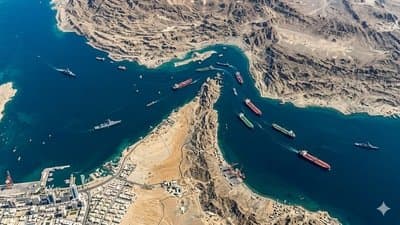
This market resolves to “Yes” if the Iranian government officially announces and begins collecting fees, tolls, charges, tariffs, or similar payments from commercial vessels which are mandatory for passage through or access to the Strait of Hormuz between market creation and the specified date, 11:59 PM ET. Otherwise, this market resolves to “No.” A qualifying fee must be an announced policy which applies generally to all commercial vessels, or a defined subcategory of commercial vessels (e.g., vessels flagged to the US and its allies). Isolated demanded charges will not qualify. A fee is mandatory if, in practice, affected commercial vessels cannot transit or access the Strait of Hormuz without paying it, regardless of whether Iran characterizes the payment as voluntary or a fee for services. Fees described as tolls, maritime fees, service charges, environmental fees, security fees, insurance charges, etc. will qualify provided they are recognized as mandatory for passage through or access to the Strait of Hormuz by a consensus of credible reporting (e.g., a mandatory insurance fee charged by the Iranian Persian Gulf Strait Authority would qualify). Both of the following are required to occur prior to the specified date, 11:59 PM ET to satisfy this market’s resolution criteria: 1) An official announcement from the Iranian government that such a fee is being, or will be, implemented. 2) A consensus of credible reporting that collection of the fee has begun. Fees charged by Oman, the United Arab Emirates, shipping insurers, private companies, or other non-Iranian entities do not qualify unless charged jointly with Iran, or if Iran directly receives the fee or controls the charging entity. Normal port fees, customs duties, sanctions-related costs, or shipping surcharges do not alone qualify. The resolution sources will be official announcements from the government of Iran and consensus of credible reporting.Iran has advanced plans to impose maritime service fees or transit charges on vessels passing through the Strait of Hormuz, asserting sovereign management rights over the strategic waterway that handles roughly one-fifth of global oil shipments. Following a June 2026 US-Iran memorandum of understanding that included a 60-day toll-free window tied to demining and reopening, Iranian officials including chief negotiator Mohammad Bagher Ghalibaf have stated the strait will not revert to pre-conflict conditions. Tehran has coordinated with Oman on administration and services, distinguishing proposed fees for navigation, safety, and environmental measures from prohibited tolls under international law. As of mid-September 2026, Iranian parliamentary statements confirm the Persian Gulf Strait Authority framework is operational, with collections reported at $1.5–2 million per vessel in cash, cryptocurrency, or barter under Supreme National Security Council oversight. US officials have consistently rejected such charges on an international waterway, creating ongoing diplomatic friction that shapes trader assessments of implementation timelines and enforcement.

This market resolves to “Yes” if the Iranian government officially announces and begins collecting fees, tolls, charges, tariffs, or similar payments from commercial vessels which are mandatory for passage through or access to the Strait of Hormuz between market creation and the specified date, 11:59 PM ET. Otherwise, this market resolves to “No.”

A qualifying fee must be an announced policy which applies generally to all commercial vessels, or a defined subcategory of commercial vessels (e.g., vessels flagged to the US and its allies). Isolated demanded charges will not qualify.

A fee is mandatory if, in practice, affected commercial vessels cannot transit or access the Strait of Hormuz without paying it, regardless of whether Iran characterizes the payment as voluntary or a fee for services. Fees described as tolls, maritime fees, service charges, environmental fees, security fees, insurance charges, etc. will qualify provided they are recognized as mandatory for passage through or access to the Strait of Hormuz by a consensus of credible reporting (e.g., a mandatory insurance fee charged by the Iranian Persian Gulf Strait Authority would qualify).

Both of the following are required to occur prior to the specified date, 11:59 PM ET to satisfy this market’s resolution criteria:
1) An official announcement from the Iranian government that such a fee is being, or will be, implemented.
2) A consensus of credible reporting that collection of the fee has begun.

Fees charged by Oman, the United Arab Emirates, shipping insurers, private companies, or other non-Iranian entities do not qualify unless charged jointly with Iran, or if Iran directly receives the fee or controls the charging entity. Normal port fees, customs duties, sanctions-related costs, or shipping surcharges do not alone qualify.

The resolution sources will be official announcements from the government of Iran and consensus of credible reporting.
This market resolves to “Yes” if the Iranian government officially announces and begins collecting fees, tolls, charges, tariffs, or similar payments from commercial vessels which are mandatory for passage through or access to the Strait of Hormuz between market creation and the specified date, 11:59 PM ET. Otherwise, this market resolves to “No.” A qualifying fee must be an announced policy which applies generally to all commercial vessels, or a defined subcategory of commercial vessels (e.g., vessels flagged to the US and its allies). Isolated demanded charges will not qualify. A fee is mandatory if, in practice, affected commercial vessels cannot transit or access the Strait of Hormuz without paying it, regardless of whether Iran characterizes the payment as voluntary or a fee for services. Fees described as tolls, maritime fees, service charges, environmental fees, security fees, insurance charges, etc. will qualify provided they are recognized as mandatory for passage through or access to the Strait of Hormuz by a consensus of credible reporting (e.g., a mandatory insurance fee charged by the Iranian Persian Gulf Strait Authority would qualify). Both of the following are required to occur prior to the specified date, 11:59 PM ET to satisfy this market’s resolution criteria: 1) An official announcement from the Iranian government that such a fee is being, or will be, implemented. 2) A consensus of credible reporting that collection of the fee has begun. Fees charged by Oman, the United Arab Emirates, shipping insurers, private companies, or other non-Iranian entities do not qualify unless charged jointly with Iran, or if Iran directly receives the fee or controls the charging entity. Normal port fees, customs duties, sanctions-related costs, or shipping surcharges do not alone qualify. The resolution sources will be official announcements from the government of Iran and consensus of credible reporting.
Volumen
$3,047,831
Enddatum
1. Jan. 2027
Markt eröffnet
Aug 7, 2026, 10:31 AM ET
This market resolves to “Yes” if the Iranian government officially announces and begins collecting fees, tolls, charges, tariffs, or similar payments from commercial vessels which are mandatory for passage through or access to the Strait of Hormuz between market creation and the specified date, 11:59 PM ET. Otherwise, this market resolves to “No.” A qualifying fee must be an announced policy which applies generally to all commercial vessels, or a defined subcategory of commercial vessels (e.g., vessels flagged to the US and its allies). Isolated demanded charges will not qualify. A fee is mandatory if, in practice, affected commercial vessels cannot transit or access the Strait of Hormuz without paying it, regardless of whether Iran characterizes the payment as voluntary or a fee for services. Fees described as tolls, maritime fees, service charges, environmental fees, security fees, insurance charges, etc. will qualify provided they are recognized as mandatory for passage through or access to the Strait of Hormuz by a consensus of credible reporting (e.g., a mandatory insurance fee charged by the Iranian Persian Gulf Strait Authority would qualify). Both of the following are required to occur prior to the specified date, 11:59 PM ET to satisfy this market’s resolution criteria: 1) An official announcement from the Iranian government that such a fee is being, or will be, implemented. 2) A consensus of credible reporting that collection of the fee has begun. Fees charged by Oman, the United Arab Emirates, shipping insurers, private companies, or other non-Iranian entities do not qualify unless charged jointly with Iran, or if Iran directly receives the fee or controls the charging entity. Normal port fees, customs duties, sanctions-related costs, or shipping surcharges do not alone qualify. The resolution sources will be official announcements from the government of Iran and consensus of credible reporting.Iran has advanced plans to impose maritime service fees or transit charges on vessels passing through the Strait of Hormuz, asserting sovereign management rights over the strategic waterway that handles roughly one-fifth of global oil shipments. Following a June 2026 US-Iran memorandum of understanding that included a 60-day toll-free window tied to demining and reopening, Iranian officials including chief negotiator Mohammad Bagher Ghalibaf have stated the strait will not revert to pre-conflict conditions. Tehran has coordinated with Oman on administration and services, distinguishing proposed fees for navigation, safety, and environmental measures from prohibited tolls under international law. As of mid-September 2026, Iranian parliamentary statements confirm the Persian Gulf Strait Authority framework is operational, with collections reported at $1.5–2 million per vessel in cash, cryptocurrency, or barter under Supreme National Security Council oversight. US officials have consistently rejected such charges on an international waterway, creating ongoing diplomatic friction that shapes trader assessments of implementation timelines and enforcement.

This market resolves to “Yes” if the Iranian government officially announces and begins collecting fees, tolls, charges, tariffs, or similar payments from commercial vessels which are mandatory for passage through or access to the Strait of Hormuz between market creation and the specified date, 11:59 PM ET. Otherwise, this market resolves to “No.”

A qualifying fee must be an announced policy which applies generally to all commercial vessels, or a defined subcategory of commercial vessels (e.g., vessels flagged to the US and its allies). Isolated demanded charges will not qualify.

A fee is mandatory if, in practice, affected commercial vessels cannot transit or access the Strait of Hormuz without paying it, regardless of whether Iran characterizes the payment as voluntary or a fee for services. Fees described as tolls, maritime fees, service charges, environmental fees, security fees, insurance charges, etc. will qualify provided they are recognized as mandatory for passage through or access to the Strait of Hormuz by a consensus of credible reporting (e.g., a mandatory insurance fee charged by the Iranian Persian Gulf Strait Authority would qualify).

Both of the following are required to occur prior to the specified date, 11:59 PM ET to satisfy this market’s resolution criteria:
1) An official announcement from the Iranian government that such a fee is being, or will be, implemented.
2) A consensus of credible reporting that collection of the fee has begun.

Fees charged by Oman, the United Arab Emirates, shipping insurers, private companies, or other non-Iranian entities do not qualify unless charged jointly with Iran, or if Iran directly receives the fee or controls the charging entity. Normal port fees, customs duties, sanctions-related costs, or shipping surcharges do not alone qualify.

The resolution sources will be official announcements from the government of Iran and consensus of credible reporting.
This market resolves to “Yes” if the Iranian government officially announces and begins collecting fees, tolls, charges, tariffs, or similar payments from commercial vessels which are mandatory for passage through or access to the Strait of Hormuz between market creation and the specified date, 11:59 PM ET. Otherwise, this market resolves to “No.” A qualifying fee must be an announced policy which applies generally to all commercial vessels, or a defined subcategory of commercial vessels (e.g., vessels flagged to the US and its allies). Isolated demanded charges will not qualify. A fee is mandatory if, in practice, affected commercial vessels cannot transit or access the Strait of Hormuz without paying it, regardless of whether Iran characterizes the payment as voluntary or a fee for services. Fees described as tolls, maritime fees, service charges, environmental fees, security fees, insurance charges, etc. will qualify provided they are recognized as mandatory for passage through or access to the Strait of Hormuz by a consensus of credible reporting (e.g., a mandatory insurance fee charged by the Iranian Persian Gulf Strait Authority would qualify). Both of the following are required to occur prior to the specified date, 11:59 PM ET to satisfy this market’s resolution criteria: 1) An official announcement from the Iranian government that such a fee is being, or will be, implemented. 2) A consensus of credible reporting that collection of the fee has begun. Fees charged by Oman, the United Arab Emirates, shipping insurers, private companies, or other non-Iranian entities do not qualify unless charged jointly with Iran, or if Iran directly receives the fee or controls the charging entity. Normal port fees, customs duties, sanctions-related costs, or shipping surcharges do not alone qualify. The resolution sources will be official announcements from the government of Iran and consensus of credible reporting.
Volumen
$3,047,831
Enddatum
1. Jan. 2027
Markt eröffnet
Aug 7, 2026, 10:31 AM ET

Vorsicht bei externen Links.

Häufig gestellte Fragen

„Iran erhebt Hormuz-Gebühren bis...?" ist ein Prognosemarkt auf Polymarket mit 6 möglichen Ergebnissen, bei dem Händler Anteile auf Basis ihrer Einschätzung kaufen und verkaufen. Das aktuell führende Ergebnis ist „31. Dezember" mit 28%, gefolgt von „31. Oktober" mit 14%. Die Preise spiegeln Echtzeit-Wahrscheinlichkeiten der Community wider. Ein Anteilspreis von 28¢ bedeutet, dass der Markt diesem Ergebnis eine Wahrscheinlichkeit von 28% zuweist. Diese Quoten ändern sich laufend, wenn Händler auf neue Entwicklungen reagieren. Anteile am richtigen Ergebnis können bei Marktauflösung für jeweils $1 eingelöst werden.

Stand heute hat „Iran erhebt Hormuz-Gebühren bis...?" ein Gesamthandelsvolumen von $3 million generiert, seit der Markt am Jun 25, 2026 gestartet wurde. Dieses Aktivitätsniveau spiegelt starkes Engagement der Polymarket-Community wider und stellt sicher, dass die aktuellen Quoten von einem breiten Pool an Marktteilnehmern geprägt werden. Sie können Live-Preisbewegungen verfolgen und direkt auf dieser Seite auf jedes Ergebnis handeln.

Um auf „Iran erhebt Hormuz-Gebühren bis...?" zu handeln, durchsuchen Sie die 6 verfügbaren Ergebnisse auf dieser Seite. Jedes Ergebnis zeigt einen aktuellen Preis, der die implizierte Wahrscheinlichkeit des Marktes darstellt. Um eine Position einzunehmen, wählen Sie das Ergebnis, das Sie für am wahrscheinlichsten halten, wählen Sie „Ja" um dafür oder „Nein" um dagegen zu handeln, geben Sie Ihren Betrag ein und klicken Sie auf „Handeln". Liegt Ihr gewähltes Ergebnis bei Marktauflösung richtig, zahlen Ihre „Ja"-Anteile jeweils $1 aus. Liegt es falsch, zahlen sie $0. Sie können Ihre Anteile auch jederzeit vor der Auflösung verkaufen.

Der aktuelle Favorit für „Iran erhebt Hormuz-Gebühren bis...?" ist „31. Dezember" mit 28%, was bedeutet, dass der Markt diesem Ergebnis eine Wahrscheinlichkeit von 28% zuweist. Das nächstliegende Ergebnis ist „31. Oktober" mit 14%. Diese Quoten werden in Echtzeit aktualisiert, wenn Händler Anteile kaufen und verkaufen. Schauen Sie regelmäßig vorbei oder speichern Sie diese Seite als Lesezeichen.

Die Auflösungsregeln für „Iran erhebt Hormuz-Gebühren bis...?" definieren genau, was passieren muss, damit jedes Ergebnis als Gewinner erklärt wird – einschließlich der offiziellen Datenquellen zur Bestimmung des Ergebnisses. Sie können die vollständigen Auflösungskriterien im Abschnitt „Regeln" auf dieser Seite über den Kommentaren einsehen. Wir empfehlen, die Regeln vor dem Handeln sorgfältig zu lesen, da sie die genauen Bedingungen, Sonderfälle und Quellen festlegen.