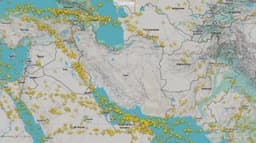
Ongoing military tensions in the Middle East, including US and Israeli strikes on Iranian targets and Iranian missile responses earlier in 2026, have kept Iran's Tehran FIR under partial restrictions, with the western sector closed since March and only limited eastern overflight access restored in June. Aviation authorities such as EASA continue to issue conflict-zone advisories through late August 2026, citing risks from renewed activity and urging operators to avoid the airspace entirely. Temporary full closures occurred briefly in January amid US tensions, but the current fragmented status reflects calibrated de-escalation alongside persistent regional threats like Strait of Hormuz blockades and cross-border strikes. Traders monitor diplomatic signals, ceasefire durability, and any escalation in strikes or port actions that could prompt a complete shutdown.
Experimentelle KI-generierte Zusammenfassung mit Polymarket-Daten. Dies ist keine Handelsberatung und spielt keine Rolle bei der Auflösung dieses Marktes. · AktualisiertIran volle Luftraumsperrung bis...?
Iran volle Luftraumsperrung bis...?
$8,453,061 Vol.
31. August
7%
30. September
16%
31. Dezember
33%
$8,453,061 Vol.
31. August
7%
30. September
16%
31. Dezember
33%
A “general closure” refers to a cancellation or suspension of aviation which is generally applicable to all commercial flights transiting Iranian airspace (“Tehran FIR”). A qualifying closure must apply generally to all of Iran or the Tehran FIR; limited cancellations, delays, or partial closures will not qualify. A closure which applies generally to commercial aviation across Iranian airspace, with limited exceptions for certain categories of flights, however, will qualify (e.g. exceptions for certain flights pre-approved by the Iranian Civil Aviation Authority may be permitted).
Qualifying previous examples include the February 28, 2026 total closure of Iranian airspace (https://www.iranintl.com/en/202602289115) and the January 2026 total closure of Iranian airspace except to international flights with express governmental permission (https://www.reuters.com/world/middle-east/iran-shuts-airspace-most-flights-flightradar24-says-2026-01-14/). Non-qualifying examples include the January 27, 2026 partial closure of Iranian airspace around the Strait of Hormuz (https://www.aa.com.tr/en/middle-east/iran-issues-airspace-notice-for-military-drills-near-strait-of-hormuz/3812508), the April 2024 closure of Iran’s western airspace (https://www.reuters.com/world/middle-east/iranian-airports-cancel-flights-until-monday-morning-2024-04-14/), and the January 25 - April 25, 2026 VFR (Visual Flight Rules) flights suspension which did not broadly close commercial aviation in Iran (https://www.intellinews.com/iran-suspends-general-aviation-and-vfr-flights-in-new-airspace-directive-421997/).
Warnings, No-Fly-Zones, or other flight restrictions imposed by airlines or countries other than Iran will not be sufficient for a “Yes” resolution.
Airspace closures which occur solely due to weather conditions, earthquakes, or volcanic eruptions, will not qualify.
The primary resolution sources for this market will be official information from Iranian aviation authorities and a consensus of credible reporting.
Markt eröffnet: Jun 25, 2026, 7:21 PM ET
Resolver
0x65070BE91...A “general closure” refers to a cancellation or suspension of aviation which is generally applicable to all commercial flights transiting Iranian airspace (“Tehran FIR”). A qualifying closure must apply generally to all of Iran or the Tehran FIR; limited cancellations, delays, or partial closures will not qualify. A closure which applies generally to commercial aviation across Iranian airspace, with limited exceptions for certain categories of flights, however, will qualify (e.g. exceptions for certain flights pre-approved by the Iranian Civil Aviation Authority may be permitted).
Qualifying previous examples include the February 28, 2026 total closure of Iranian airspace (https://www.iranintl.com/en/202602289115) and the January 2026 total closure of Iranian airspace except to international flights with express governmental permission (https://www.reuters.com/world/middle-east/iran-shuts-airspace-most-flights-flightradar24-says-2026-01-14/). Non-qualifying examples include the January 27, 2026 partial closure of Iranian airspace around the Strait of Hormuz (https://www.aa.com.tr/en/middle-east/iran-issues-airspace-notice-for-military-drills-near-strait-of-hormuz/3812508), the April 2024 closure of Iran’s western airspace (https://www.reuters.com/world/middle-east/iranian-airports-cancel-flights-until-monday-morning-2024-04-14/), and the January 25 - April 25, 2026 VFR (Visual Flight Rules) flights suspension which did not broadly close commercial aviation in Iran (https://www.intellinews.com/iran-suspends-general-aviation-and-vfr-flights-in-new-airspace-directive-421997/).
Warnings, No-Fly-Zones, or other flight restrictions imposed by airlines or countries other than Iran will not be sufficient for a “Yes” resolution.
Airspace closures which occur solely due to weather conditions, earthquakes, or volcanic eruptions, will not qualify.
The primary resolution sources for this market will be official information from Iranian aviation authorities and a consensus of credible reporting.
Resolver
0x65070BE91...Ongoing military tensions in the Middle East, including US and Israeli strikes on Iranian targets and Iranian missile responses earlier in 2026, have kept Iran's Tehran FIR under partial restrictions, with the western sector closed since March and only limited eastern overflight access restored in June. Aviation authorities such as EASA continue to issue conflict-zone advisories through late August 2026, citing risks from renewed activity and urging operators to avoid the airspace entirely. Temporary full closures occurred briefly in January amid US tensions, but the current fragmented status reflects calibrated de-escalation alongside persistent regional threats like Strait of Hormuz blockades and cross-border strikes. Traders monitor diplomatic signals, ceasefire durability, and any escalation in strikes or port actions that could prompt a complete shutdown.
Experimentelle KI-generierte Zusammenfassung mit Polymarket-Daten. Dies ist keine Handelsberatung und spielt keine Rolle bei der Auflösung dieses Marktes. · Aktualisiert

Vorsicht bei externen Links.
Vorsicht bei externen Links.
Häufig gestellte Fragen