
Ongoing regional tensions with Iran and proxy groups like Hezbollah and the Houthis continue to shape assessments of Israeli airspace restrictions, following multiple temporary closures and reopenings between February and July 2026 tied to strikes, missile exchanges, and a subsequent US-Iran ceasefire breakdown. Renewed military activity around the Strait of Hormuz in July prompted updated EASA guidance advising operators to assess risks in the Tel Aviv FIR, though the airspace has remained open since then amid volatile but contained threats. Israeli officials have noted Iran's accelerated post-conflict military recovery as of mid-August, heightening monitoring for potential escalations that could trigger new NOTAMs or full civilian flight suspensions. Diplomatic efforts on the Lebanon ceasefire and broader de-escalation talks represent key variables that could influence near-term decisions on airspace management.
Experimentelle KI-generierte Zusammenfassung mit Polymarket-Daten. Dies ist keine Handelsberatung und spielt keine Rolle bei der Auflösung dieses Marktes. · Aktualisiert$26,981,246 Vol.
15. August
1%
31. August
6%
$26,981,246 Vol.
15. August
1%
31. August
6%
A “major closure” is defined as a broad closure, cancellation, or complete suspension of commercial aviation across the entirety of Israeli civilian airspace or a region encompassing a majority of Israeli civilian airspace, including commercial flights transiting, arriving in, and departing from that airspace. A qualifying closure must apply generally to all flights across Israel or a qualifying subset of Israeli airspace. Limited cancellations, delays, temporary ground stops or isolated regional closures will not qualify. Limited exceptions to a broad closure, however, will not disqualify such a closure from counting (e.g. exceptions for certain pre-approved flights may be permitted).
Warnings, No-Fly-Zones, flight suspensions, or other flight restrictions imposed by airlines or countries other than Israel will not be sufficient for a “Yes” resolution.
Airspace closures which occur solely due to weather conditions will not qualify.
The primary resolution source for this market will be official information from Israeli aviation authorities; however, a consensus of credible reporting may also be used.
Markt eröffnet: Jul 18, 2026, 3:16 PM ET
Resolver
0x65070BE91...A “major closure” is defined as a broad closure, cancellation, or complete suspension of commercial aviation across the entirety of Israeli civilian airspace or a region encompassing a majority of Israeli civilian airspace, including commercial flights transiting, arriving in, and departing from that airspace. A qualifying closure must apply generally to all flights across Israel or a qualifying subset of Israeli airspace. Limited cancellations, delays, temporary ground stops or isolated regional closures will not qualify. Limited exceptions to a broad closure, however, will not disqualify such a closure from counting (e.g. exceptions for certain pre-approved flights may be permitted).
Warnings, No-Fly-Zones, flight suspensions, or other flight restrictions imposed by airlines or countries other than Israel will not be sufficient for a “Yes” resolution.
Airspace closures which occur solely due to weather conditions will not qualify.
The primary resolution source for this market will be official information from Israeli aviation authorities; however, a consensus of credible reporting may also be used.
Resolver
0x65070BE91...Ongoing regional tensions with Iran and proxy groups like Hezbollah and the Houthis continue to shape assessments of Israeli airspace restrictions, following multiple temporary closures and reopenings between February and July 2026 tied to strikes, missile exchanges, and a subsequent US-Iran ceasefire breakdown. Renewed military activity around the Strait of Hormuz in July prompted updated EASA guidance advising operators to assess risks in the Tel Aviv FIR, though the airspace has remained open since then amid volatile but contained threats. Israeli officials have noted Iran's accelerated post-conflict military recovery as of mid-August, heightening monitoring for potential escalations that could trigger new NOTAMs or full civilian flight suspensions. Diplomatic efforts on the Lebanon ceasefire and broader de-escalation talks represent key variables that could influence near-term decisions on airspace management.
Experimentelle KI-generierte Zusammenfassung mit Polymarket-Daten. Dies ist keine Handelsberatung und spielt keine Rolle bei der Auflösung dieses Marktes. · Aktualisiert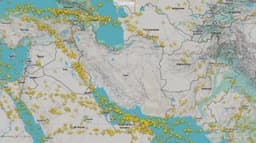
Vorsicht bei externen Links.
Vorsicht bei externen Links.
Häufig gestellte Fragen