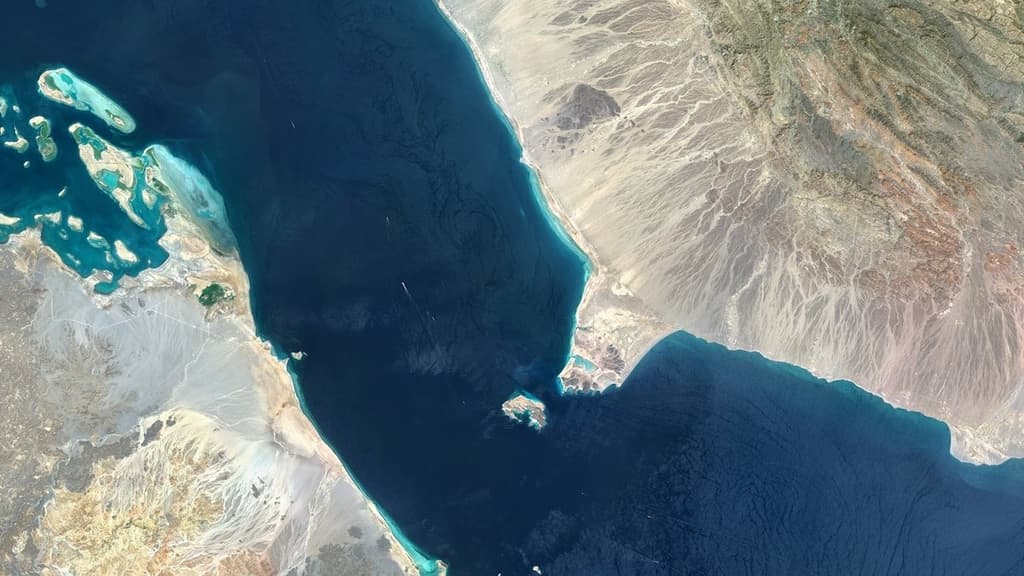
Recent Houthi maritime restrictions, including the July 2026 blockade targeting Saudi-linked vessels, have driven sharp volatility and a sustained decline in Bab el-Mandeb transits, with daily commodity ship crossings fluctuating between lows of 1–5 and highs near 30–39 amid elevated insurance costs and rerouting incentives. This has stabilized weekly volumes around 260–270 vessels—well below pre-escalation norms of roughly 350+—as carriers weigh risks from missile threats and enforcement actions tied to broader regional tensions. Market-implied odds favoring sub-25 daily averages reflect trader assessment of these persistent disruptions, with limited near-term catalysts for recovery before month-end absent verified de-escalation.
Resumen experimental generado por IA con datos de Polymarket. Esto no es asesoramiento de trading y no influye en cómo se resuelve este mercado. · Actualizado¿Promedio de naves que transitan por el estrecho de Bab el-Mandeb a finales de agosto?
¿Promedio de naves que transitan por el estrecho de Bab el-Mandeb a finales de agosto?
<25 44.8%
25-29 27%
30-34 20%
35-39 6%
$15,134 Vol.
$15,134 Vol.
31 ago 2026
<25
45%
25-29
27%
30-34
20%
35-39
6%
40+
2%
<25 44.8%
25-29 27%
30-34 20%
35-39 6%
$15,134 Vol.
$15,134 Vol.
31 ago 2026
<25
$2,960 Vol.
45%
25-29
$3,518 Vol.
27%
30-34
$3,754 Vol.
20%
35-39
$1,163 Vol.
6%
40+
$3,738 Vol.
2%
This market will resolve according to the 7-day moving average of transit calls (“Arrivals of Ships”) for the Bab el-Mandeb Strait that IMF Portwatch reports for August 31, 2026.
Transit calls include container, dry bulk, roll-on/roll-off, general cargo, and tanker ships. Ships not reported by IMF Portwatch will not be considered.
This market will resolve as soon as the relevant data has been published. If the relevant data is not published within 14 calendar days of the specified date, this market will resolve based on the most recent data published up to that point.
In case of obvious data integrity issues (i.e., erroneous data), the market may remain open until the end of the third calendar day (ET) after the date on which such data is first released to allow for corrections. Data integrity issues refer only to clerical or other similar errors in the underlying data, and do not include cases where IMF Portwatch differs from alternative sources.
The resolution source for this market will be IMF PortWatch, specifically the “Arrivals of Ships” data published for the Bab el-Mandeb Strait at https://portwatch.imf.org/pages/6b1814d64903461b98144a6cc25eb79c.Recent Houthi maritime restrictions, including the July 2026 blockade targeting Saudi-linked vessels, have driven sharp volatility and a sustained decline in Bab el-Mandeb transits, with daily commodity ship crossings fluctuating between lows of 1–5 and highs near 30–39 amid elevated insurance costs and rerouting incentives. This has stabilized weekly volumes around 260–270 vessels—well below pre-escalation norms of roughly 350+—as carriers weigh risks from missile threats and enforcement actions tied to broader regional tensions. Market-implied odds favoring sub-25 daily averages reflect trader assessment of these persistent disruptions, with limited near-term catalysts for recovery before month-end absent verified de-escalation.
This market will resolve according to the 7-day moving average of transit calls (“Arrivals of Ships”) for the Bab el-Mandeb Strait that IMF Portwatch reports for August 31, 2026.
Transit calls include container, dry bulk, roll-on/roll-off, general cargo, and tanker ships. Ships not reported by IMF Portwatch will not be considered.
This market will resolve as soon as the relevant data has been published. If the relevant data is not published within 14 calendar days of the specified date, this market will resolve based on the most recent data published up to that point.
In case of obvious data integrity issues (i.e., erroneous data), the market may remain open until the end of the third calendar day (ET) after the date on which such data is first released to allow for corrections. Data integrity issues refer only to clerical or other similar errors in the underlying data, and do not include cases where IMF Portwatch differs from alternative sources.
The resolution source for this market will be IMF PortWatch, specifically the “Arrivals of Ships” data published for the Bab el-Mandeb Strait at https://portwatch.imf.org/pages/6b1814d64903461b98144a6cc25eb79c.
Transit calls include container, dry bulk, roll-on/roll-off, general cargo, and tanker ships. Ships not reported by IMF Portwatch will not be considered.
This market will resolve as soon as the relevant data has been published. If the relevant data is not published within 14 calendar days of the specified date, this market will resolve based on the most recent data published up to that point.
In case of obvious data integrity issues (i.e., erroneous data), the market may remain open until the end of the third calendar day (ET) after the date on which such data is first released to allow for corrections. Data integrity issues refer only to clerical or other similar errors in the underlying data, and do not include cases where IMF Portwatch differs from alternative sources.
The resolution source for this market will be IMF PortWatch, specifically the “Arrivals of Ships” data published for the Bab el-Mandeb Strait at https://portwatch.imf.org/pages/6b1814d64903461b98144a6cc25eb79c.
Mercado abierto: Jul 31, 2026, 2:13 PM ET
Volumen
$15,134Fecha de finalización
31 ago 2026Mercado abierto
Jul 31, 2026, 2:13 PM ETFuente de resolución
IMF PortWatchResolver
0x69c47De9D...This market will resolve according to the 7-day moving average of transit calls (“Arrivals of Ships”) for the Bab el-Mandeb Strait that IMF Portwatch reports for August 31, 2026.
Transit calls include container, dry bulk, roll-on/roll-off, general cargo, and tanker ships. Ships not reported by IMF Portwatch will not be considered.
This market will resolve as soon as the relevant data has been published. If the relevant data is not published within 14 calendar days of the specified date, this market will resolve based on the most recent data published up to that point.
In case of obvious data integrity issues (i.e., erroneous data), the market may remain open until the end of the third calendar day (ET) after the date on which such data is first released to allow for corrections. Data integrity issues refer only to clerical or other similar errors in the underlying data, and do not include cases where IMF Portwatch differs from alternative sources.
The resolution source for this market will be IMF PortWatch, specifically the “Arrivals of Ships” data published for the Bab el-Mandeb Strait at https://portwatch.imf.org/pages/6b1814d64903461b98144a6cc25eb79c.Recent Houthi maritime restrictions, including the July 2026 blockade targeting Saudi-linked vessels, have driven sharp volatility and a sustained decline in Bab el-Mandeb transits, with daily commodity ship crossings fluctuating between lows of 1–5 and highs near 30–39 amid elevated insurance costs and rerouting incentives. This has stabilized weekly volumes around 260–270 vessels—well below pre-escalation norms of roughly 350+—as carriers weigh risks from missile threats and enforcement actions tied to broader regional tensions. Market-implied odds favoring sub-25 daily averages reflect trader assessment of these persistent disruptions, with limited near-term catalysts for recovery before month-end absent verified de-escalation.
This market will resolve according to the 7-day moving average of transit calls (“Arrivals of Ships”) for the Bab el-Mandeb Strait that IMF Portwatch reports for August 31, 2026.
Transit calls include container, dry bulk, roll-on/roll-off, general cargo, and tanker ships. Ships not reported by IMF Portwatch will not be considered.
This market will resolve as soon as the relevant data has been published. If the relevant data is not published within 14 calendar days of the specified date, this market will resolve based on the most recent data published up to that point.
In case of obvious data integrity issues (i.e., erroneous data), the market may remain open until the end of the third calendar day (ET) after the date on which such data is first released to allow for corrections. Data integrity issues refer only to clerical or other similar errors in the underlying data, and do not include cases where IMF Portwatch differs from alternative sources.
The resolution source for this market will be IMF PortWatch, specifically the “Arrivals of Ships” data published for the Bab el-Mandeb Strait at https://portwatch.imf.org/pages/6b1814d64903461b98144a6cc25eb79c.
Transit calls include container, dry bulk, roll-on/roll-off, general cargo, and tanker ships. Ships not reported by IMF Portwatch will not be considered.
This market will resolve as soon as the relevant data has been published. If the relevant data is not published within 14 calendar days of the specified date, this market will resolve based on the most recent data published up to that point.
In case of obvious data integrity issues (i.e., erroneous data), the market may remain open until the end of the third calendar day (ET) after the date on which such data is first released to allow for corrections. Data integrity issues refer only to clerical or other similar errors in the underlying data, and do not include cases where IMF Portwatch differs from alternative sources.
The resolution source for this market will be IMF PortWatch, specifically the “Arrivals of Ships” data published for the Bab el-Mandeb Strait at https://portwatch.imf.org/pages/6b1814d64903461b98144a6cc25eb79c.
Volumen
$15,134Fecha de finalización
31 ago 2026Mercado abierto
Jul 31, 2026, 2:13 PM ETFuente de resolución
IMF PortWatchResolver
0x69c47De9D...Recent Houthi maritime restrictions, including the July 2026 blockade targeting Saudi-linked vessels, have driven sharp volatility and a sustained decline in Bab el-Mandeb transits, with daily commodity ship crossings fluctuating between lows of 1–5 and highs near 30–39 amid elevated insurance costs and rerouting incentives. This has stabilized weekly volumes around 260–270 vessels—well below pre-escalation norms of roughly 350+—as carriers weigh risks from missile threats and enforcement actions tied to broader regional tensions. Market-implied odds favoring sub-25 daily averages reflect trader assessment of these persistent disruptions, with limited near-term catalysts for recovery before month-end absent verified de-escalation.
Resumen experimental generado por IA con datos de Polymarket. Esto no es asesoramiento de trading y no influye en cómo se resuelve este mercado. · Actualizado
Cuidado con los enlaces externos.
Cuidado con los enlaces externos.
Preguntas frecuentes