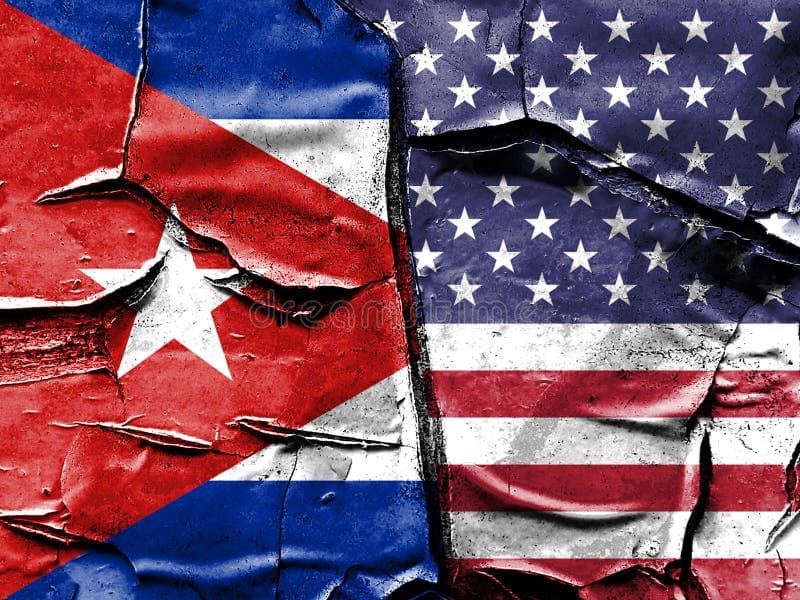
US pressure on Cuba has intensified since the January 2026 US operation in Venezuela that removed Nicolás Maduro, prompting an energy embargo, sanctions on third-country oil suppliers, and indictments targeting former Cuban leaders. These steps, combined with naval deployments including the USS Nimitz carrier strike group in May, heightened surveillance flights, and public statements framing Cuba as the next priority, have driven elevated rhetoric and contingency planning around Guantánamo Bay. Cuba faces deepening fuel shortages, blackouts, and economic strain, prompting defensive preparations and warnings of high costs for any intervention. Senior US officials have emphasized tools short of strikes or invasion, citing ongoing regional commitments and preference for negotiated leadership transition. Trader consensus reflected in low probabilities for a US-initiated strike by year-end incorporates these constraints alongside stalled backchannel talks and the absence of kinetic action to date.
Resumen experimental generado por IA con datos de Polymarket. Esto no es asesoramiento de trading y no influye en cómo se resuelve este mercado. · Actualizado¿Acción militar de Estados Unidos contra Cuba por parte de…?
¿Acción militar de Estados Unidos contra Cuba por parte de…?
$7,279,113 Vol.
31 de diciembre
19%
$7,279,113 Vol.
31 de diciembre
19%
For the purposes of this market, a qualifying "strike" is defined as the use of aerial bombs, drones, or missiles (including FPV and ATGM strikes as well as cruise or ballistic missiles) launched by any United States operatives, including military forces, intelligence agencies, or other U.S. government operatives, that physically impact ground territory within the listed country.
A strike on any area within the terrestrial territory (including rivers, lakes, ports, but excluding territorial sea) of the listed country counts.
Missiles or drones that are intercepted and surface-to-air missile strikes will not be sufficient for a "Yes" resolution, regardless of whether they land territory or cause damage.
Actions such as artillery fire, small arms fire, ground incursions, naval shelling, or cyberattacks will not qualify.
Any strike occurring during this market’s timeframe that is claimed by either Donald Trump or the U.S. government will qualify.
The primary resolution source will be a consensus of credible reporting.
This market will remain open until the end of the second day after the resolution time. If the date/time of a qualifying strike cannot be confirmed by a consensus of credible reporting by that time, it will resolve to "No" regardless of whether a strike was later confirmed to have taken place.
Mercado abierto: Jan 4, 2026, 3:08 PM ET
Resolver
0x65070BE91...For the purposes of this market, a qualifying "strike" is defined as the use of aerial bombs, drones, or missiles (including FPV and ATGM strikes as well as cruise or ballistic missiles) launched by any United States operatives, including military forces, intelligence agencies, or other U.S. government operatives, that physically impact ground territory within the listed country.
A strike on any area within the terrestrial territory (including rivers, lakes, ports, but excluding territorial sea) of the listed country counts.
Missiles or drones that are intercepted and surface-to-air missile strikes will not be sufficient for a "Yes" resolution, regardless of whether they land territory or cause damage.
Actions such as artillery fire, small arms fire, ground incursions, naval shelling, or cyberattacks will not qualify.
Any strike occurring during this market’s timeframe that is claimed by either Donald Trump or the U.S. government will qualify.
The primary resolution source will be a consensus of credible reporting.
This market will remain open until the end of the second day after the resolution time. If the date/time of a qualifying strike cannot be confirmed by a consensus of credible reporting by that time, it will resolve to "No" regardless of whether a strike was later confirmed to have taken place.
Resolver
0x65070BE91...US pressure on Cuba has intensified since the January 2026 US operation in Venezuela that removed Nicolás Maduro, prompting an energy embargo, sanctions on third-country oil suppliers, and indictments targeting former Cuban leaders. These steps, combined with naval deployments including the USS Nimitz carrier strike group in May, heightened surveillance flights, and public statements framing Cuba as the next priority, have driven elevated rhetoric and contingency planning around Guantánamo Bay. Cuba faces deepening fuel shortages, blackouts, and economic strain, prompting defensive preparations and warnings of high costs for any intervention. Senior US officials have emphasized tools short of strikes or invasion, citing ongoing regional commitments and preference for negotiated leadership transition. Trader consensus reflected in low probabilities for a US-initiated strike by year-end incorporates these constraints alongside stalled backchannel talks and the absence of kinetic action to date.
Resumen experimental generado por IA con datos de Polymarket. Esto no es asesoramiento de trading y no influye en cómo se resuelve este mercado. · Actualizado


Cuidado con los enlaces externos.
Cuidado con los enlaces externos.
Preguntas frecuentes