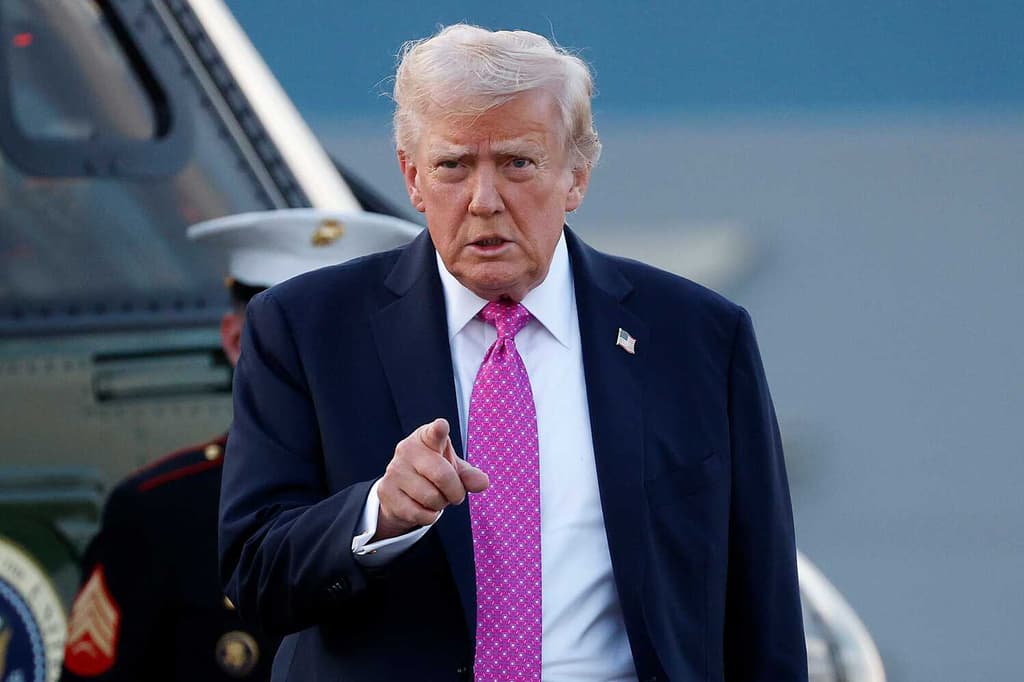
Recent public appearances and statements by President Trump have centered trader focus on the potential for pointed remarks aimed at political rivals or media outlets ahead of key deadlines. His ongoing commentary on policy disputes and electoral matters often features direct language, reflecting established patterns of engagement during high-visibility periods. Upcoming rallies, interviews, and legislative-related events could either prompt or moderate such expressions depending on the context and audience dynamics. Market positioning reflects the wisdom of crowds assessing these recurring behavioral tendencies against the specific timeframe in question.
Resumen experimental generado por IA con datos de Polymarket. Esto no es asesoramiento de trading y no influye en cómo se resuelve este mercado. · ActualizadoWill Trump publicly insult someone on...?
Will Trump publicly insult someone on...?
$509,115 Vol.
31 may 2026
May 18
94%
May 19
93%
May 20
91%
May 21
90%
May 22
93%
May 23
91%
May 24
90%
May 25
91%
May 26
91%
May 27
89%
May 28
91%
May 29
91%
May 30
91%
May 31
90%
$509,115 Vol.
May 18
$7,892 Vol.
94%
May 19
$1,979 Vol.
93%
May 20
$1,797 Vol.
91%
May 21
$748 Vol.
90%
May 22
$1,083 Vol.
93%
May 23
$153 Vol.
91%
May 24
$497 Vol.
90%
May 25
$626 Vol.
91%
May 26
$735 Vol.
91%
May 27
$1,035 Vol.
89%
May 28
$523 Vol.
91%
May 29
$383 Vol.
91%
May 30
$97 Vol.
91%
May 31
$399 Vol.
90%
This market will resolve to "Yes" if Donald Trump makes any public statement in which he insults, mocks, or attacks any non-fictional individual personally or professionally in a clearly negative manner on the specified date (ET). Otherwise, this market will resolve to "No".
This includes calling the individual weak, stupid, disloyal, a failure, using an insulting nickname, using other derogatory language, or using the negative form of a positive trait in a derogatory personal way (e.g., “He/She isn’t smart”). Negative forms used in reference to the individual's professional actions, policies, or decisions (e.g., “He/She isn’t being smart about this policy”) will not count. Policy disagreements stated without disparaging language will not count.
A direct reference will qualify even if the individual is not named, so long as it is reasonably clear from context that they are the subject.
Any written, verbal, or recorded public statement by Trump qualifies.
The resolution source will be a consensus of credible reporting.Recent public appearances and statements by President Trump have centered trader focus on the potential for pointed remarks aimed at political rivals or media outlets ahead of key deadlines. His ongoing commentary on policy disputes and electoral matters often features direct language, reflecting established patterns of engagement during high-visibility periods. Upcoming rallies, interviews, and legislative-related events could either prompt or moderate such expressions depending on the context and audience dynamics. Market positioning reflects the wisdom of crowds assessing these recurring behavioral tendencies against the specific timeframe in question.
This market will resolve to "Yes" if Donald Trump makes any public statement in which he insults, mocks, or attacks any non-fictional individual personally or professionally in a clearly negative manner on the specified date (ET). Otherwise, this market will resolve to "No".
This includes calling the individual weak, stupid, disloyal, a failure, using an insulting nickname, using other derogatory language, or using the negative form of a positive trait in a derogatory personal way (e.g., “He/She isn’t smart”). Negative forms used in reference to the individual's professional actions, policies, or decisions (e.g., “He/She isn’t being smart about this policy”) will not count. Policy disagreements stated without disparaging language will not count.
A direct reference will qualify even if the individual is not named, so long as it is reasonably clear from context that they are the subject.
Any written, verbal, or recorded public statement by Trump qualifies.
The resolution source will be a consensus of credible reporting.
This includes calling the individual weak, stupid, disloyal, a failure, using an insulting nickname, using other derogatory language, or using the negative form of a positive trait in a derogatory personal way (e.g., “He/She isn’t smart”). Negative forms used in reference to the individual's professional actions, policies, or decisions (e.g., “He/She isn’t being smart about this policy”) will not count. Policy disagreements stated without disparaging language will not count.
A direct reference will qualify even if the individual is not named, so long as it is reasonably clear from context that they are the subject.
Any written, verbal, or recorded public statement by Trump qualifies.
The resolution source will be a consensus of credible reporting.
Mercado abierto: Apr 30, 2026, 11:29 AM ET
Volumen
$509,115Fecha de finalización
31 may 2026Mercado abierto
Apr 30, 2026, 11:29 AM ETResolver
0x65070BE91...This market will resolve to "Yes" if Donald Trump makes any public statement in which he insults, mocks, or attacks any non-fictional individual personally or professionally in a clearly negative manner on the specified date (ET). Otherwise, this market will resolve to "No".
This includes calling the individual weak, stupid, disloyal, a failure, using an insulting nickname, using other derogatory language, or using the negative form of a positive trait in a derogatory personal way (e.g., “He/She isn’t smart”). Negative forms used in reference to the individual's professional actions, policies, or decisions (e.g., “He/She isn’t being smart about this policy”) will not count. Policy disagreements stated without disparaging language will not count.
A direct reference will qualify even if the individual is not named, so long as it is reasonably clear from context that they are the subject.
Any written, verbal, or recorded public statement by Trump qualifies.
The resolution source will be a consensus of credible reporting.Recent public appearances and statements by President Trump have centered trader focus on the potential for pointed remarks aimed at political rivals or media outlets ahead of key deadlines. His ongoing commentary on policy disputes and electoral matters often features direct language, reflecting established patterns of engagement during high-visibility periods. Upcoming rallies, interviews, and legislative-related events could either prompt or moderate such expressions depending on the context and audience dynamics. Market positioning reflects the wisdom of crowds assessing these recurring behavioral tendencies against the specific timeframe in question.
This market will resolve to "Yes" if Donald Trump makes any public statement in which he insults, mocks, or attacks any non-fictional individual personally or professionally in a clearly negative manner on the specified date (ET). Otherwise, this market will resolve to "No".
This includes calling the individual weak, stupid, disloyal, a failure, using an insulting nickname, using other derogatory language, or using the negative form of a positive trait in a derogatory personal way (e.g., “He/She isn’t smart”). Negative forms used in reference to the individual's professional actions, policies, or decisions (e.g., “He/She isn’t being smart about this policy”) will not count. Policy disagreements stated without disparaging language will not count.
A direct reference will qualify even if the individual is not named, so long as it is reasonably clear from context that they are the subject.
Any written, verbal, or recorded public statement by Trump qualifies.
The resolution source will be a consensus of credible reporting.
This includes calling the individual weak, stupid, disloyal, a failure, using an insulting nickname, using other derogatory language, or using the negative form of a positive trait in a derogatory personal way (e.g., “He/She isn’t smart”). Negative forms used in reference to the individual's professional actions, policies, or decisions (e.g., “He/She isn’t being smart about this policy”) will not count. Policy disagreements stated without disparaging language will not count.
A direct reference will qualify even if the individual is not named, so long as it is reasonably clear from context that they are the subject.
Any written, verbal, or recorded public statement by Trump qualifies.
The resolution source will be a consensus of credible reporting.
Volumen
$509,115Fecha de finalización
31 may 2026Mercado abierto
Apr 30, 2026, 11:29 AM ETResolver
0x65070BE91...Recent public appearances and statements by President Trump have centered trader focus on the potential for pointed remarks aimed at political rivals or media outlets ahead of key deadlines. His ongoing commentary on policy disputes and electoral matters often features direct language, reflecting established patterns of engagement during high-visibility periods. Upcoming rallies, interviews, and legislative-related events could either prompt or moderate such expressions depending on the context and audience dynamics. Market positioning reflects the wisdom of crowds assessing these recurring behavioral tendencies against the specific timeframe in question.
Resumen experimental generado por IA con datos de Polymarket. Esto no es asesoramiento de trading y no influye en cómo se resuelve este mercado. · Actualizado
Cuidado con los enlaces externos.
Cuidado con los enlaces externos.
Preguntas frecuentes