
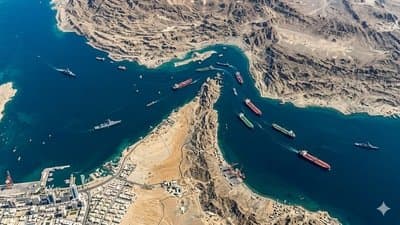
Recent U.S.-Iran negotiations and a June 2026 memorandum of understanding have introduced a 60-day period of charge-free transit through the Strait of Hormuz while demining occurs, following earlier 2026 conflict that included Iranian closure declarations and shipping attacks. Iran’s foreign ministry has stated it will not impose transit tolls but will levy fees for services such as navigation and environmental protection once the grace period ends around mid-August, consistent with the Persian Gulf Strait Authority established in May. U.S. officials, including President Trump, have rejected any tolls or fees as setting a dangerous precedent under international maritime law. Key variables for traders include whether the deal holds, enforcement of Iranian permitting requirements, and potential escalations or additional diplomatic steps before year-end deadlines.
Résumé expérimental généré par IA à partir des données Polymarket. Ceci n'est pas un conseil de trading et ne joue aucun rôle dans la résolution de ce marché. · Mis à jourL'Iran facture des frais d'Ormuz de... ?
15 juillet
7%
31 août
30%
$8,211 Vol.
15 juillet
7%
31 août
30%
A qualifying fee must be an announced policy which applies generally to all commercial vessels, or a defined subcategory of commercial vessels (e.g., vessels flagged to the US and its allies). Isolated demanded charges will not qualify.
A fee is mandatory if, in practice, affected commercial vessels cannot transit or access the Strait of Hormuz without paying it, regardless of whether Iran characterizes the payment as voluntary or a fee for services. Fees described as tolls, maritime fees, service charges, environmental fees, security fees, insurance charges, etc. will qualify provided they are recognized as mandatory for passage through or access to the Strait of Hormuz by a consensus of credible reporting (e.g., a mandatory insurance fee charged by the Iranian Persian Gulf Strait Authority would qualify).
Both of the following are required to occur prior to the specified date, 11:59 PM ET to satisfy this market’s resolution criteria:
1) An official announcement from the Iranian government that such a fee is being, or will be, implemented.
2) A consensus of credible reporting that collection of the fee has begun.
Fees charged by Oman, the United Arab Emirates, shipping insurers, private companies, or other non-Iranian entities do not qualify unless charged jointly with Iran, or if Iran directly receives the fee or controls the charging entity. Normal port fees, customs duties, sanctions-related costs, or shipping surcharges do not alone qualify.
The resolution sources will be official announcements from the government of Iran and consensus of credible reporting.
Marché ouvert : Jun 25, 2026, 7:21 PM ET
Resolver
0x65070BE91...A qualifying fee must be an announced policy which applies generally to all commercial vessels, or a defined subcategory of commercial vessels (e.g., vessels flagged to the US and its allies). Isolated demanded charges will not qualify.
A fee is mandatory if, in practice, affected commercial vessels cannot transit or access the Strait of Hormuz without paying it, regardless of whether Iran characterizes the payment as voluntary or a fee for services. Fees described as tolls, maritime fees, service charges, environmental fees, security fees, insurance charges, etc. will qualify provided they are recognized as mandatory for passage through or access to the Strait of Hormuz by a consensus of credible reporting (e.g., a mandatory insurance fee charged by the Iranian Persian Gulf Strait Authority would qualify).
Both of the following are required to occur prior to the specified date, 11:59 PM ET to satisfy this market’s resolution criteria:
1) An official announcement from the Iranian government that such a fee is being, or will be, implemented.
2) A consensus of credible reporting that collection of the fee has begun.
Fees charged by Oman, the United Arab Emirates, shipping insurers, private companies, or other non-Iranian entities do not qualify unless charged jointly with Iran, or if Iran directly receives the fee or controls the charging entity. Normal port fees, customs duties, sanctions-related costs, or shipping surcharges do not alone qualify.
The resolution sources will be official announcements from the government of Iran and consensus of credible reporting.
Resolver
0x65070BE91...Recent U.S.-Iran negotiations and a June 2026 memorandum of understanding have introduced a 60-day period of charge-free transit through the Strait of Hormuz while demining occurs, following earlier 2026 conflict that included Iranian closure declarations and shipping attacks. Iran’s foreign ministry has stated it will not impose transit tolls but will levy fees for services such as navigation and environmental protection once the grace period ends around mid-August, consistent with the Persian Gulf Strait Authority established in May. U.S. officials, including President Trump, have rejected any tolls or fees as setting a dangerous precedent under international maritime law. Key variables for traders include whether the deal holds, enforcement of Iranian permitting requirements, and potential escalations or additional diplomatic steps before year-end deadlines.
Résumé expérimental généré par IA à partir des données Polymarket. Ceci n'est pas un conseil de trading et ne joue aucun rôle dans la résolution de ce marché. · Mis à jour
Méfiez-vous des liens externes.
Questions fréquentes