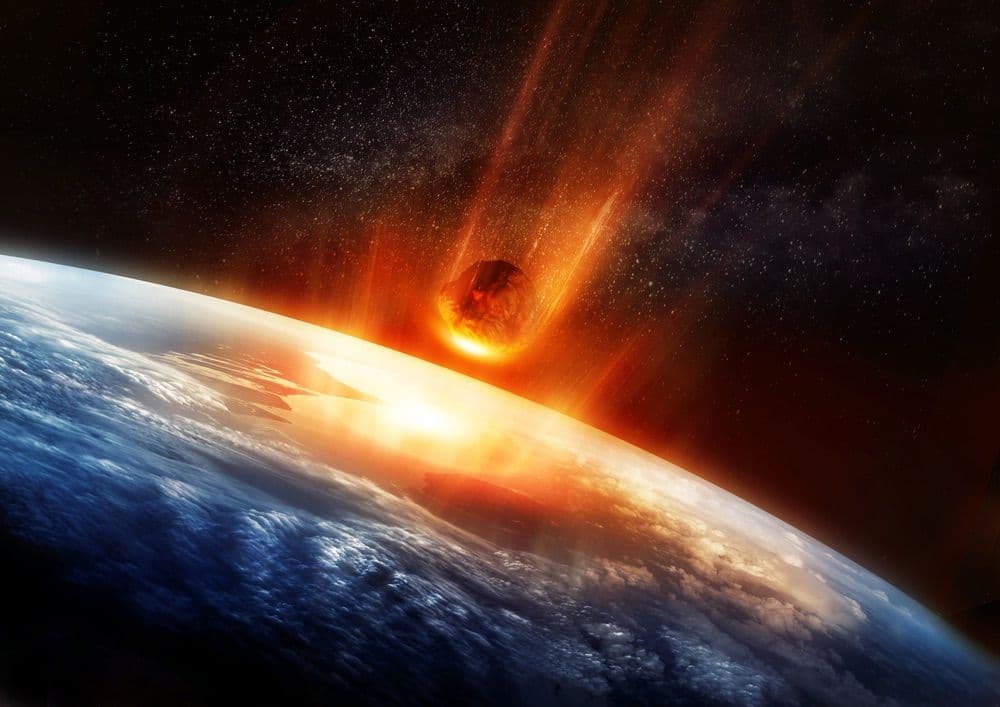
NASA's continuous near-Earth object (NEO) monitoring via CNEOS and ESA systems shows no cataloged asteroids or comets on collision trajectories capable of a 1-megaton airburst or impact through the end of 2026, driving the 98.7% market-implied odds for "No." Advanced orbital modeling, radar tracking, and automated Sentry scans have ruled out threats at this energy scale, consistent with historical impact rates where megaton-class events occur roughly once per millennium. Minor fireballs and smaller NEO flybys observed earlier this year have not altered assessments. Realistic scenarios that could still shift the outcome include a very late discovery of an undetected object or refined orbital data revealing an unexpected impact path, though current surveillance makes such developments highly improbable before year-end.
Ringkasan eksperimental yang dihasilkan AI dengan referensi data Polymarket. Ini bukan saran trading dan tidak berperan dalam bagaimana pasar ini diselesaikan. · Diperbarui1 megaton meteor strike in 2026?
1 megaton meteor strike in 2026?
$116,329 Vol.
$116,329 Vol.
$116,329 Vol.
$116,329 Vol.
The object must be classified as a natural meteoroid; events involving artificial objects or reentry vehicles do not qualify.
The primary resolution source will be the NASA JPL Fireball and Bolide Data repository: https://cneos.jpl.nasa.gov/fireballs/. The relevant field for determining impact energy is the “Impact Energy (kt)” column. If this dataset has not been updated to include all relevant dates by February 28, 2027, or if the NASA JPL Fireball and Bolide Data repository becomes permanently unavailable, this market may resolve based on a consensus of credible sources including the European Space Agency (ESA), the International Asteroid Warning Network (IAWN), the U.S. Department of Defense, or credible reporting of a scientific consensus, such as a NASA press release.
Pasar Dibuka: Jan 2, 2026, 2:24 PM ET
Resolver
0x65070BE91...The object must be classified as a natural meteoroid; events involving artificial objects or reentry vehicles do not qualify.
The primary resolution source will be the NASA JPL Fireball and Bolide Data repository: https://cneos.jpl.nasa.gov/fireballs/. The relevant field for determining impact energy is the “Impact Energy (kt)” column. If this dataset has not been updated to include all relevant dates by February 28, 2027, or if the NASA JPL Fireball and Bolide Data repository becomes permanently unavailable, this market may resolve based on a consensus of credible sources including the European Space Agency (ESA), the International Asteroid Warning Network (IAWN), the U.S. Department of Defense, or credible reporting of a scientific consensus, such as a NASA press release.
Resolver
0x65070BE91...NASA's continuous near-Earth object (NEO) monitoring via CNEOS and ESA systems shows no cataloged asteroids or comets on collision trajectories capable of a 1-megaton airburst or impact through the end of 2026, driving the 98.7% market-implied odds for "No." Advanced orbital modeling, radar tracking, and automated Sentry scans have ruled out threats at this energy scale, consistent with historical impact rates where megaton-class events occur roughly once per millennium. Minor fireballs and smaller NEO flybys observed earlier this year have not altered assessments. Realistic scenarios that could still shift the outcome include a very late discovery of an undetected object or refined orbital data revealing an unexpected impact path, though current surveillance makes such developments highly improbable before year-end.
Ringkasan eksperimental yang dihasilkan AI dengan referensi data Polymarket. Ini bukan saran trading dan tidak berperan dalam bagaimana pasar ini diselesaikan. · Diperbarui
Hati-hati dengan link eksternal.
Hati-hati dengan link eksternal.
Pertanyaan yang Sering Diajukan