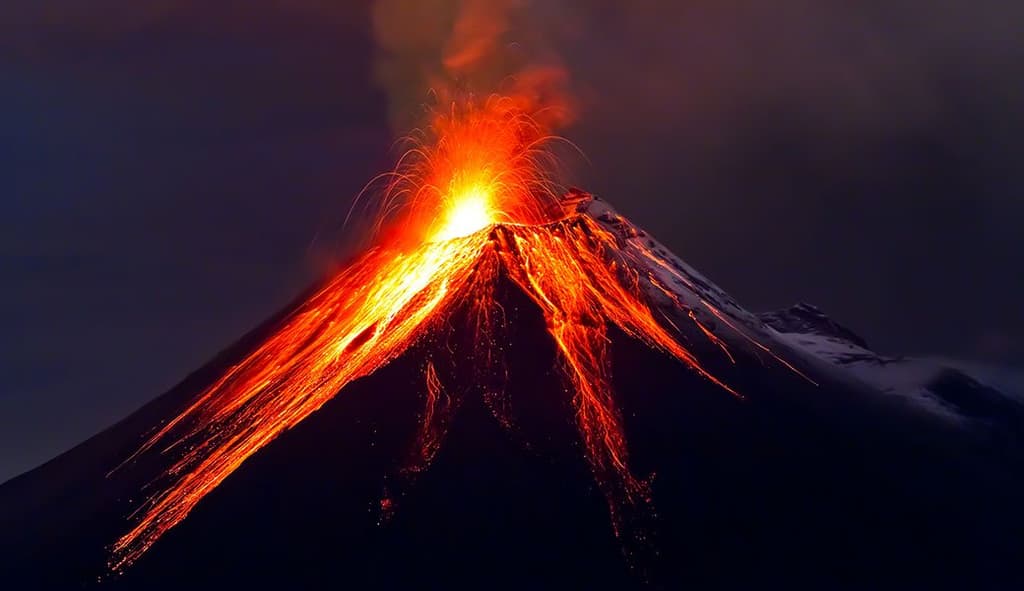
Trader consensus assigns the highest implied probability (53%) to zero VEI ≥4 eruptions for all of 2026, reflecting the absence of any confirmed large explosive events through mid-August amid 47 total eruptions tracked by the Smithsonian Global Volcanism Program. VEI 4 events require substantial tephra volumes (0.1–1 km³) and plume heights exceeding 10 km, which remain rare on annual timescales; ongoing activity at sites such as Kīlauea, Taal, and a notable submarine system has so far produced only lower-VEI or effusive outputs. With roughly 4.5 months remaining, continued low-level unrest and the lack of new stratospheric signals keep the zero outcome favored, while any sudden escalation at restless calderas could still shift odds toward one event.
Ringkasan eksperimental yang dihasilkan AI dengan referensi data Polymarket. Ini bukan saran trading dan tidak berperan dalam bagaimana pasar ini diselesaikan. · DiperbaruiBerapa banyak letusan gunung berapi besar (VEI ≥4) pada tahun 2026?
Berapa banyak letusan gunung berapi besar (VEI ≥4) pada tahun 2026?
0 54%
1 20%
2 3.6%
5+ 1.0%
$1,156,005 Vol.
$1,156,005 Vol.
0
54%
1
20%
2
4%
3
1%
4
1%
5+
1%
0 54%
1 20%
2 3.6%
5+ 1.0%
$1,156,005 Vol.
$1,156,005 Vol.
0
54%
1
20%
2
4%
3
1%
4
1%
5+
1%
The primary resolution source will be the Smithsonian Institution Global Volcanism Program (GVP: https://volcano.si.edu/), specifically the cumulative figures for 2026 for VEI 4, VEI 5, and VEI 6 released on the page currently titled "Eruptions Avg 2000-2024 (N/T)" (https://volcano.si.edu/faq/index.cfm?question=eruptionsbyyear) as of March 31, 2027, 12 PM ET. Any prior updates will not be considered finalized.
If this dataset has not been updated to include all relevant events by March 31, 2027, or if the Smithsonian GVP becomes permanently unavailable, this market may resolve based on a consensus of credible scientific sources, including the U.S. Geological Survey (USGS), national or regional volcanic observatories, or credible reporting of a scientific consensus.
Note: Smithsonian Institution Global Volcanism Program databases, which include eruptions that reached the relevant threshold prior to this market’s timeframe (e.g., https://volcano.si.edu/faq/index.cfm?question=eruptionsbyyear&checkyear=2025), will not be considered.
Pasar Dibuka: Jan 2, 2026, 1:48 PM ET
Resolver
0x2F5e3684c...The primary resolution source will be the Smithsonian Institution Global Volcanism Program (GVP: https://volcano.si.edu/), specifically the cumulative figures for 2026 for VEI 4, VEI 5, and VEI 6 released on the page currently titled "Eruptions Avg 2000-2024 (N/T)" (https://volcano.si.edu/faq/index.cfm?question=eruptionsbyyear) as of March 31, 2027, 12 PM ET. Any prior updates will not be considered finalized.
If this dataset has not been updated to include all relevant events by March 31, 2027, or if the Smithsonian GVP becomes permanently unavailable, this market may resolve based on a consensus of credible scientific sources, including the U.S. Geological Survey (USGS), national or regional volcanic observatories, or credible reporting of a scientific consensus.
Note: Smithsonian Institution Global Volcanism Program databases, which include eruptions that reached the relevant threshold prior to this market’s timeframe (e.g., https://volcano.si.edu/faq/index.cfm?question=eruptionsbyyear&checkyear=2025), will not be considered.
Resolver
0x2F5e3684c...Trader consensus assigns the highest implied probability (53%) to zero VEI ≥4 eruptions for all of 2026, reflecting the absence of any confirmed large explosive events through mid-August amid 47 total eruptions tracked by the Smithsonian Global Volcanism Program. VEI 4 events require substantial tephra volumes (0.1–1 km³) and plume heights exceeding 10 km, which remain rare on annual timescales; ongoing activity at sites such as Kīlauea, Taal, and a notable submarine system has so far produced only lower-VEI or effusive outputs. With roughly 4.5 months remaining, continued low-level unrest and the lack of new stratospheric signals keep the zero outcome favored, while any sudden escalation at restless calderas could still shift odds toward one event.
Ringkasan eksperimental yang dihasilkan AI dengan referensi data Polymarket. Ini bukan saran trading dan tidak berperan dalam bagaimana pasar ini diselesaikan. · Diperbarui

Hati-hati dengan link eksternal.
Hati-hati dengan link eksternal.
Pertanyaan yang Sering Diajukan