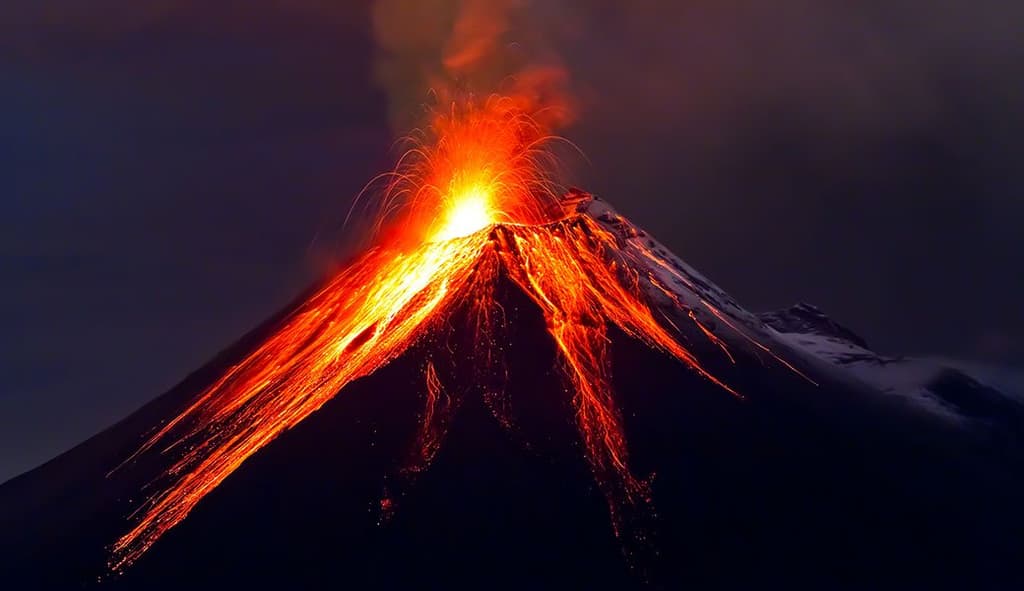
The strong market-implied odds against a VEI ≥6 eruption in 2026 reflect the low baseline frequency established by the geologic record, with such events recurring globally roughly once every 50–100 years on average. The most recent examples include Pinatubo in 1991 and Novarupta in 1912, both low-end VEI 6, while VEI 7 events occur only 1–2 times per millennium. As of mid-August 2026, official monitoring by the Smithsonian Global Volcanism Program and USGS shows dozens of ongoing eruptions, primarily at Etna, Kīlauea, and similar systems, but all remain well below the volume thresholds (≥10 km³ ejecta) and Plinian intensity required for VEI 6 classification. No large-magnitude precursors, such as rapid caldera inflation or widespread seismic swarms at high-risk systems, have been reported. A sudden escalation at an under-monitored volcano remains possible but statistically improbable given the remaining months of the year.
Ringkasan eksperimental yang dihasilkan AI dengan referensi data Polymarket. Ini bukan saran trading dan tidak berperan dalam bagaimana pasar ini diselesaikan. · DiperbaruiMajor volcano eruption (VEI ≥6) in 2026?
Major volcano eruption (VEI ≥6) in 2026?
$127,900 Vol.
$127,900 Vol.
$127,900 Vol.
$127,900 Vol.
The primary resolution source will be the Smithsonian Institution Global Volcanism Program (GVP: https://volcano.si.edu/), specifically the ‘VEI 6’ figure for 2026 released on the page currently titled "Eruptions Avg 2000-2024 (N/T)" (https://volcano.si.edu/faq/index.cfm?question=eruptionsbyyear) as of March 31, 2027, 12 PM ET. Any prior updates will not be considered finalized.
If this dataset has not been updated to include all relevant events by March 31, 2027, or if the Smithsonian GVP becomes permanently unavailable, this market may resolve based on a consensus of credible scientific sources, including the U.S. Geological Survey (USGS), national or regional volcanic observatories, or credible reporting of a scientific consensus.
Note: Smithsonian Institution Global Volcanism Program databases, which include eruptions that reached the relevant threshold prior to this market’s timeframe (e.g., https://volcano.si.edu/faq/index.cfm?question=eruptionsbyyear&checkyear=2025), will not be considered.
Pasar Dibuka: Dec 29, 2025, 6:24 PM ET
Resolver
0x65070BE91...The primary resolution source will be the Smithsonian Institution Global Volcanism Program (GVP: https://volcano.si.edu/), specifically the ‘VEI 6’ figure for 2026 released on the page currently titled "Eruptions Avg 2000-2024 (N/T)" (https://volcano.si.edu/faq/index.cfm?question=eruptionsbyyear) as of March 31, 2027, 12 PM ET. Any prior updates will not be considered finalized.
If this dataset has not been updated to include all relevant events by March 31, 2027, or if the Smithsonian GVP becomes permanently unavailable, this market may resolve based on a consensus of credible scientific sources, including the U.S. Geological Survey (USGS), national or regional volcanic observatories, or credible reporting of a scientific consensus.
Note: Smithsonian Institution Global Volcanism Program databases, which include eruptions that reached the relevant threshold prior to this market’s timeframe (e.g., https://volcano.si.edu/faq/index.cfm?question=eruptionsbyyear&checkyear=2025), will not be considered.
Resolver
0x65070BE91...The strong market-implied odds against a VEI ≥6 eruption in 2026 reflect the low baseline frequency established by the geologic record, with such events recurring globally roughly once every 50–100 years on average. The most recent examples include Pinatubo in 1991 and Novarupta in 1912, both low-end VEI 6, while VEI 7 events occur only 1–2 times per millennium. As of mid-August 2026, official monitoring by the Smithsonian Global Volcanism Program and USGS shows dozens of ongoing eruptions, primarily at Etna, Kīlauea, and similar systems, but all remain well below the volume thresholds (≥10 km³ ejecta) and Plinian intensity required for VEI 6 classification. No large-magnitude precursors, such as rapid caldera inflation or widespread seismic swarms at high-risk systems, have been reported. A sudden escalation at an under-monitored volcano remains possible but statistically improbable given the remaining months of the year.
Ringkasan eksperimental yang dihasilkan AI dengan referensi data Polymarket. Ini bukan saran trading dan tidak berperan dalam bagaimana pasar ini diselesaikan. · Diperbarui

Hati-hati dengan link eksternal.
Hati-hati dengan link eksternal.
Pertanyaan yang Sering Diajukan