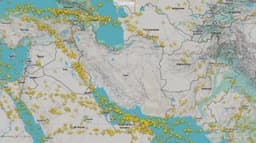
Ongoing military tensions in the US-Iran and Israel-Iran conflicts drive trader focus on Iran's airspace status, with repeated NOTAMs restricting the Tehran FIR due to air defense priorities and missile activity. Partial western closures have persisted since spring 2026, including extensions through May and disruptions in June amid strikes near Tehran, while eastern sectors partially reopened in July under a fragile ceasefire. EASA advisories continue to limit overflights, and recent pauses in US strikes since early August have not fully restored normal operations. Full nationwide closures remain infrequent, typically brief responses to imminent threats near the Strait of Hormuz or major retaliation cycles, leaving outcomes sensitive to any escalation in diplomatic breakdowns or cross-border strikes before late-August resolution windows.
Eksperymentalne podsumowanie AI odwołujące się do danych Polymarket. To nie jest porada handlowa i nie ma wpływu na rozstrzyganie tego rynku. · ZaktualizowanoIran full airspace closure by...?
Iran full airspace closure by...?
$8,388,784 Wol.
August 31
6%
September 30
15%
December 31
30%
$8,388,784 Wol.
August 31
6%
September 30
15%
December 31
30%
A “general closure” refers to a cancellation or suspension of aviation which is generally applicable to all commercial flights transiting Iranian airspace (“Tehran FIR”). A qualifying closure must apply generally to all of Iran or the Tehran FIR; limited cancellations, delays, or partial closures will not qualify. A closure which applies generally to commercial aviation across Iranian airspace, with limited exceptions for certain categories of flights, however, will qualify (e.g. exceptions for certain flights pre-approved by the Iranian Civil Aviation Authority may be permitted).
Qualifying previous examples include the February 28, 2026 total closure of Iranian airspace (https://www.iranintl.com/en/202602289115) and the January 2026 total closure of Iranian airspace except to international flights with express governmental permission (https://www.reuters.com/world/middle-east/iran-shuts-airspace-most-flights-flightradar24-says-2026-01-14/). Non-qualifying examples include the January 27, 2026 partial closure of Iranian airspace around the Strait of Hormuz (https://www.aa.com.tr/en/middle-east/iran-issues-airspace-notice-for-military-drills-near-strait-of-hormuz/3812508), the April 2024 closure of Iran’s western airspace (https://www.reuters.com/world/middle-east/iranian-airports-cancel-flights-until-monday-morning-2024-04-14/), and the January 25 - April 25, 2026 VFR (Visual Flight Rules) flights suspension which did not broadly close commercial aviation in Iran (https://www.intellinews.com/iran-suspends-general-aviation-and-vfr-flights-in-new-airspace-directive-421997/).
Warnings, No-Fly-Zones, or other flight restrictions imposed by airlines or countries other than Iran will not be sufficient for a “Yes” resolution.
Airspace closures which occur solely due to weather conditions, earthquakes, or volcanic eruptions, will not qualify.
The primary resolution sources for this market will be official information from Iranian aviation authorities and a consensus of credible reporting.
Rynek otwarty: Jul 18, 2026, 3:06 PM ET
Resolver
0x65070BE91...Wynik zaproponowany: No
Brak sporu
Ostateczny wynik: No
A “general closure” refers to a cancellation or suspension of aviation which is generally applicable to all commercial flights transiting Iranian airspace (“Tehran FIR”). A qualifying closure must apply generally to all of Iran or the Tehran FIR; limited cancellations, delays, or partial closures will not qualify. A closure which applies generally to commercial aviation across Iranian airspace, with limited exceptions for certain categories of flights, however, will qualify (e.g. exceptions for certain flights pre-approved by the Iranian Civil Aviation Authority may be permitted).
Qualifying previous examples include the February 28, 2026 total closure of Iranian airspace (https://www.iranintl.com/en/202602289115) and the January 2026 total closure of Iranian airspace except to international flights with express governmental permission (https://www.reuters.com/world/middle-east/iran-shuts-airspace-most-flights-flightradar24-says-2026-01-14/). Non-qualifying examples include the January 27, 2026 partial closure of Iranian airspace around the Strait of Hormuz (https://www.aa.com.tr/en/middle-east/iran-issues-airspace-notice-for-military-drills-near-strait-of-hormuz/3812508), the April 2024 closure of Iran’s western airspace (https://www.reuters.com/world/middle-east/iranian-airports-cancel-flights-until-monday-morning-2024-04-14/), and the January 25 - April 25, 2026 VFR (Visual Flight Rules) flights suspension which did not broadly close commercial aviation in Iran (https://www.intellinews.com/iran-suspends-general-aviation-and-vfr-flights-in-new-airspace-directive-421997/).
Warnings, No-Fly-Zones, or other flight restrictions imposed by airlines or countries other than Iran will not be sufficient for a “Yes” resolution.
Airspace closures which occur solely due to weather conditions, earthquakes, or volcanic eruptions, will not qualify.
The primary resolution sources for this market will be official information from Iranian aviation authorities and a consensus of credible reporting.
Resolver
0x65070BE91...Wynik zaproponowany: No
Brak sporu
Ostateczny wynik: No
Ongoing military tensions in the US-Iran and Israel-Iran conflicts drive trader focus on Iran's airspace status, with repeated NOTAMs restricting the Tehran FIR due to air defense priorities and missile activity. Partial western closures have persisted since spring 2026, including extensions through May and disruptions in June amid strikes near Tehran, while eastern sectors partially reopened in July under a fragile ceasefire. EASA advisories continue to limit overflights, and recent pauses in US strikes since early August have not fully restored normal operations. Full nationwide closures remain infrequent, typically brief responses to imminent threats near the Strait of Hormuz or major retaliation cycles, leaving outcomes sensitive to any escalation in diplomatic breakdowns or cross-border strikes before late-August resolution windows.
Eksperymentalne podsumowanie AI odwołujące się do danych Polymarket. To nie jest porada handlowa i nie ma wpływu na rozstrzyganie tego rynku. · Zaktualizowano

Uważaj na linki zewnętrzne.
Uważaj na linki zewnętrzne.
Często zadawane pytania