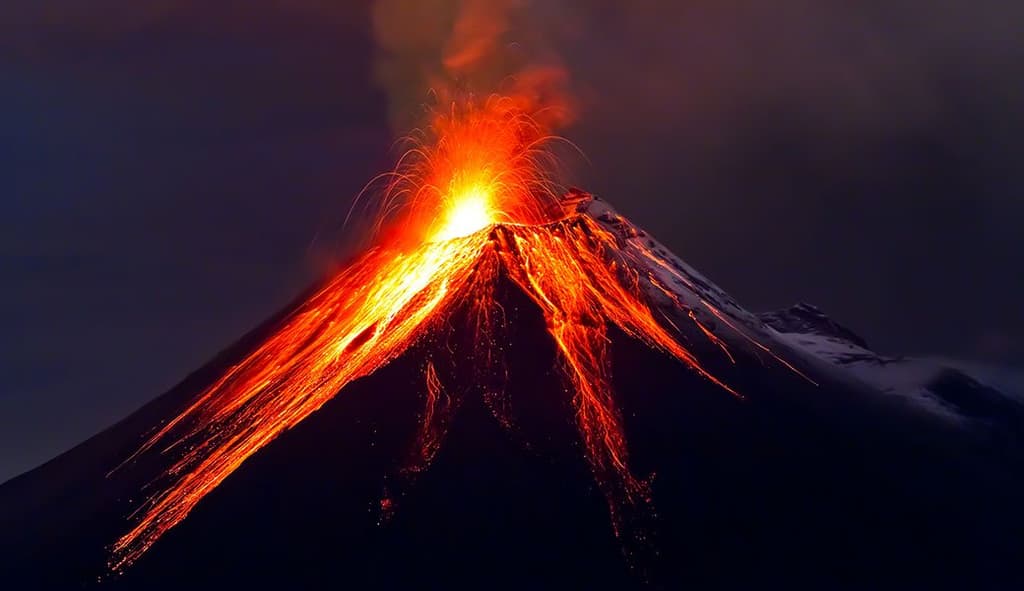
icon for Major volcano eruption (VEI ≥6) in 2026?

Major volcano eruption (VEI ≥6) in 2026?

icon for Major volcano eruption (VEI ≥6) in 2026?

Major volcano eruption (VEI ≥6) in 2026?

6% tsansa
Polymarket

$127,916 Vol.

6% tsansa
Polymarket

$127,916 Vol.

This market will resolve to "Yes" if a natural volcanic eruption with a Volcanic Explosivity Index (VEI) of 6 or higher occurs between the market's creation and December 31, 2026, 11:59 PM ET. Otherwise, this market will resolve to “No”. The primary resolution source will be the Smithsonian Institution Global Volcanism Program (GVP: https://volcano.si.edu/), specifically the ‘VEI 6’ figure for 2026 released on the page currently titled "Eruptions Avg 2000-2024 (N/T)" (https://volcano.si.edu/faq/index.cfm?question=eruptionsbyyear) as of March 31, 2027, 12 PM ET. Any prior updates will not be considered finalized. If this dataset has not been updated to include all relevant events by March 31, 2027, or if the Smithsonian GVP becomes permanently unavailable, this market may resolve based on a consensus of credible scientific sources, including the U.S. Geological Survey (USGS), national or regional volcanic observatories, or credible reporting of a scientific consensus. Note: Smithsonian Institution Global Volcanism Program databases, which include eruptions that reached the relevant threshold prior to this market’s timeframe (e.g., https://volcano.si.edu/faq/index.cfm?question=eruptionsbyyear&checkyear=2025), will not be considered.The strong market consensus favoring no VEI ≥6 eruption in 2026 stems primarily from the low historical frequency of such colossal events, which occur roughly once every 50–100 years based on the Smithsonian Global Volcanism Program record. The most recent example, Pinatubo in 1991, underscores this baseline rarity, and official monitoring by the USGS and similar agencies shows no current signs of unrest at high-risk calderas capable of rapid escalation to Plinian or ultra-Plinian scales. Ongoing activity at volcanoes like Etna or Fuego remains at much lower VEI levels. While atmospheric or seismic precursors could theoretically emerge quickly in unmonitored systems, the absence of elevated alerts through mid-August 2026 reinforces trader skepticism about an imminent shift.

This market will resolve to "Yes" if a natural volcanic eruption with a Volcanic Explosivity Index (VEI) of 6 or higher occurs between the market's creation and December 31, 2026, 11:59 PM ET. Otherwise, this market will resolve to “No”.

The primary resolution source will be the Smithsonian Institution Global Volcanism Program (GVP: https://volcano.si.edu/), specifically the ‘VEI 6’ figure for 2026 released on the page currently titled "Eruptions Avg 2000-2024 (N/T)" (https://volcano.si.edu/faq/index.cfm?question=eruptionsbyyear) as of March 31, 2027, 12 PM ET. Any prior updates will not be considered finalized.

If this dataset has not been updated to include all relevant events by March 31, 2027, or if the Smithsonian GVP becomes permanently unavailable, this market may resolve based on a consensus of credible scientific sources, including the U.S. Geological Survey (USGS), national or regional volcanic observatories, or credible reporting of a scientific consensus.

Note: Smithsonian Institution Global Volcanism Program databases, which include eruptions that reached the relevant threshold prior to this market’s timeframe (e.g., https://volcano.si.edu/faq/index.cfm?question=eruptionsbyyear&checkyear=2025), will not be considered.
Volume
$127,916
Petsa ng Pagtatapos
Mar 31, 2027
Binuksan ang Market
Dec 29, 2025, 6:24 PM ET
This market will resolve to "Yes" if a natural volcanic eruption with a Volcanic Explosivity Index (VEI) of 6 or higher occurs between the market's creation and December 31, 2026, 11:59 PM ET. Otherwise, this market will resolve to “No”. The primary resolution source will be the Smithsonian Institution Global Volcanism Program (GVP: https://volcano.si.edu/), specifically the ‘VEI 6’ figure for 2026 released on the page currently titled "Eruptions Avg 2000-2024 (N/T)" (https://volcano.si.edu/faq/index.cfm?question=eruptionsbyyear) as of March 31, 2027, 12 PM ET. Any prior updates will not be considered finalized. If this dataset has not been updated to include all relevant events by March 31, 2027, or if the Smithsonian GVP becomes permanently unavailable, this market may resolve based on a consensus of credible scientific sources, including the U.S. Geological Survey (USGS), national or regional volcanic observatories, or credible reporting of a scientific consensus. Note: Smithsonian Institution Global Volcanism Program databases, which include eruptions that reached the relevant threshold prior to this market’s timeframe (e.g., https://volcano.si.edu/faq/index.cfm?question=eruptionsbyyear&checkyear=2025), will not be considered.
This market will resolve to "Yes" if a natural volcanic eruption with a Volcanic Explosivity Index (VEI) of 6 or higher occurs between the market's creation and December 31, 2026, 11:59 PM ET. Otherwise, this market will resolve to “No”. The primary resolution source will be the Smithsonian Institution Global Volcanism Program (GVP: https://volcano.si.edu/), specifically the ‘VEI 6’ figure for 2026 released on the page currently titled "Eruptions Avg 2000-2024 (N/T)" (https://volcano.si.edu/faq/index.cfm?question=eruptionsbyyear) as of March 31, 2027, 12 PM ET. Any prior updates will not be considered finalized. If this dataset has not been updated to include all relevant events by March 31, 2027, or if the Smithsonian GVP becomes permanently unavailable, this market may resolve based on a consensus of credible scientific sources, including the U.S. Geological Survey (USGS), national or regional volcanic observatories, or credible reporting of a scientific consensus. Note: Smithsonian Institution Global Volcanism Program databases, which include eruptions that reached the relevant threshold prior to this market’s timeframe (e.g., https://volcano.si.edu/faq/index.cfm?question=eruptionsbyyear&checkyear=2025), will not be considered.The strong market consensus favoring no VEI ≥6 eruption in 2026 stems primarily from the low historical frequency of such colossal events, which occur roughly once every 50–100 years based on the Smithsonian Global Volcanism Program record. The most recent example, Pinatubo in 1991, underscores this baseline rarity, and official monitoring by the USGS and similar agencies shows no current signs of unrest at high-risk calderas capable of rapid escalation to Plinian or ultra-Plinian scales. Ongoing activity at volcanoes like Etna or Fuego remains at much lower VEI levels. While atmospheric or seismic precursors could theoretically emerge quickly in unmonitored systems, the absence of elevated alerts through mid-August 2026 reinforces trader skepticism about an imminent shift.

This market will resolve to "Yes" if a natural volcanic eruption with a Volcanic Explosivity Index (VEI) of 6 or higher occurs between the market's creation and December 31, 2026, 11:59 PM ET. Otherwise, this market will resolve to “No”.

The primary resolution source will be the Smithsonian Institution Global Volcanism Program (GVP: https://volcano.si.edu/), specifically the ‘VEI 6’ figure for 2026 released on the page currently titled "Eruptions Avg 2000-2024 (N/T)" (https://volcano.si.edu/faq/index.cfm?question=eruptionsbyyear) as of March 31, 2027, 12 PM ET. Any prior updates will not be considered finalized.

If this dataset has not been updated to include all relevant events by March 31, 2027, or if the Smithsonian GVP becomes permanently unavailable, this market may resolve based on a consensus of credible scientific sources, including the U.S. Geological Survey (USGS), national or regional volcanic observatories, or credible reporting of a scientific consensus.

Note: Smithsonian Institution Global Volcanism Program databases, which include eruptions that reached the relevant threshold prior to this market’s timeframe (e.g., https://volcano.si.edu/faq/index.cfm?question=eruptionsbyyear&checkyear=2025), will not be considered.
Volume
$127,916
Petsa ng Pagtatapos
Mar 31, 2027
Binuksan ang Market
Dec 29, 2025, 6:24 PM ET
This market will resolve to "Yes" if a natural volcanic eruption with a Volcanic Explosivity Index (VEI) of 6 or higher occurs between the market's creation and December 31, 2026, 11:59 PM ET. Otherwise, this market will resolve to “No”. The primary resolution source will be the Smithsonian Institution Global Volcanism Program (GVP: https://volcano.si.edu/), specifically the ‘VEI 6’ figure for 2026 released on the page currently titled "Eruptions Avg 2000-2024 (N/T)" (https://volcano.si.edu/faq/index.cfm?question=eruptionsbyyear) as of March 31, 2027, 12 PM ET. Any prior updates will not be considered finalized. If this dataset has not been updated to include all relevant events by March 31, 2027, or if the Smithsonian GVP becomes permanently unavailable, this market may resolve based on a consensus of credible scientific sources, including the U.S. Geological Survey (USGS), national or regional volcanic observatories, or credible reporting of a scientific consensus. Note: Smithsonian Institution Global Volcanism Program databases, which include eruptions that reached the relevant threshold prior to this market’s timeframe (e.g., https://volcano.si.edu/faq/index.cfm?question=eruptionsbyyear&checkyear=2025), will not be considered.

Mag-ingat sa mga external link.

Mga Madalas na Tanong

Ang "Major volcano eruption (VEI ≥6) in 2026?" ay isang prediction market sa Polymarket kung saan bumibili at nagbebenta ang mga trader ng "Yes" o "No" shares batay sa kung naniniwala silang mangyayari ang event na ito. Ang kasalukuyang crowd-sourced probability ay 6% para sa "Yes." Halimbawa, kung ang "Yes" ay naka-presyo sa 6¢, ang market ay kolektibong nagtatakda ng 6% na tsansa na mangyayari ang event na ito. Patuloy na nagbabago ang mga odds na ito habang tumutugon ang mga trader sa mga bagong development at impormasyon. Ang mga shares sa tamang outcome ay mare-redeem sa $1 bawat isa sa market resolution.

Sa ngayon, ang "Major volcano eruption (VEI ≥6) in 2026?" ay naka-generate ng $127.9K sa kabuuang trading volume mula nang ilunsad ang market noong Dec 29, 2025. Ang antas na ito ng trading activity ay sumasalamin sa malakas na engagement mula sa Polymarket community at tumutulong na matiyak na ang kasalukuyang odds ay sinusuportahan ng malawak na pool ng mga market participant. Maaari mong subaybayan ang live price movements at mag-trade sa anumang outcome nang direkta sa pahinang ito.

Para mag-trade sa "Major volcano eruption (VEI ≥6) in 2026?," piliin lang kung naniniwala ka na ang sagot ay "Yes" o "No." Ang bawat panig ay may kasalukuyang presyo na sumasalamin sa implied probability ng market. Ilagay ang iyong halaga at i-click ang "Trade." Kung bibili ka ng "Yes" shares at na-resolve ang outcome bilang "Yes," nagbabayad ang bawat share ng $1. Kung na-resolve bilang "No," ang iyong "Yes" shares ay nagkakahalaga ng $0. Maaari ka ring magbenta ng iyong shares anumang oras bago ang resolution kung gusto mong i-lock in ang kita o bawasan ang pagkalugi.

Ang kasalukuyang probability para sa "Major volcano eruption (VEI ≥6) in 2026?" ay 6% para sa "Yes." Ibig sabihin nito na kasalukuyang naniniwala ang Polymarket crowd na may 6% tsansa na mangyayari ang event na ito. Nag-a-update ang mga odds na ito sa real-time batay sa actual trades, na nagbibigay ng patuloy na ina-update na signal kung ano ang inaasahan ng market na mangyayari.

Ang mga resolution rules para sa "Major volcano eruption (VEI ≥6) in 2026?" ay tiyak na nagde-define kung ano ang kailangang mangyari para sa bawat outcome na maideklara bilang panalo — kasama ang mga opisyal na data source na ginagamit para matukoy ang resulta. Maaari mong i-review ang kumpletong resolution criteria sa "Rules" section sa pahinang ito sa itaas ng mga komento. Inirerekomenda namin na basahin nang mabuti ang mga patakaran bago mag-trade, dahil tinutukoy nila ang mga tiyak na kondisyon, edge cases, at mga source na namamahala kung paano nise-settle ang market na ito.