

**Recent technical demonstrations have advanced orbital AI compute but fall short of market thresholds for a qualifying "AI data center," keeping near-term odds low.** Starcloud’s November 2025 Starcloud-1 mission placed a single Nvidia H100 GPU in low Earth orbit, enabling the first in-space LLM training and Gemini inference runs, yet it carried far fewer than the required 100 data-center-grade accelerators. SpaceX unveiled its AI1 satellite design in June 2026 (~150 kW peak compute, roughly one server rack) and filed FCC plans for up to one million orbital AI satellites targeting initial deployment as early as 2028, while Google’s Project Suncatcher and Blue Origin’s Project Sunrise advanced prototype and constellation filings focused on solar-powered TPU/GPU clusters in sun-synchronous orbits. **Terrestrial constraints—power queues, water scarcity, and grid limits—drive interest, but economic and engineering hurdles remain steep.** Launch costs, radiation hardening, thermal management, and inter-satellite laser links must scale dramatically; most analysts view meaningful capacity (tens of MW+) as unlikely before the late 2020s even with Starship maturation. Upcoming catalysts include Google/Planet prototype launches targeted for early 2027, Starcloud’s planned follow-on missions, and FCC decisions on large constellations, all of which could shift sentiment if they demonstrate rack-scale or larger qualifying systems. Traders price strong long-term feasibility against near-term execution risk, reflecting aggregated capital-at-risk consensus on ambitious timelines.
Tóm tắt AI thử nghiệm tham chiếu dữ liệu Polymarket. Đây không phải tư vấn giao dịch và không ảnh hưởng đến cách thị trường này được giải quyết. · Cập nhật$44,279 KL.
December 31, 2026
2%
December 31, 2027
18%
$44,279 KL.
December 31, 2026
2%
December 31, 2027
18%
“Orbital data center” refers to any spacecraft, satellite, or equivalent technology carrying computing infrastructure that is launched into Earth’s orbit for the purpose of providing data-center, cloud-computing, or artificial intelligence computing services and which includes at least 100 data-center-grade AI accelerators, GPUs, TPUs, or substantially equivalent compute processors, (e.g. NVIDIA H100 GPUs, Google TPUs, or equivalent or successor chips).
“Successfully launched” refers to any launch which successfully places a qualifying orbital data center into Earth’s orbit.
The primary resolution source for this market will be a consensus of credible reporting.
Thị trường mở: May 14, 2026, 1:45 PM ET
Người giải quyết
0x65070BE91...“Orbital data center” refers to any spacecraft, satellite, or equivalent technology carrying computing infrastructure that is launched into Earth’s orbit for the purpose of providing data-center, cloud-computing, or artificial intelligence computing services and which includes at least 100 data-center-grade AI accelerators, GPUs, TPUs, or substantially equivalent compute processors, (e.g. NVIDIA H100 GPUs, Google TPUs, or equivalent or successor chips).
“Successfully launched” refers to any launch which successfully places a qualifying orbital data center into Earth’s orbit.
The primary resolution source for this market will be a consensus of credible reporting.
Người giải quyết
0x65070BE91...**Recent technical demonstrations have advanced orbital AI compute but fall short of market thresholds for a qualifying "AI data center," keeping near-term odds low.** Starcloud’s November 2025 Starcloud-1 mission placed a single Nvidia H100 GPU in low Earth orbit, enabling the first in-space LLM training and Gemini inference runs, yet it carried far fewer than the required 100 data-center-grade accelerators. SpaceX unveiled its AI1 satellite design in June 2026 (~150 kW peak compute, roughly one server rack) and filed FCC plans for up to one million orbital AI satellites targeting initial deployment as early as 2028, while Google’s Project Suncatcher and Blue Origin’s Project Sunrise advanced prototype and constellation filings focused on solar-powered TPU/GPU clusters in sun-synchronous orbits. **Terrestrial constraints—power queues, water scarcity, and grid limits—drive interest, but economic and engineering hurdles remain steep.** Launch costs, radiation hardening, thermal management, and inter-satellite laser links must scale dramatically; most analysts view meaningful capacity (tens of MW+) as unlikely before the late 2020s even with Starship maturation. Upcoming catalysts include Google/Planet prototype launches targeted for early 2027, Starcloud’s planned follow-on missions, and FCC decisions on large constellations, all of which could shift sentiment if they demonstrate rack-scale or larger qualifying systems. Traders price strong long-term feasibility against near-term execution risk, reflecting aggregated capital-at-risk consensus on ambitious timelines.
Tóm tắt AI thử nghiệm tham chiếu dữ liệu Polymarket. Đây không phải tư vấn giao dịch và không ảnh hưởng đến cách thị trường này được giải quyết. · Cập nhật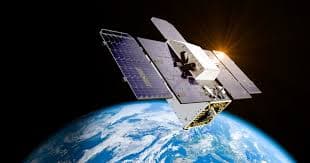

Cẩn thận với liên kết bên ngoài.
Cẩn thận với liên kết bên ngoài.
Câu hỏi thường gặp