
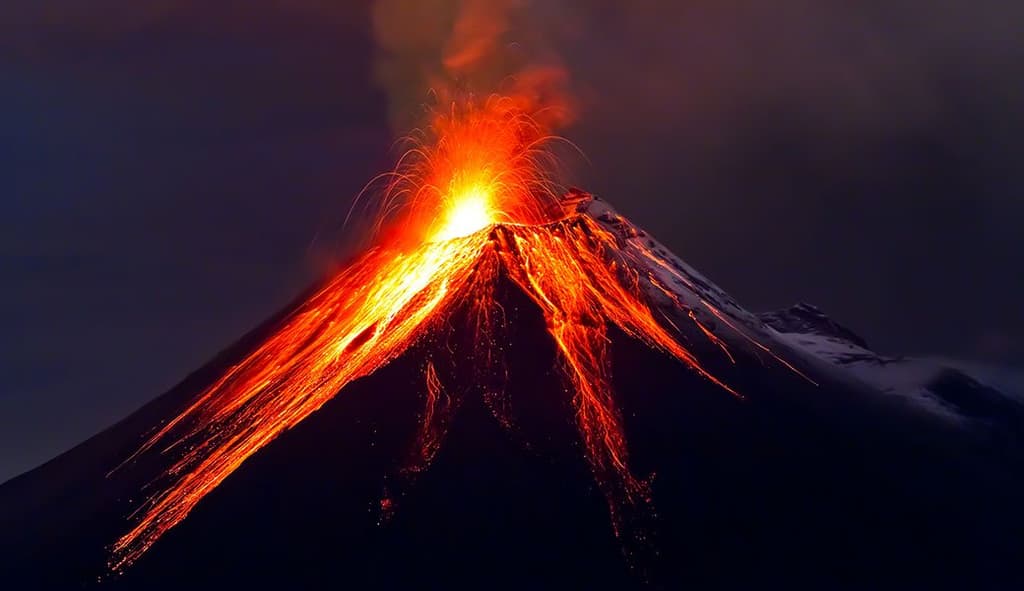
Trader consensus strongly favors no VEI ≥6 eruption occurring in 2026, reflecting the low historical frequency of these events, which have averaged roughly one per 50–100 years based on geological records. The most recent confirmed example was Mount Pinatubo in 1991, and current global monitoring by the USGS and similar agencies shows no volcanoes exhibiting the sustained magma accumulation or unrest required for such explosive magnitude. While atmospheric and seismic indicators continue to be tracked, no near-term triggers like rapid inflation or major tectonic shifts have emerged to elevate near-term odds.
Experimentelle KI-generierte Zusammenfassung mit Polymarket-Daten. Dies ist keine Handelsberatung und spielt keine Rolle bei der Auflösung dieses Marktes. · AktualisiertGroßer Vulkanausbruch (vei ≥6) im Jahr 2026?
Ja
$80,401 Vol.
$80,401 Vol.
31. März 2027
Ja
$80,401 Vol.
$80,401 Vol.
31. März 2027
This market will resolve to "Yes" if a natural volcanic eruption with a Volcanic Explosivity Index (VEI) of 6 or higher occurs between the market's creation and December 31, 2026, 11:59 PM ET. Otherwise, this market will resolve to “No”.
The primary resolution source will be the Smithsonian Institution Global Volcanism Program (GVP: https://volcano.si.edu/), specifically the ‘VEI 6’ figure for 2026 released on the page currently titled "Eruptions Avg 2000-2024 (N/T)" (https://volcano.si.edu/faq/index.cfm?question=eruptionsbyyear) as of March 31, 2027, 12 PM ET. Any prior updates will not be considered finalized.
If this dataset has not been updated to include all relevant events by March 31, 2027, or if the Smithsonian GVP becomes permanently unavailable, this market may resolve based on a consensus of credible scientific sources, including the U.S. Geological Survey (USGS), national or regional volcanic observatories, or credible reporting of a scientific consensus.
Note: Smithsonian Institution Global Volcanism Program databases, which include eruptions that reached the relevant threshold prior to this market’s timeframe (e.g., https://volcano.si.edu/faq/index.cfm?question=eruptionsbyyear&checkyear=2025), will not be considered.Trader consensus strongly favors no VEI ≥6 eruption occurring in 2026, reflecting the low historical frequency of these events, which have averaged roughly one per 50–100 years based on geological records. The most recent confirmed example was Mount Pinatubo in 1991, and current global monitoring by the USGS and similar agencies shows no volcanoes exhibiting the sustained magma accumulation or unrest required for such explosive magnitude. While atmospheric and seismic indicators continue to be tracked, no near-term triggers like rapid inflation or major tectonic shifts have emerged to elevate near-term odds.
This market will resolve to "Yes" if a natural volcanic eruption with a Volcanic Explosivity Index (VEI) of 6 or higher occurs between the market's creation and December 31, 2026, 11:59 PM ET. Otherwise, this market will resolve to “No”.
The primary resolution source will be the Smithsonian Institution Global Volcanism Program (GVP: https://volcano.si.edu/), specifically the ‘VEI 6’ figure for 2026 released on the page currently titled "Eruptions Avg 2000-2024 (N/T)" (https://volcano.si.edu/faq/index.cfm?question=eruptionsbyyear) as of March 31, 2027, 12 PM ET. Any prior updates will not be considered finalized.
If this dataset has not been updated to include all relevant events by March 31, 2027, or if the Smithsonian GVP becomes permanently unavailable, this market may resolve based on a consensus of credible scientific sources, including the U.S. Geological Survey (USGS), national or regional volcanic observatories, or credible reporting of a scientific consensus.
Note: Smithsonian Institution Global Volcanism Program databases, which include eruptions that reached the relevant threshold prior to this market’s timeframe (e.g., https://volcano.si.edu/faq/index.cfm?question=eruptionsbyyear&checkyear=2025), will not be considered.
The primary resolution source will be the Smithsonian Institution Global Volcanism Program (GVP: https://volcano.si.edu/), specifically the ‘VEI 6’ figure for 2026 released on the page currently titled "Eruptions Avg 2000-2024 (N/T)" (https://volcano.si.edu/faq/index.cfm?question=eruptionsbyyear) as of March 31, 2027, 12 PM ET. Any prior updates will not be considered finalized.
If this dataset has not been updated to include all relevant events by March 31, 2027, or if the Smithsonian GVP becomes permanently unavailable, this market may resolve based on a consensus of credible scientific sources, including the U.S. Geological Survey (USGS), national or regional volcanic observatories, or credible reporting of a scientific consensus.
Note: Smithsonian Institution Global Volcanism Program databases, which include eruptions that reached the relevant threshold prior to this market’s timeframe (e.g., https://volcano.si.edu/faq/index.cfm?question=eruptionsbyyear&checkyear=2025), will not be considered.
Markt eröffnet: Dec 29, 2025, 6:24 PM ET
Volumen
$80,401Enddatum
31. März 2027Markt eröffnet
Dec 29, 2025, 6:24 PM ETResolver
0x65070BE91...This market will resolve to "Yes" if a natural volcanic eruption with a Volcanic Explosivity Index (VEI) of 6 or higher occurs between the market's creation and December 31, 2026, 11:59 PM ET. Otherwise, this market will resolve to “No”.
The primary resolution source will be the Smithsonian Institution Global Volcanism Program (GVP: https://volcano.si.edu/), specifically the ‘VEI 6’ figure for 2026 released on the page currently titled "Eruptions Avg 2000-2024 (N/T)" (https://volcano.si.edu/faq/index.cfm?question=eruptionsbyyear) as of March 31, 2027, 12 PM ET. Any prior updates will not be considered finalized.
If this dataset has not been updated to include all relevant events by March 31, 2027, or if the Smithsonian GVP becomes permanently unavailable, this market may resolve based on a consensus of credible scientific sources, including the U.S. Geological Survey (USGS), national or regional volcanic observatories, or credible reporting of a scientific consensus.
Note: Smithsonian Institution Global Volcanism Program databases, which include eruptions that reached the relevant threshold prior to this market’s timeframe (e.g., https://volcano.si.edu/faq/index.cfm?question=eruptionsbyyear&checkyear=2025), will not be considered.Trader consensus strongly favors no VEI ≥6 eruption occurring in 2026, reflecting the low historical frequency of these events, which have averaged roughly one per 50–100 years based on geological records. The most recent confirmed example was Mount Pinatubo in 1991, and current global monitoring by the USGS and similar agencies shows no volcanoes exhibiting the sustained magma accumulation or unrest required for such explosive magnitude. While atmospheric and seismic indicators continue to be tracked, no near-term triggers like rapid inflation or major tectonic shifts have emerged to elevate near-term odds.
This market will resolve to "Yes" if a natural volcanic eruption with a Volcanic Explosivity Index (VEI) of 6 or higher occurs between the market's creation and December 31, 2026, 11:59 PM ET. Otherwise, this market will resolve to “No”.
The primary resolution source will be the Smithsonian Institution Global Volcanism Program (GVP: https://volcano.si.edu/), specifically the ‘VEI 6’ figure for 2026 released on the page currently titled "Eruptions Avg 2000-2024 (N/T)" (https://volcano.si.edu/faq/index.cfm?question=eruptionsbyyear) as of March 31, 2027, 12 PM ET. Any prior updates will not be considered finalized.
If this dataset has not been updated to include all relevant events by March 31, 2027, or if the Smithsonian GVP becomes permanently unavailable, this market may resolve based on a consensus of credible scientific sources, including the U.S. Geological Survey (USGS), national or regional volcanic observatories, or credible reporting of a scientific consensus.
Note: Smithsonian Institution Global Volcanism Program databases, which include eruptions that reached the relevant threshold prior to this market’s timeframe (e.g., https://volcano.si.edu/faq/index.cfm?question=eruptionsbyyear&checkyear=2025), will not be considered.
The primary resolution source will be the Smithsonian Institution Global Volcanism Program (GVP: https://volcano.si.edu/), specifically the ‘VEI 6’ figure for 2026 released on the page currently titled "Eruptions Avg 2000-2024 (N/T)" (https://volcano.si.edu/faq/index.cfm?question=eruptionsbyyear) as of March 31, 2027, 12 PM ET. Any prior updates will not be considered finalized.
If this dataset has not been updated to include all relevant events by March 31, 2027, or if the Smithsonian GVP becomes permanently unavailable, this market may resolve based on a consensus of credible scientific sources, including the U.S. Geological Survey (USGS), national or regional volcanic observatories, or credible reporting of a scientific consensus.
Note: Smithsonian Institution Global Volcanism Program databases, which include eruptions that reached the relevant threshold prior to this market’s timeframe (e.g., https://volcano.si.edu/faq/index.cfm?question=eruptionsbyyear&checkyear=2025), will not be considered.
Volumen
$80,401Enddatum
31. März 2027Markt eröffnet
Dec 29, 2025, 6:24 PM ETResolver
0x65070BE91...Trader consensus strongly favors no VEI ≥6 eruption occurring in 2026, reflecting the low historical frequency of these events, which have averaged roughly one per 50–100 years based on geological records. The most recent confirmed example was Mount Pinatubo in 1991, and current global monitoring by the USGS and similar agencies shows no volcanoes exhibiting the sustained magma accumulation or unrest required for such explosive magnitude. While atmospheric and seismic indicators continue to be tracked, no near-term triggers like rapid inflation or major tectonic shifts have emerged to elevate near-term odds.
Experimentelle KI-generierte Zusammenfassung mit Polymarket-Daten. Dies ist keine Handelsberatung und spielt keine Rolle bei der Auflösung dieses Marktes. · Aktualisiert
Vorsicht bei externen Links.
Häufig gestellte Fragen