
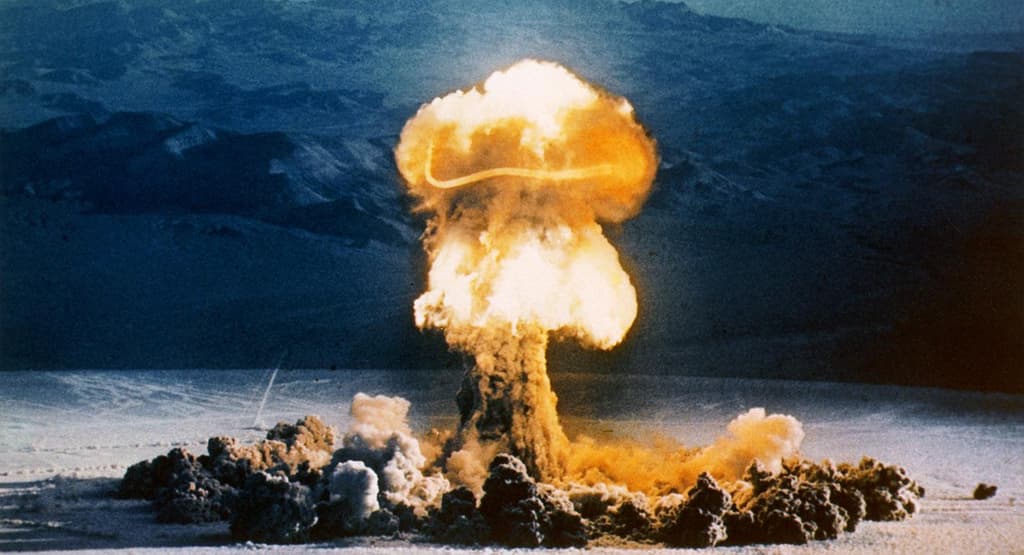
This market will resolve to "Yes" if Russia conducts a nuclear test by the listed date (ET). Otherwise, this market will resolve to "No".
A nuclear test is defined as the intentional non-combat detonation of a device by Russia that produces a nuclear chain reaction (fission or fusion), regardless of yield.
Accidents, radiological dispersal devices (bombs that spread radioactive material using conventional explosives such as "dirty bombs"), or actions by third parties will not count toward this market's resolution.
Tests not explicitly claimed by Russia may still qualify if a clear consensus of credible reporting attributes the nuclear detonation to Russia. For example, an unclaimed nuclear test analogous to the 1979 "Vela Incident" would count if credible reporting attributes it to Russia.
The resolution source for this market will be a broad consensus of credible reporting.Russia's recent test launch of the RS-28 Sarmat intercontinental ballistic missile on May 14, 2026—hailed by President Putin as the world's most powerful, capable of carrying multiple nuclear warheads and evading missile defenses—underscores Moscow's push to modernize strategic nuclear forces amid the expired New START treaty in February 2026 and ongoing Ukraine conflict. Earlier ICBM drills at the Kura range from May 6–10 further signal nuclear readiness, echoing 2025 proposals ordered by Putin for potential explosive tests following U.S. resumption signals. Yet, no verified plans exist for a nuclear detonation—the first since 1990—despite Russia's 2023 revocation of Comprehensive Nuclear-Test-Ban Treaty ratification. Traders weigh low escalation risks against diplomatic de-escalation or sanctions pressures, with Sarmat deployment eyed by year-end as a key milestone.
This market will resolve to "Yes" if Russia conducts a nuclear test by the listed date (ET). Otherwise, this market will resolve to "No".
A nuclear test is defined as the intentional non-combat detonation of a device by Russia that produces a nuclear chain reaction (fission or fusion), regardless of yield.
Accidents, radiological dispersal devices (bombs that spread radioactive material using conventional explosives such as "dirty bombs"), or actions by third parties will not count toward this market's resolution.
Tests not explicitly claimed by Russia may still qualify if a clear consensus of credible reporting attributes the nuclear detonation to Russia. For example, an unclaimed nuclear test analogous to the 1979 "Vela Incident" would count if credible reporting attributes it to Russia.
The resolution source for this market will be a broad consensus of credible reporting.
This market will resolve to "Yes" if Russia conducts a nuclear test by the listed date (ET). Otherwise, this market will resolve to "No".
A nuclear test is defined as the intentional non-combat detonation of a device by Russia that produces a nuclear chain reaction (fission or fusion), regardless of yield.
Accidents, radiological dispersal devices (bombs that spread radioactive material using conventional explosives such as "dirty bombs"), or actions by third parties will not count toward this market's resolution.
Tests not explicitly claimed by Russia may still qualify if a clear consensus of credible reporting attributes the nuclear detonation to Russia. For example, an unclaimed nuclear test analogous to the 1979 "Vela Incident" would count if credible reporting attributes it to Russia.
The resolution source for this market will be a broad consensus of credible reporting.
Russia's recent test launch of the RS-28 Sarmat intercontinental ballistic missile on May 14, 2026—hailed by President Putin as the world's most powerful, capable of carrying multiple nuclear warheads and evading missile defenses—underscores Moscow's push to modernize strategic nuclear forces amid the expired New START treaty in February 2026 and ongoing Ukraine conflict. Earlier ICBM drills at the Kura range from May 6–10 further signal nuclear readiness, echoing 2025 proposals ordered by Putin for potential explosive tests following U.S. resumption signals. Yet, no verified plans exist for a nuclear detonation—the first since 1990—despite Russia's 2023 revocation of Comprehensive Nuclear-Test-Ban Treaty ratification. Traders weigh low escalation risks against diplomatic de-escalation or sanctions pressures, with Sarmat deployment eyed by year-end as a key milestone.
Résumé expérimental généré par IA à partir des données Polymarket. Ceci n'est pas un conseil de trading et ne joue aucun rôle dans la résolution de ce marché. · Mis à jour
May 7 2026
Russia uses nuclear-capable Oreshnik missile in massive strike on Ukraine
September 30, 2026 dips to 5%1%
Russia launched a massive missile and drone strike on Ukraine, including the use of the nuclear-capable Oreshnik intermediate-range ballistic missile. While this demonstrated Russia’s willingness to deploy nuclear-capable weapons, no nuclear test was reported, and the strike was conventional in nature, influencing market perceptions downward for a nuclear test occurring soon.
May 6 2026
Russia and Ukraine envoys meet in Abu Dhabi for US-brokered peace talks
Diplomatic talks between Russia and Ukraine, brokered by the U.S., aimed at ending the nearly four-year war, signaled ongoing efforts to avoid escalation including nuclear testing. The talks coincided with the expiration of the last nuclear arms treaty, reinforcing market expectations against a nuclear test by Russia in the near term.
Apr 29 2026
Russia’s nuclear-capable Oreshnik missiles enter active service in Belarus
September 30, 2026 dips to 6%1%
Russia announced that its nuclear-capable Oreshnik missile system had entered active service in Belarus, demonstrating enhanced nuclear delivery capabilities. This development raised concerns about nuclear escalation but did not indicate an actual nuclear test, contributing to market uncertainty and price adjustments.
Apr 13 2026
U.S. imposes naval blockade on Iranian ports amid fragile ceasefire with Iran
December 31, 2026 dips to 8%4%
The U.S. military blockade of Iranian ports near the Strait of Hormuz raised regional tensions and cast doubt on the fragile ceasefire, increasing global security concerns but not directly implicating Russia in nuclear testing. This heightened geopolitical risk may have influenced market perceptions of nuclear escalation risks generally.
Apr 7 2026
Russia commits to adhering to New START nuclear arms limits despite treaty expiration
September 30, 2026 plunges to 10%41%
On April 7, 2026, Russian officials stated that Russia would continue to observe the limits of the expired New START treaty as long as the United States did the same. This commitment reduced market fears of imminent Russian nuclear testing, contributing to a sharp decline in the market price for a test by September 30, 2026.
Apr 3 2026
Russia conducts missile strikes including nuclear-capable missiles but no nuclear test
June 30, 2026 plunges to 3%47%
Russia launched a massive missile strike on Ukraine using nuclear-capable missiles, heightening fears of escalation. Despite the use of nuclear-capable weapons, no nuclear test detonation occurred, leading to further market price declines for the June 30, 2026 outcome.
Apr 2 2026
Russia launches massive missile and drone strike on Ukraine including nuclear-capable missile
June 30, 2026 plunges to 2%48%
On April 2, 2026, Russia conducted a large-scale missile and drone attack on Ukraine, using a nuclear-capable intermediate-range ballistic missile. While this demonstrated Russia's nuclear-capable strike capability, it was not a nuclear test, contributing to market price drops as fears of an actual nuclear test diminished.
Apr 2 2026
Russia deploys nuclear-capable Oreshnik missiles but no nuclear test reported
December 31, 2026 plunges to 13%37%
Russia announced the active service deployment of nuclear-capable Oreshnik missiles in Belarus, increasing nuclear tensions. However, no nuclear test was conducted or reported, contributing to the market's reassessment and price drop for the December 31, 2026 outcome.
Apr 2 2026
No credible reports of Russia conducting nuclear test amid heightened tensions
December 31, 2026 plunges to 9%42%
Despite military escalations and deployment of nuclear-capable weapons, no credible reports or confirmations emerged of Russia conducting a nuclear test during the analysis window. This absence of evidence led to a significant market reassessment and price decline for the likelihood of a nuclear test by Russia by the listed dates.
Apr 1 2026
No credible reports of Russian nuclear test emerge amid heightened tensions
September 30, 2026 plunges to 10%41%
Despite increased military activity and deployment of nuclear-capable missiles by Russia, no credible news or official confirmation of a nuclear test by Russia was reported during the analysis window. This absence of evidence led to a sharp decline in market prices for the likelihood of a Russian nuclear test by September 30, 2026.
Apr 1 2026
Russia deploys nuclear-capable Oreshnik missiles in Belarus amid Ukraine conflict
September 30, 2026 drops to 46%5%
On April 1, 2026, Russia announced that its nuclear-capable Oreshnik missile system had entered active service in Belarus, signaling a strategic military escalation. This deployment raised concerns about potential nuclear use but did not constitute a nuclear test, leading to initial market uncertainty reflected in prices around this date.
This market will resolve to "Yes" if Russia conducts a nuclear test by the listed date (ET). Otherwise, this market will resolve to "No".
A nuclear test is defined as the intentional non-combat detonation of a device by Russia that produces a nuclear chain reaction (fission or fusion), regardless of yield.
Accidents, radiological dispersal devices (bombs that spread radioactive material using conventional explosives such as "dirty bombs"), or actions by third parties will not count toward this market's resolution.
Tests not explicitly claimed by Russia may still qualify if a clear consensus of credible reporting attributes the nuclear detonation to Russia. For example, an unclaimed nuclear test analogous to the 1979 "Vela Incident" would count if credible reporting attributes it to Russia.
The resolution source for this market will be a broad consensus of credible reporting.Russia's recent test launch of the RS-28 Sarmat intercontinental ballistic missile on May 14, 2026—hailed by President Putin as the world's most powerful, capable of carrying multiple nuclear warheads and evading missile defenses—underscores Moscow's push to modernize strategic nuclear forces amid the expired New START treaty in February 2026 and ongoing Ukraine conflict. Earlier ICBM drills at the Kura range from May 6–10 further signal nuclear readiness, echoing 2025 proposals ordered by Putin for potential explosive tests following U.S. resumption signals. Yet, no verified plans exist for a nuclear detonation—the first since 1990—despite Russia's 2023 revocation of Comprehensive Nuclear-Test-Ban Treaty ratification. Traders weigh low escalation risks against diplomatic de-escalation or sanctions pressures, with Sarmat deployment eyed by year-end as a key milestone.
This market will resolve to "Yes" if Russia conducts a nuclear test by the listed date (ET). Otherwise, this market will resolve to "No".
A nuclear test is defined as the intentional non-combat detonation of a device by Russia that produces a nuclear chain reaction (fission or fusion), regardless of yield.
Accidents, radiological dispersal devices (bombs that spread radioactive material using conventional explosives such as "dirty bombs"), or actions by third parties will not count toward this market's resolution.
Tests not explicitly claimed by Russia may still qualify if a clear consensus of credible reporting attributes the nuclear detonation to Russia. For example, an unclaimed nuclear test analogous to the 1979 "Vela Incident" would count if credible reporting attributes it to Russia.
The resolution source for this market will be a broad consensus of credible reporting.
This market will resolve to "Yes" if Russia conducts a nuclear test by the listed date (ET). Otherwise, this market will resolve to "No".
A nuclear test is defined as the intentional non-combat detonation of a device by Russia that produces a nuclear chain reaction (fission or fusion), regardless of yield.
Accidents, radiological dispersal devices (bombs that spread radioactive material using conventional explosives such as "dirty bombs"), or actions by third parties will not count toward this market's resolution.
Tests not explicitly claimed by Russia may still qualify if a clear consensus of credible reporting attributes the nuclear detonation to Russia. For example, an unclaimed nuclear test analogous to the 1979 "Vela Incident" would count if credible reporting attributes it to Russia.
The resolution source for this market will be a broad consensus of credible reporting.
Russia's recent test launch of the RS-28 Sarmat intercontinental ballistic missile on May 14, 2026—hailed by President Putin as the world's most powerful, capable of carrying multiple nuclear warheads and evading missile defenses—underscores Moscow's push to modernize strategic nuclear forces amid the expired New START treaty in February 2026 and ongoing Ukraine conflict. Earlier ICBM drills at the Kura range from May 6–10 further signal nuclear readiness, echoing 2025 proposals ordered by Putin for potential explosive tests following U.S. resumption signals. Yet, no verified plans exist for a nuclear detonation—the first since 1990—despite Russia's 2023 revocation of Comprehensive Nuclear-Test-Ban Treaty ratification. Traders weigh low escalation risks against diplomatic de-escalation or sanctions pressures, with Sarmat deployment eyed by year-end as a key milestone.
Résumé expérimental généré par IA à partir des données Polymarket. Ceci n'est pas un conseil de trading et ne joue aucun rôle dans la résolution de ce marché. · Mis à jour
May 7 2026
Russia uses nuclear-capable Oreshnik missile in massive strike on Ukraine
September 30, 2026 dips to 5%1%
Russia launched a massive missile and drone strike on Ukraine, including the use of the nuclear-capable Oreshnik intermediate-range ballistic missile. While this demonstrated Russia’s willingness to deploy nuclear-capable weapons, no nuclear test was reported, and the strike was conventional in nature, influencing market perceptions downward for a nuclear test occurring soon.
May 6 2026
Russia and Ukraine envoys meet in Abu Dhabi for US-brokered peace talks
Diplomatic talks between Russia and Ukraine, brokered by the U.S., aimed at ending the nearly four-year war, signaled ongoing efforts to avoid escalation including nuclear testing. The talks coincided with the expiration of the last nuclear arms treaty, reinforcing market expectations against a nuclear test by Russia in the near term.
Apr 29 2026
Russia’s nuclear-capable Oreshnik missiles enter active service in Belarus
September 30, 2026 dips to 6%1%
Russia announced that its nuclear-capable Oreshnik missile system had entered active service in Belarus, demonstrating enhanced nuclear delivery capabilities. This development raised concerns about nuclear escalation but did not indicate an actual nuclear test, contributing to market uncertainty and price adjustments.
Apr 13 2026
U.S. imposes naval blockade on Iranian ports amid fragile ceasefire with Iran
December 31, 2026 dips to 8%4%
The U.S. military blockade of Iranian ports near the Strait of Hormuz raised regional tensions and cast doubt on the fragile ceasefire, increasing global security concerns but not directly implicating Russia in nuclear testing. This heightened geopolitical risk may have influenced market perceptions of nuclear escalation risks generally.
Apr 7 2026
Russia commits to adhering to New START nuclear arms limits despite treaty expiration
September 30, 2026 plunges to 10%41%
On April 7, 2026, Russian officials stated that Russia would continue to observe the limits of the expired New START treaty as long as the United States did the same. This commitment reduced market fears of imminent Russian nuclear testing, contributing to a sharp decline in the market price for a test by September 30, 2026.
Apr 3 2026
Russia conducts missile strikes including nuclear-capable missiles but no nuclear test
June 30, 2026 plunges to 3%47%
Russia launched a massive missile strike on Ukraine using nuclear-capable missiles, heightening fears of escalation. Despite the use of nuclear-capable weapons, no nuclear test detonation occurred, leading to further market price declines for the June 30, 2026 outcome.
Apr 2 2026
Russia launches massive missile and drone strike on Ukraine including nuclear-capable missile
June 30, 2026 plunges to 2%48%
On April 2, 2026, Russia conducted a large-scale missile and drone attack on Ukraine, using a nuclear-capable intermediate-range ballistic missile. While this demonstrated Russia's nuclear-capable strike capability, it was not a nuclear test, contributing to market price drops as fears of an actual nuclear test diminished.
Apr 2 2026
Russia deploys nuclear-capable Oreshnik missiles but no nuclear test reported
December 31, 2026 plunges to 13%37%
Russia announced the active service deployment of nuclear-capable Oreshnik missiles in Belarus, increasing nuclear tensions. However, no nuclear test was conducted or reported, contributing to the market's reassessment and price drop for the December 31, 2026 outcome.
Apr 2 2026
No credible reports of Russia conducting nuclear test amid heightened tensions
December 31, 2026 plunges to 9%42%
Despite military escalations and deployment of nuclear-capable weapons, no credible reports or confirmations emerged of Russia conducting a nuclear test during the analysis window. This absence of evidence led to a significant market reassessment and price decline for the likelihood of a nuclear test by Russia by the listed dates.
Apr 1 2026
No credible reports of Russian nuclear test emerge amid heightened tensions
September 30, 2026 plunges to 10%41%
Despite increased military activity and deployment of nuclear-capable missiles by Russia, no credible news or official confirmation of a nuclear test by Russia was reported during the analysis window. This absence of evidence led to a sharp decline in market prices for the likelihood of a Russian nuclear test by September 30, 2026.
Apr 1 2026
Russia deploys nuclear-capable Oreshnik missiles in Belarus amid Ukraine conflict
September 30, 2026 drops to 46%5%
On April 1, 2026, Russia announced that its nuclear-capable Oreshnik missile system had entered active service in Belarus, signaling a strategic military escalation. This deployment raised concerns about potential nuclear use but did not constitute a nuclear test, leading to initial market uncertainty reflected in prices around this date.
Méfiez-vous des liens externes.
Questions fréquentes
« Essai nucléaire de la Russie par… ? » est un marché de prédiction sur Polymarket avec 6 résultats possibles où les traders achètent et vendent des parts selon ce qu'ils pensent qu'il se passera. Le résultat en tête actuel est « 30 septembre 2026 » à 4%, suivi de « 31 décembre 2026 » à 4%. Les prix reflètent des probabilités en temps réel de la communauté. Par exemple, une part cotée à 4¢ implique que le marché attribue collectivement une probabilité de 4% à ce résultat. Ces cotes changent en permanence. Les parts du résultat correct sont échangeables contre $1 chacune lors de la résolution du marché.
À ce jour, « Essai nucléaire de la Russie par… ? » a généré $1.4 million en volume total de trading depuis le lancement du marché le Nov 5, 2025. Ce niveau d'activité reflète un fort engagement de la communauté Polymarket et garantit que les cotes actuelles sont alimentées par un large bassin de participants. Vous pouvez suivre les mouvements de prix en direct et trader sur n'importe quel résultat directement sur cette page.
Pour trader sur « Essai nucléaire de la Russie par… ? », parcourez les 6 résultats disponibles sur cette page. Chaque résultat affiche un prix actuel représentant la probabilité implicite du marché. Pour prendre position, sélectionnez le résultat que vous estimez le plus probable, choisissez « Oui » pour trader en sa faveur ou « Non » pour trader contre, entrez votre montant et cliquez sur « Trader ». Si votre résultat choisi est correct lors de la résolution, vos parts « Oui » rapportent $1 chacune. S'il est incorrect, elles rapportent $0. Vous pouvez également vendre vos parts avant la résolution.
C'est un marché très ouvert. Le leader actuel pour « Essai nucléaire de la Russie par… ? » est « 30 septembre 2026 » à seulement 4%, avec « 31 décembre 2026 » juste derrière à 4%. Aucun résultat ne dominant clairement, les traders voient cela comme très incertain, ce qui peut présenter des opportunités de trading uniques. Ces cotes sont mises à jour en temps réel, alors ajoutez cette page à vos favoris.
Les règles de résolution de « Essai nucléaire de la Russie par… ? » définissent exactement ce qui doit se produire pour que chaque résultat soit déclaré gagnant, y compris les sources de données officielles utilisées pour déterminer le résultat. Vous pouvez consulter les critères de résolution complets dans la section « Règles » sur cette page au-dessus des commentaires. Nous recommandons de lire attentivement les règles avant de trader, car elles précisent les conditions exactes, les cas particuliers et les sources.
Oui. Vous n'avez pas besoin de trader pour rester informé. Cette page sert de suivi en direct pour « Essai nucléaire de la Russie par… ? ». Les probabilités des résultats sont mises à jour en temps réel à mesure que de nouvelles transactions arrivent. Vous pouvez ajouter cette page à vos favoris et consulter la section commentaires pour voir ce que disent les autres traders. Vous pouvez également utiliser les filtres de plage temporelle sur le graphique pour voir comment les cotes ont évolué au fil du temps.
Les cotes de Polymarket sont fixées par de vrais traders qui mettent de l'argent réel derrière leurs convictions, ce qui tend à produire des prédictions précises. Avec $1.4 million échangés sur « Essai nucléaire de la Russie par… ? », ces prix agrègent les connaissances collectives et la conviction de milliers de participants — surpassant souvent les sondages, les prévisions d’experts et les enquêtes traditionnelles. Les marchés de prédiction comme Polymarket ont un solide historique de précision, surtout à mesure que les événements approchent de leur date de résolution. Par exemple, Polymarket a un score de précision sur un mois de 94%. Pour les dernières statistiques sur la précision des prédictions de Polymarket, visitez la page de précision sur Polymarket.
Pour placer votre première transaction sur « Essai nucléaire de la Russie par… ? », inscrivez-vous pour un compte Polymarket gratuit et approvisionnez-le en utilisant des cryptomonnaies, une carte de crédit ou débit, ou un virement bancaire. Une fois votre compte approvisionné, revenez sur cette page, sélectionnez le résultat sur lequel vous souhaitez trader, entrez votre montant et cliquez sur « Trader ». Si vous êtes nouveau dans les marchés de prédiction, cliquez sur le lien « Comment ça marche » en haut de n'importe quelle page Polymarket pour un guide étape par étape.
Sur Polymarket, le prix de chaque résultat représente la probabilité implicite du marché. Un prix de 4¢ pour « 30 septembre 2026 » sur le marché « Essai nucléaire de la Russie par… ? » signifie que les traders estiment collectivement qu'il y a environ une probabilité de 4% que « 30 septembre 2026 » sera le résultat correct. Si vous achetez des parts « Oui » à 4¢ et que le résultat est correct, vous recevez $1,00 par part — un gain de 96¢ par part. S'il est incorrect, ces parts valent $0.
La date de fin prévue du marché « Essai nucléaire de la Russie par… ? » est passée, mais le marché n'a pas encore été officiellement résolu. La date de fin indique quand l'événement sous-jacent est censé se produire ou devenir connaissable. Le marché reste ouvert au trading jusqu'à ce que le résultat soit formellement résolu. Consultez le statut de résolution et la section « Règles » sur cette page pour les mises à jour.
Le marché « Essai nucléaire de la Russie par… ? » a une discussion croissante de 7 commentaires où les traders partagent leurs analyses, débattent des résultats et discutent des derniers développements. Faites défiler jusqu'à la section commentaires ci-dessous pour lire ce que pensent les autres participants. Vous pouvez également filtrer par « Principaux détenteurs » ou consulter l'onglet « Activité » pour un flux en temps réel des transactions.
Polymarket est le plus grand marché de prédiction au monde, où vous pouvez rester informé et profiter de vos connaissances sur les événements du monde réel. Les traders achètent et vendent des parts sur des résultats allant de la politique et des élections aux cryptomonnaies, finances, sports, technologie et culture, y compris des marchés comme « Essai nucléaire de la Russie par… ? ». Les prix reflètent des probabilités en temps réel soutenues par une conviction financière, fournissant souvent des signaux plus rapides et plus précis que les sondages, les commentateurs ou les enquêtes traditionnelles.
Méfiez-vous des liens externes.
Questions fréquentes