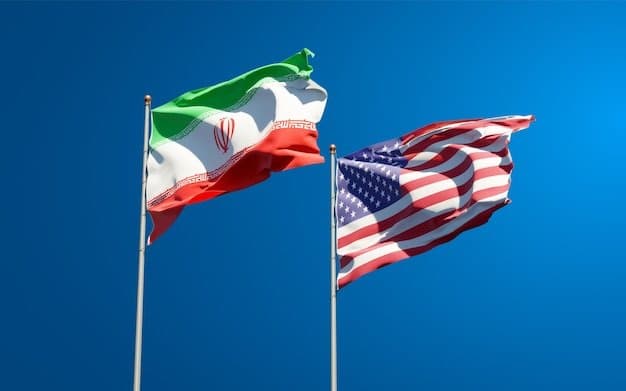
This market will resolve to "Yes" if there is a diplomatic meeting between representatives of the United States and Iran by the listed date, 11:59 PM ET. Otherwise, this market will resolve to “No”.
A diplomatic meeting refers to a deliberate meeting between representatives of the listed countries who are acting in an official capacity and are authorized to engage in negotiation or diplomacy regarding US-Iranian relations on behalf of their governments. Meetings conducted indirectly, for example, through designated mediators, facilitators, or interlocutors acting with the knowledge and authorization of the relevant governments, will qualify.
Brief greetings, chance encounters, or talks otherwise not deliberately aimed at diplomacy or negotiation will not count.
The meeting must be in-person (including indirect in-person meetings) and must be publicly acknowledged by either government or reported by a consensus of credible media. Remote meetings, phone calls, or other meetings where the relevant parties are not present will not count.
The resolution sources for this market will be official information from the governments of the United States and Iran, and a consensus of credible reporting.Recent diplomatic efforts between the United States and Iran center on mediated talks in Pakistan and indirect channels, driven by demands over nuclear restrictions, sanctions relief, and reopening the Strait of Hormuz following a fragile April 2026 ceasefire. As of mid-May, proposals have stalled without a formal bilateral meeting, amid mixed signals from President Trump and Iranian officials rejecting excessive demands. A May summit between Trump and Chinese leader Xi Jinping highlighted Beijing's role in supporting Tehran, while U.S. intelligence assessments note Iran's skepticism toward serious negotiations. Upcoming developments include potential follow-up rounds or BRICS-related contacts that could shift momentum before any June resolution deadline. Trader pricing reflects this impasse as the dominant factor limiting near-term prospects.
This market will resolve to "Yes" if there is a diplomatic meeting between representatives of the United States and Iran by the listed date, 11:59 PM ET. Otherwise, this market will resolve to “No”.
A diplomatic meeting refers to a deliberate meeting between representatives of the listed countries who are acting in an official capacity and are authorized to engage in negotiation or diplomacy regarding US-Iranian relations on behalf of their governments. Meetings conducted indirectly, for example, through designated mediators, facilitators, or interlocutors acting with the knowledge and authorization of the relevant governments, will qualify.
Brief greetings, chance encounters, or talks otherwise not deliberately aimed at diplomacy or negotiation will not count.
The meeting must be in-person (including indirect in-person meetings) and must be publicly acknowledged by either government or reported by a consensus of credible media. Remote meetings, phone calls, or other meetings where the relevant parties are not present will not count.
The resolution sources for this market will be official information from the governments of the United States and Iran, and a consensus of credible reporting.
This market will resolve to "Yes" if there is a diplomatic meeting between representatives of the United States and Iran by the listed date, 11:59 PM ET. Otherwise, this market will resolve to “No”.
A diplomatic meeting refers to a deliberate meeting between representatives of the listed countries who are acting in an official capacity and are authorized to engage in negotiation or diplomacy regarding US-Iranian relations on behalf of their governments. Meetings conducted indirectly, for example, through designated mediators, facilitators, or interlocutors acting with the knowledge and authorization of the relevant governments, will qualify.
Brief greetings, chance encounters, or talks otherwise not deliberately aimed at diplomacy or negotiation will not count.
The meeting must be in-person (including indirect in-person meetings) and must be publicly acknowledged by either government or reported by a consensus of credible media. Remote meetings, phone calls, or other meetings where the relevant parties are not present will not count.
The resolution sources for this market will be official information from the governments of the United States and Iran, and a consensus of credible reporting.
Recent diplomatic efforts between the United States and Iran center on mediated talks in Pakistan and indirect channels, driven by demands over nuclear restrictions, sanctions relief, and reopening the Strait of Hormuz following a fragile April 2026 ceasefire. As of mid-May, proposals have stalled without a formal bilateral meeting, amid mixed signals from President Trump and Iranian officials rejecting excessive demands. A May summit between Trump and Chinese leader Xi Jinping highlighted Beijing's role in supporting Tehran, while U.S. intelligence assessments note Iran's skepticism toward serious negotiations. Upcoming developments include potential follow-up rounds or BRICS-related contacts that could shift momentum before any June resolution deadline. Trader pricing reflects this impasse as the dominant factor limiting near-term prospects.
Résumé expérimental généré par IA à partir des données Polymarket. Ceci n'est pas un conseil de trading et ne joue aucun rôle dans la résolution de ce marché. · Mis à jour
May 14 2026
Iran fully closes Strait of Hormuz again
May 15 drops to 0%12%
Iran re‑closed the Strait of Hormuz on May 14, worsening the strategic outlook and driving the price for a May 15 meeting to its lowest point.
May 14 2026
Market reaches endpoint: Yes probability 0% for May‑15 meeting
May 15 dips to 0%2%
By the end of the analysis window, no credible diplomatic progress had occurred, leaving the market at zero confidence for a meeting before May 15.
May 12 2026
Iran’s army chief threatens pre‑emptive attack over U.S. rhetoric
May 31 drops to 24%6%
The threatening statement from Iran’s army chief increased the perception of a hostile environment, further depressing the May‑31 price from 30% to 24% and the June‑30 price from 63% to 59%.
May 12 2026
Trump rejects Iran’s latest proposal to end war
May 15 dips to 1%2%
President Trump rejected Iran’s latest peace proposal, citing dissatisfaction and Iran’s fractured leadership, which diminished market expectations for a diplomatic meeting by May 15 and May 31.
May 12 2026
Pakistani delegation meets Iranian officials in Tehran to arrange US‑Iran talks
May 31 drops to 30%8%
The meeting suggested a possible diplomatic breakthrough, briefly stabilizing the market and raising the May‑31 price from 38% back to 30% before it fell again later in the week.
May 12 2026
Iran’s foreign minister says Tehran will not negotiate until U.S. lifts blockade
June 30 dips to 60%3%
The statement underscored a stalemate, coinciding with the lowest points for the May‑31 and June‑30 outcomes as market participants priced in a low probability of a meeting.
May 12 2026
Qatar foreign minister meets US Vice President Vance on Mideast talks
June 30 drops to 63%8%
Qatar’s foreign minister met JD Vance on May 12 to discuss US‑Iran mediation, providing a modest boost to expectations for a meeting by June 30.
May 10 2026
President Trump rejects Iran’s latest peace proposal
May 15 plunges to 55%16%
Trump’s public dismissal of Iran’s proposal signaled a stalled diplomatic process, causing the May‑15 price to tumble from 71% to 55% over the next two days.
May 10 2026
Trump rejects Iran’s latest cease‑fire proposal
May 15 plunges to 12%21%
President Trump publicly rejected Iran’s new proposal on May 10, signaling continued deadlock and pushing the market price for a May 15 meeting toward zero.
May 10 2026
Trump says all options are on the table at UN Security Council
May 31 drops to 30%14%
Trump’s aggressive rhetoric at the UN signaled no imminent diplomatic breakthrough, coinciding with the May‑31 price dropping from 44% to 30% and the June‑30 price falling from 75% to 65%.
May 8 2026
US fires on and disables two Iranian tankers as tensions rise in Strait of Hormuz
May 31 plunges to 28%16%
US forces disabled two Iranian oil tankers attempting to breach the blockade, escalating military tensions and undermining prospects for diplomatic meetings before May 31. This contributed to further declines in market probabilities for near-term meetings.
May 8 2026
U.S. forces fire on and disable two Iranian tankers in Hormuz
May 31 drops to 44%5%
The direct military engagement heightened the risk of escalation, causing the May‑31 price to fall from 49% to 44% and the June‑30 price to slip from 72% to 65% that day.
May 8 2026
US forces fire on and disable two Iranian tankers in the Strait of Hormuz
June 30 drops to 60%13%
The US disabling of Iranian tankers escalated military tension, leading to a sharp price decline for the June‑30 outcome from 73% to 60% within two days.
May 8 2026
US fires on two Iranian tankers in Strait of Hormuz
May 15 drops to 33%12%
U.S. forces disabled two Iranian tankers on May 8, reigniting military tension and sharply reducing confidence for any diplomatic meeting by May 15.
May 7 2026
U.S. announces ‘Project Freedom’ to guide ships out of the Strait, then pauses effort
May 31 drops to 38%6%
The mixed signals about reopening the strait further eroded confidence in any near‑term diplomatic meeting, pushing the May‑31 price down further.
May 6 2026
Iran announces reopening of Strait of Hormuz
June 30 rises to 71%2%
Iran declared the Strait of Hormuz reopened on May 6, easing regional tensions and briefly raising market optimism for a US‑Iran meeting by June 30.
May 2 2026
U.S. warns shipping firms of sanctions for paying Iran to transit Hormuz
June 30 drops to 61%7%
The Treasury’s warning that payments to Iran could trigger sanctions underscored the hostile environment, further eroding market confidence and pushing the June‑30 price from 68% to 61% on May 2.
May 2 2026
US envoy trip to Islamabad cancelled by Trump
May 31 rises to 47%3%
President Trump told envoys not to travel to Islamabad on May 2, halting the planned US delegation and further lowering odds for a meeting by May 31.
May 1 2026
U.S. forces fire on and disable two Iranian tankers in the Strait of Hormuz
May 15 drops to 12%6%
The direct military action heightened the risk of escalation, causing a sharp drop in the May‑15 price as traders saw diplomatic engagement receding.
Apr 30 2026
US‑Iran cease‑fire talks end without agreement in Pakistan
May 31 drops to 44%7%
The 21‑hour face‑to‑face talks in Pakistan concluded without a deal on April 30, causing a sharp decline in confidence for a meeting by May 31.
Apr 30 2026
Iran fully closes Strait of Hormuz and fires on ships amid US blockade
May 15 drops to 23%14%
Iran reversed its reopening of the Strait of Hormuz and fired on ships attempting to pass, escalating tensions and undermining prospects for diplomatic meetings, leading to a sharp drop in market prices for May 15 and May 31 outcomes.
Apr 30 2026
US Navy seizes Iranian‑flagged cargo ship near Strait of Hormuz
May 31 drops to 38%7%
The seizure was viewed as a provocative act that further reduced expectations of a diplomatic meeting, pushing the May‑31 price from 45% to 38% the following day.
Apr 28 2026
US announces naval blockade of Iranian ports
May 31 drops to 51%14%
President Trump announced a full naval blockade of Iranian ports on April 28, intensifying pressure on Tehran and dampening expectations for an imminent in‑person meeting.
Apr 26 2026
Iranian foreign minister briefly returns to Pakistan, Trump urges phone talks
May 31 drops to 44%5%
Iran’s foreign minister’s brief visit to Islamabad ended with Trump refusing to send envoys, reinforcing the perception that in‑person talks were stalled, contributing to the May‑31 price dip from 49% to 44% that day.
Apr 26 2026
Iranian foreign minister returns to Pakistan; Trump prefers phone talks
May 15 drops to 71%8%
The brief return of Iran’s foreign minister to Islamabad raised hopes for a second round of talks, but Trump’s insistence on phone negotiations dampened optimism, causing the May‑15 price to drop from 79% to 71% the next day.
Apr 26 2026
Iran’s top diplomat returns to Pakistan after talks canceled
May 31 dips to 27%4%
Iran’s foreign minister returned to Pakistan after the cancellation of talks, while Trump suggested the sides could talk by phone instead, reflecting ongoing diplomatic uncertainty and contributing to market declines for May 31 and May 15 outcomes.
Apr 26 2026
Trump rejects Iran’s latest peace proposal, calling it unsatisfactory
May 31 drops to 49%6%
The president’s dismissal of Iran’s offer reduced optimism that a meeting would be scheduled, contributing to the continued decline of the May‑31 price.
Apr 25 2026
Trump cancels US envoys' trip to Pakistan for Iran talks
May 31 drops to 31%9%
Iran’s top diplomat left Pakistan and President Trump said he told envoys not to travel to Islamabad, signaling a breakdown in planned talks and causing a sharp market decline in optimism for meetings by May 31 and May 15.
Apr 25 2026
Pakistani army chief meets Iran’s foreign minister in Tehran
June 30 dips to 69%2%
A Pakistani delegation met Iran’s foreign minister in Tehran on April 25, seeking to set up a second US‑Iran negotiation round, which temporarily boosted market confidence for a meeting by late June.
Apr 25 2026
Trump cancels US envoys' trip to Pakistan for Iran talks as Iran's top diplomat leaves Islamabad
May 15 drops to 4%10%
Iran’s top diplomat left Pakistan abruptly and President Trump announced he told US envoys not to travel to Islamabad for follow-up talks, signaling a breakdown in planned direct negotiations. This caused a sharp drop in market confidence for May 15 and May 31 meeting dates.
Apr 23 2026
Trump says US-Iran talks could resume soon but no schedule set
June 30 jumps to 71%8%
President Trump indicated that a second round of talks could happen within two days, but a US official later said no talks were scheduled, reflecting uncertainty and causing mixed market reactions with some volatility.
Apr 21 2026
Pakistan’s army chief meets Iran’s foreign minister in Tehran to discuss US‑Iran talks
May 15 drops to 70%9%
The meeting signaled a possible diplomatic channel but produced no concrete agreement, coinciding with a price dip for the May‑15 outcome as traders saw no imminent meeting.
Apr 21 2026
U.S. rejects Iran’s latest cease‑fire proposal
May 15 drops to 71%8%
Trump publicly said he was not satisfied with Iran’s proposal delivered via Pakistani mediators, indicating no imminent meeting and coinciding with the May‑15 price falling from 79% to 71%.
Apr 21 2026
Pakistan delegation meets Iranian officials to ease tensions and arrange talks
June 30 jumps to 63%6%
Pakistan's army chief met Iran's foreign minister in Tehran to facilitate a second round of US-Iran negotiations before the ceasefire expires, raising hopes for diplomacy and causing a temporary market rebound for June 30 and May 31 outcomes.
Apr 21 2026
US‑Iran back‑channel talks resume in Islamabad
June 30 jumps to 71%5%
Diplomats worked through back channels on April 21 to arrange a new round of US‑Iran talks in Islamabad, raising hopes for a diplomatic meeting before the cease‑fire expires.
This market will resolve to "Yes" if there is a diplomatic meeting between representatives of the United States and Iran by the listed date, 11:59 PM ET. Otherwise, this market will resolve to “No”.
A diplomatic meeting refers to a deliberate meeting between representatives of the listed countries who are acting in an official capacity and are authorized to engage in negotiation or diplomacy regarding US-Iranian relations on behalf of their governments. Meetings conducted indirectly, for example, through designated mediators, facilitators, or interlocutors acting with the knowledge and authorization of the relevant governments, will qualify.
Brief greetings, chance encounters, or talks otherwise not deliberately aimed at diplomacy or negotiation will not count.
The meeting must be in-person (including indirect in-person meetings) and must be publicly acknowledged by either government or reported by a consensus of credible media. Remote meetings, phone calls, or other meetings where the relevant parties are not present will not count.
The resolution sources for this market will be official information from the governments of the United States and Iran, and a consensus of credible reporting.Recent diplomatic efforts between the United States and Iran center on mediated talks in Pakistan and indirect channels, driven by demands over nuclear restrictions, sanctions relief, and reopening the Strait of Hormuz following a fragile April 2026 ceasefire. As of mid-May, proposals have stalled without a formal bilateral meeting, amid mixed signals from President Trump and Iranian officials rejecting excessive demands. A May summit between Trump and Chinese leader Xi Jinping highlighted Beijing's role in supporting Tehran, while U.S. intelligence assessments note Iran's skepticism toward serious negotiations. Upcoming developments include potential follow-up rounds or BRICS-related contacts that could shift momentum before any June resolution deadline. Trader pricing reflects this impasse as the dominant factor limiting near-term prospects.
This market will resolve to "Yes" if there is a diplomatic meeting between representatives of the United States and Iran by the listed date, 11:59 PM ET. Otherwise, this market will resolve to “No”.
A diplomatic meeting refers to a deliberate meeting between representatives of the listed countries who are acting in an official capacity and are authorized to engage in negotiation or diplomacy regarding US-Iranian relations on behalf of their governments. Meetings conducted indirectly, for example, through designated mediators, facilitators, or interlocutors acting with the knowledge and authorization of the relevant governments, will qualify.
Brief greetings, chance encounters, or talks otherwise not deliberately aimed at diplomacy or negotiation will not count.
The meeting must be in-person (including indirect in-person meetings) and must be publicly acknowledged by either government or reported by a consensus of credible media. Remote meetings, phone calls, or other meetings where the relevant parties are not present will not count.
The resolution sources for this market will be official information from the governments of the United States and Iran, and a consensus of credible reporting.
This market will resolve to "Yes" if there is a diplomatic meeting between representatives of the United States and Iran by the listed date, 11:59 PM ET. Otherwise, this market will resolve to “No”.
A diplomatic meeting refers to a deliberate meeting between representatives of the listed countries who are acting in an official capacity and are authorized to engage in negotiation or diplomacy regarding US-Iranian relations on behalf of their governments. Meetings conducted indirectly, for example, through designated mediators, facilitators, or interlocutors acting with the knowledge and authorization of the relevant governments, will qualify.
Brief greetings, chance encounters, or talks otherwise not deliberately aimed at diplomacy or negotiation will not count.
The meeting must be in-person (including indirect in-person meetings) and must be publicly acknowledged by either government or reported by a consensus of credible media. Remote meetings, phone calls, or other meetings where the relevant parties are not present will not count.
The resolution sources for this market will be official information from the governments of the United States and Iran, and a consensus of credible reporting.
Recent diplomatic efforts between the United States and Iran center on mediated talks in Pakistan and indirect channels, driven by demands over nuclear restrictions, sanctions relief, and reopening the Strait of Hormuz following a fragile April 2026 ceasefire. As of mid-May, proposals have stalled without a formal bilateral meeting, amid mixed signals from President Trump and Iranian officials rejecting excessive demands. A May summit between Trump and Chinese leader Xi Jinping highlighted Beijing's role in supporting Tehran, while U.S. intelligence assessments note Iran's skepticism toward serious negotiations. Upcoming developments include potential follow-up rounds or BRICS-related contacts that could shift momentum before any June resolution deadline. Trader pricing reflects this impasse as the dominant factor limiting near-term prospects.
Résumé expérimental généré par IA à partir des données Polymarket. Ceci n'est pas un conseil de trading et ne joue aucun rôle dans la résolution de ce marché. · Mis à jour
May 14 2026
Iran fully closes Strait of Hormuz again
May 15 drops to 0%12%
Iran re‑closed the Strait of Hormuz on May 14, worsening the strategic outlook and driving the price for a May 15 meeting to its lowest point.
May 14 2026
Market reaches endpoint: Yes probability 0% for May‑15 meeting
May 15 dips to 0%2%
By the end of the analysis window, no credible diplomatic progress had occurred, leaving the market at zero confidence for a meeting before May 15.
May 12 2026
Iran’s army chief threatens pre‑emptive attack over U.S. rhetoric
May 31 drops to 24%6%
The threatening statement from Iran’s army chief increased the perception of a hostile environment, further depressing the May‑31 price from 30% to 24% and the June‑30 price from 63% to 59%.
May 12 2026
Trump rejects Iran’s latest proposal to end war
May 15 dips to 1%2%
President Trump rejected Iran’s latest peace proposal, citing dissatisfaction and Iran’s fractured leadership, which diminished market expectations for a diplomatic meeting by May 15 and May 31.
May 12 2026
Pakistani delegation meets Iranian officials in Tehran to arrange US‑Iran talks
May 31 drops to 30%8%
The meeting suggested a possible diplomatic breakthrough, briefly stabilizing the market and raising the May‑31 price from 38% back to 30% before it fell again later in the week.
May 12 2026
Iran’s foreign minister says Tehran will not negotiate until U.S. lifts blockade
June 30 dips to 60%3%
The statement underscored a stalemate, coinciding with the lowest points for the May‑31 and June‑30 outcomes as market participants priced in a low probability of a meeting.
May 12 2026
Qatar foreign minister meets US Vice President Vance on Mideast talks
June 30 drops to 63%8%
Qatar’s foreign minister met JD Vance on May 12 to discuss US‑Iran mediation, providing a modest boost to expectations for a meeting by June 30.
May 10 2026
President Trump rejects Iran’s latest peace proposal
May 15 plunges to 55%16%
Trump’s public dismissal of Iran’s proposal signaled a stalled diplomatic process, causing the May‑15 price to tumble from 71% to 55% over the next two days.
May 10 2026
Trump rejects Iran’s latest cease‑fire proposal
May 15 plunges to 12%21%
President Trump publicly rejected Iran’s new proposal on May 10, signaling continued deadlock and pushing the market price for a May 15 meeting toward zero.
May 10 2026
Trump says all options are on the table at UN Security Council
May 31 drops to 30%14%
Trump’s aggressive rhetoric at the UN signaled no imminent diplomatic breakthrough, coinciding with the May‑31 price dropping from 44% to 30% and the June‑30 price falling from 75% to 65%.
May 8 2026
US fires on and disables two Iranian tankers as tensions rise in Strait of Hormuz
May 31 plunges to 28%16%
US forces disabled two Iranian oil tankers attempting to breach the blockade, escalating military tensions and undermining prospects for diplomatic meetings before May 31. This contributed to further declines in market probabilities for near-term meetings.
May 8 2026
U.S. forces fire on and disable two Iranian tankers in Hormuz
May 31 drops to 44%5%
The direct military engagement heightened the risk of escalation, causing the May‑31 price to fall from 49% to 44% and the June‑30 price to slip from 72% to 65% that day.
May 8 2026
US forces fire on and disable two Iranian tankers in the Strait of Hormuz
June 30 drops to 60%13%
The US disabling of Iranian tankers escalated military tension, leading to a sharp price decline for the June‑30 outcome from 73% to 60% within two days.
May 8 2026
US fires on two Iranian tankers in Strait of Hormuz
May 15 drops to 33%12%
U.S. forces disabled two Iranian tankers on May 8, reigniting military tension and sharply reducing confidence for any diplomatic meeting by May 15.
May 7 2026
U.S. announces ‘Project Freedom’ to guide ships out of the Strait, then pauses effort
May 31 drops to 38%6%
The mixed signals about reopening the strait further eroded confidence in any near‑term diplomatic meeting, pushing the May‑31 price down further.
May 6 2026
Iran announces reopening of Strait of Hormuz
June 30 rises to 71%2%
Iran declared the Strait of Hormuz reopened on May 6, easing regional tensions and briefly raising market optimism for a US‑Iran meeting by June 30.
May 2 2026
U.S. warns shipping firms of sanctions for paying Iran to transit Hormuz
June 30 drops to 61%7%
The Treasury’s warning that payments to Iran could trigger sanctions underscored the hostile environment, further eroding market confidence and pushing the June‑30 price from 68% to 61% on May 2.
May 2 2026
US envoy trip to Islamabad cancelled by Trump
May 31 rises to 47%3%
President Trump told envoys not to travel to Islamabad on May 2, halting the planned US delegation and further lowering odds for a meeting by May 31.
May 1 2026
U.S. forces fire on and disable two Iranian tankers in the Strait of Hormuz
May 15 drops to 12%6%
The direct military action heightened the risk of escalation, causing a sharp drop in the May‑15 price as traders saw diplomatic engagement receding.
Apr 30 2026
US‑Iran cease‑fire talks end without agreement in Pakistan
May 31 drops to 44%7%
The 21‑hour face‑to‑face talks in Pakistan concluded without a deal on April 30, causing a sharp decline in confidence for a meeting by May 31.
Apr 30 2026
Iran fully closes Strait of Hormuz and fires on ships amid US blockade
May 15 drops to 23%14%
Iran reversed its reopening of the Strait of Hormuz and fired on ships attempting to pass, escalating tensions and undermining prospects for diplomatic meetings, leading to a sharp drop in market prices for May 15 and May 31 outcomes.
Apr 30 2026
US Navy seizes Iranian‑flagged cargo ship near Strait of Hormuz
May 31 drops to 38%7%
The seizure was viewed as a provocative act that further reduced expectations of a diplomatic meeting, pushing the May‑31 price from 45% to 38% the following day.
Apr 28 2026
US announces naval blockade of Iranian ports
May 31 drops to 51%14%
President Trump announced a full naval blockade of Iranian ports on April 28, intensifying pressure on Tehran and dampening expectations for an imminent in‑person meeting.
Apr 26 2026
Iranian foreign minister briefly returns to Pakistan, Trump urges phone talks
May 31 drops to 44%5%
Iran’s foreign minister’s brief visit to Islamabad ended with Trump refusing to send envoys, reinforcing the perception that in‑person talks were stalled, contributing to the May‑31 price dip from 49% to 44% that day.
Apr 26 2026
Iranian foreign minister returns to Pakistan; Trump prefers phone talks
May 15 drops to 71%8%
The brief return of Iran’s foreign minister to Islamabad raised hopes for a second round of talks, but Trump’s insistence on phone negotiations dampened optimism, causing the May‑15 price to drop from 79% to 71% the next day.
Apr 26 2026
Iran’s top diplomat returns to Pakistan after talks canceled
May 31 dips to 27%4%
Iran’s foreign minister returned to Pakistan after the cancellation of talks, while Trump suggested the sides could talk by phone instead, reflecting ongoing diplomatic uncertainty and contributing to market declines for May 31 and May 15 outcomes.
Apr 26 2026
Trump rejects Iran’s latest peace proposal, calling it unsatisfactory
May 31 drops to 49%6%
The president’s dismissal of Iran’s offer reduced optimism that a meeting would be scheduled, contributing to the continued decline of the May‑31 price.
Apr 25 2026
Trump cancels US envoys' trip to Pakistan for Iran talks
May 31 drops to 31%9%
Iran’s top diplomat left Pakistan and President Trump said he told envoys not to travel to Islamabad, signaling a breakdown in planned talks and causing a sharp market decline in optimism for meetings by May 31 and May 15.
Apr 25 2026
Pakistani army chief meets Iran’s foreign minister in Tehran
June 30 dips to 69%2%
A Pakistani delegation met Iran’s foreign minister in Tehran on April 25, seeking to set up a second US‑Iran negotiation round, which temporarily boosted market confidence for a meeting by late June.
Apr 25 2026
Trump cancels US envoys' trip to Pakistan for Iran talks as Iran's top diplomat leaves Islamabad
May 15 drops to 4%10%
Iran’s top diplomat left Pakistan abruptly and President Trump announced he told US envoys not to travel to Islamabad for follow-up talks, signaling a breakdown in planned direct negotiations. This caused a sharp drop in market confidence for May 15 and May 31 meeting dates.
Apr 23 2026
Trump says US-Iran talks could resume soon but no schedule set
June 30 jumps to 71%8%
President Trump indicated that a second round of talks could happen within two days, but a US official later said no talks were scheduled, reflecting uncertainty and causing mixed market reactions with some volatility.
Apr 21 2026
Pakistan’s army chief meets Iran’s foreign minister in Tehran to discuss US‑Iran talks
May 15 drops to 70%9%
The meeting signaled a possible diplomatic channel but produced no concrete agreement, coinciding with a price dip for the May‑15 outcome as traders saw no imminent meeting.
Apr 21 2026
U.S. rejects Iran’s latest cease‑fire proposal
May 15 drops to 71%8%
Trump publicly said he was not satisfied with Iran’s proposal delivered via Pakistani mediators, indicating no imminent meeting and coinciding with the May‑15 price falling from 79% to 71%.
Apr 21 2026
Pakistan delegation meets Iranian officials to ease tensions and arrange talks
June 30 jumps to 63%6%
Pakistan's army chief met Iran's foreign minister in Tehran to facilitate a second round of US-Iran negotiations before the ceasefire expires, raising hopes for diplomacy and causing a temporary market rebound for June 30 and May 31 outcomes.
Apr 21 2026
US‑Iran back‑channel talks resume in Islamabad
June 30 jumps to 71%5%
Diplomats worked through back channels on April 21 to arrange a new round of US‑Iran talks in Islamabad, raising hopes for a diplomatic meeting before the cease‑fire expires.
Méfiez-vous des liens externes.
Questions fréquentes
« Réunion diplomatique entre les États-Unis et l'Iran d'ici le... ? » est un marché de prédiction sur Polymarket avec 20 résultats possibles où les traders achètent et vendent des parts selon ce qu'ils pensent qu'il se passera. Le résultat en tête actuel est « 30 juin » à 55%, suivi de « 31 mai » à 25%. Les prix reflètent des probabilités en temps réel de la communauté. Par exemple, une part cotée à 55¢ implique que le marché attribue collectivement une probabilité de 55% à ce résultat. Ces cotes changent en permanence. Les parts du résultat correct sont échangeables contre $1 chacune lors de la résolution du marché.
À ce jour, « Réunion diplomatique entre les États-Unis et l'Iran d'ici le... ? » a généré $36.4 million en volume total de trading depuis le lancement du marché le Apr 12, 2026. Ce niveau d'activité reflète un fort engagement de la communauté Polymarket et garantit que les cotes actuelles sont alimentées par un large bassin de participants. Vous pouvez suivre les mouvements de prix en direct et trader sur n'importe quel résultat directement sur cette page.
Pour trader sur « Réunion diplomatique entre les États-Unis et l'Iran d'ici le... ? », parcourez les 20 résultats disponibles sur cette page. Chaque résultat affiche un prix actuel représentant la probabilité implicite du marché. Pour prendre position, sélectionnez le résultat que vous estimez le plus probable, choisissez « Oui » pour trader en sa faveur ou « Non » pour trader contre, entrez votre montant et cliquez sur « Trader ». Si votre résultat choisi est correct lors de la résolution, vos parts « Oui » rapportent $1 chacune. S'il est incorrect, elles rapportent $0. Vous pouvez également vendre vos parts avant la résolution.
Le favori actuel pour « Réunion diplomatique entre les États-Unis et l'Iran d'ici le... ? » est « 30 juin » à 55%, ce qui signifie que le marché attribue une probabilité de 55% à ce résultat. Le résultat le plus proche ensuite est « 31 mai » à 25%. Ces cotes sont mises à jour en temps réel à mesure que les traders achètent et vendent des parts. Revenez fréquemment ou ajoutez cette page à vos favoris.
Les règles de résolution de « Réunion diplomatique entre les États-Unis et l'Iran d'ici le... ? » définissent exactement ce qui doit se produire pour que chaque résultat soit déclaré gagnant, y compris les sources de données officielles utilisées pour déterminer le résultat. Vous pouvez consulter les critères de résolution complets dans la section « Règles » sur cette page au-dessus des commentaires. Nous recommandons de lire attentivement les règles avant de trader, car elles précisent les conditions exactes, les cas particuliers et les sources.
Oui. Vous n'avez pas besoin de trader pour rester informé. Cette page sert de suivi en direct pour « Réunion diplomatique entre les États-Unis et l'Iran d'ici le... ? ». Les probabilités des résultats sont mises à jour en temps réel à mesure que de nouvelles transactions arrivent. Vous pouvez ajouter cette page à vos favoris et consulter la section commentaires pour voir ce que disent les autres traders. Vous pouvez également utiliser les filtres de plage temporelle sur le graphique pour voir comment les cotes ont évolué au fil du temps.
Les cotes de Polymarket sont fixées par de vrais traders qui mettent de l'argent réel derrière leurs convictions, ce qui tend à produire des prédictions précises. Avec $36.4 million échangés sur « Réunion diplomatique entre les États-Unis et l'Iran d'ici le... ? », ces prix agrègent les connaissances collectives et la conviction de milliers de participants — surpassant souvent les sondages, les prévisions d’experts et les enquêtes traditionnelles. Les marchés de prédiction comme Polymarket ont un solide historique de précision, surtout à mesure que les événements approchent de leur date de résolution. Par exemple, Polymarket a un score de précision sur un mois de 94%. Pour les dernières statistiques sur la précision des prédictions de Polymarket, visitez la page de précision sur Polymarket.
Pour placer votre première transaction sur « Réunion diplomatique entre les États-Unis et l'Iran d'ici le... ? », inscrivez-vous pour un compte Polymarket gratuit et approvisionnez-le en utilisant des cryptomonnaies, une carte de crédit ou débit, ou un virement bancaire. Une fois votre compte approvisionné, revenez sur cette page, sélectionnez le résultat sur lequel vous souhaitez trader, entrez votre montant et cliquez sur « Trader ». Si vous êtes nouveau dans les marchés de prédiction, cliquez sur le lien « Comment ça marche » en haut de n'importe quelle page Polymarket pour un guide étape par étape.
Sur Polymarket, le prix de chaque résultat représente la probabilité implicite du marché. Un prix de 55¢ pour « 30 juin » sur le marché « Réunion diplomatique entre les États-Unis et l'Iran d'ici le... ? » signifie que les traders estiment collectivement qu'il y a environ une probabilité de 55% que « 30 juin » sera le résultat correct. Si vous achetez des parts « Oui » à 55¢ et que le résultat est correct, vous recevez $1,00 par part — un gain de 45¢ par part. S'il est incorrect, ces parts valent $0.
La date de fin prévue du marché « Réunion diplomatique entre les États-Unis et l'Iran d'ici le... ? » est passée, mais le marché n'a pas encore été officiellement résolu. La date de fin indique quand l'événement sous-jacent est censé se produire ou devenir connaissable. Le marché reste ouvert au trading jusqu'à ce que le résultat soit formellement résolu. Consultez le statut de résolution et la section « Règles » sur cette page pour les mises à jour.
Le marché « Réunion diplomatique entre les États-Unis et l'Iran d'ici le... ? » a une communauté active de 4,435 commentaires où les traders partagent leurs analyses, débattent des résultats et discutent des derniers développements. Faites défiler jusqu'à la section commentaires ci-dessous pour lire ce que pensent les autres participants. Vous pouvez également filtrer par « Principaux détenteurs » ou consulter l'onglet « Activité » pour un flux en temps réel des transactions.
Polymarket est le plus grand marché de prédiction au monde, où vous pouvez rester informé et profiter de vos connaissances sur les événements du monde réel. Les traders achètent et vendent des parts sur des résultats allant de la politique et des élections aux cryptomonnaies, finances, sports, technologie et culture, y compris des marchés comme « Réunion diplomatique entre les États-Unis et l'Iran d'ici le... ? ». Les prix reflètent des probabilités en temps réel soutenues par une conviction financière, fournissant souvent des signaux plus rapides et plus précis que les sondages, les commentateurs ou les enquêtes traditionnelles.
Méfiez-vous des liens externes.
Questions fréquentes