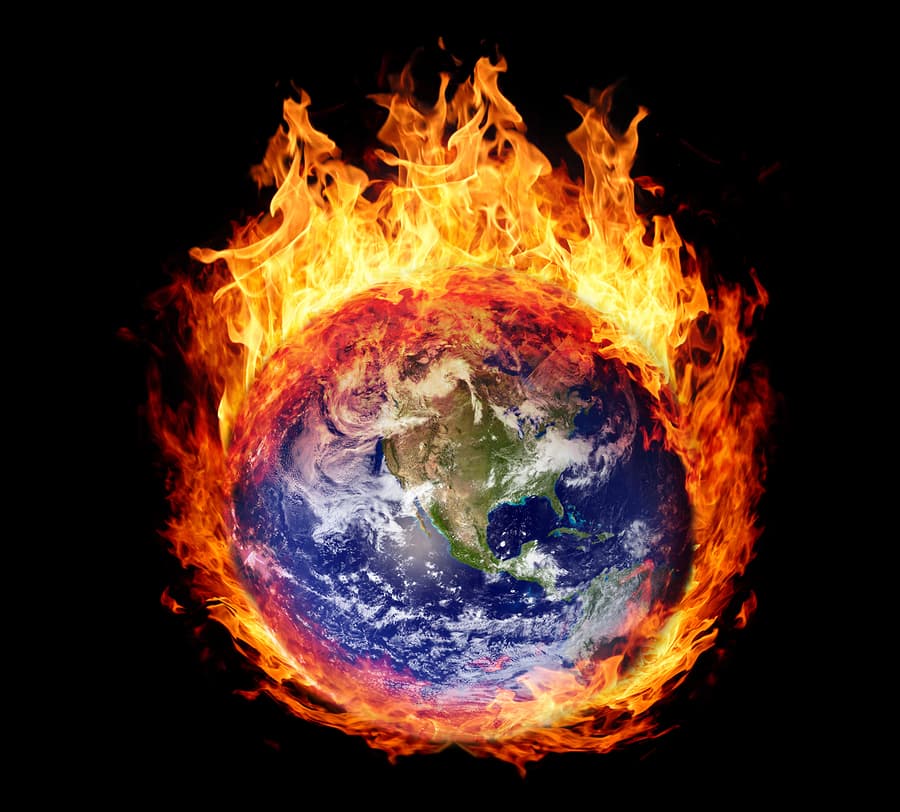
Recent preliminary analyses from monitoring groups show August 1, 2026, establishing a new Northern Hemisphere daily average temperature record of roughly 22.4–22.7 °C, exceeding prior peaks amid a rapidly strengthening El Niño that has driven sea-surface temperature anomalies above +2 °C in key Pacific regions. This builds on 2026’s pattern of near-record months, including the second-warmest June and a July tied with 2024 as the globe’s warmest on record per NOAA data. Long-term anthropogenic warming provides the baseline trend that amplifies such extremes. Market-implied odds near 97 % for first-hottest reflect trader assessment of these early observations, though final rankings from Copernicus, NASA, or Berkeley Earth could shift modestly with complete datasets or reanalysis adjustments.
Ringkasan eksperimental yang dihasilkan AI dengan referensi data Polymarket. Ini bukan saran trading dan tidak berperan dalam bagaimana pasar ini diselesaikan. · Diperbarui2026 August 1st, 2nd, 3rd hottest on record?
2026 August 1st, 2nd, 3rd hottest on record?
1st hottest 96.6%
2nd hottest 2.7%
3rd hottest 2.3%
4th or lower 1.2%
1st hottest
97%
2nd hottest
3%
3rd hottest
2%
4th or lower
1%
1st hottest 96.6%
2nd hottest 2.7%
3rd hottest 2.3%
4th or lower 1.2%
1st hottest
97%
2nd hottest
3%
3rd hottest
2%
4th or lower
1%
Note: If August 2026 is tied for first, second, or third hottest with another year, it will qualify for the bracket it ties with.
The primary resolution source for this market will be the figures found in the table titled "GLOBAL Land-Ocean Temperature Index in 0.01 degrees Celsius" under the column "Aug" (https://data.giss.nasa.gov/gistemp/tabledata_v4/GLB.Ts+dSST.txt). If NASA's "Global Temperature Index" is rendered permanently unavailable, other information from NASA may be used.
If no information for August 2026 is provided by NASA by September 30, 2026, 11:59:59 PM ET, a consensus of credible sources will be used to resolve this market.
Pasar Dibuka: Jul 28, 2026, 1:44 PM ET
Resolver
0x69c47De9D...Note: If August 2026 is tied for first, second, or third hottest with another year, it will qualify for the bracket it ties with.
The primary resolution source for this market will be the figures found in the table titled "GLOBAL Land-Ocean Temperature Index in 0.01 degrees Celsius" under the column "Aug" (https://data.giss.nasa.gov/gistemp/tabledata_v4/GLB.Ts+dSST.txt). If NASA's "Global Temperature Index" is rendered permanently unavailable, other information from NASA may be used.
If no information for August 2026 is provided by NASA by September 30, 2026, 11:59:59 PM ET, a consensus of credible sources will be used to resolve this market.
Resolver
0x69c47De9D...Recent preliminary analyses from monitoring groups show August 1, 2026, establishing a new Northern Hemisphere daily average temperature record of roughly 22.4–22.7 °C, exceeding prior peaks amid a rapidly strengthening El Niño that has driven sea-surface temperature anomalies above +2 °C in key Pacific regions. This builds on 2026’s pattern of near-record months, including the second-warmest June and a July tied with 2024 as the globe’s warmest on record per NOAA data. Long-term anthropogenic warming provides the baseline trend that amplifies such extremes. Market-implied odds near 97 % for first-hottest reflect trader assessment of these early observations, though final rankings from Copernicus, NASA, or Berkeley Earth could shift modestly with complete datasets or reanalysis adjustments.
Ringkasan eksperimental yang dihasilkan AI dengan referensi data Polymarket. Ini bukan saran trading dan tidak berperan dalam bagaimana pasar ini diselesaikan. · Diperbarui
Hati-hati dengan link eksternal.
Hati-hati dengan link eksternal.
Pertanyaan yang Sering Diajukan