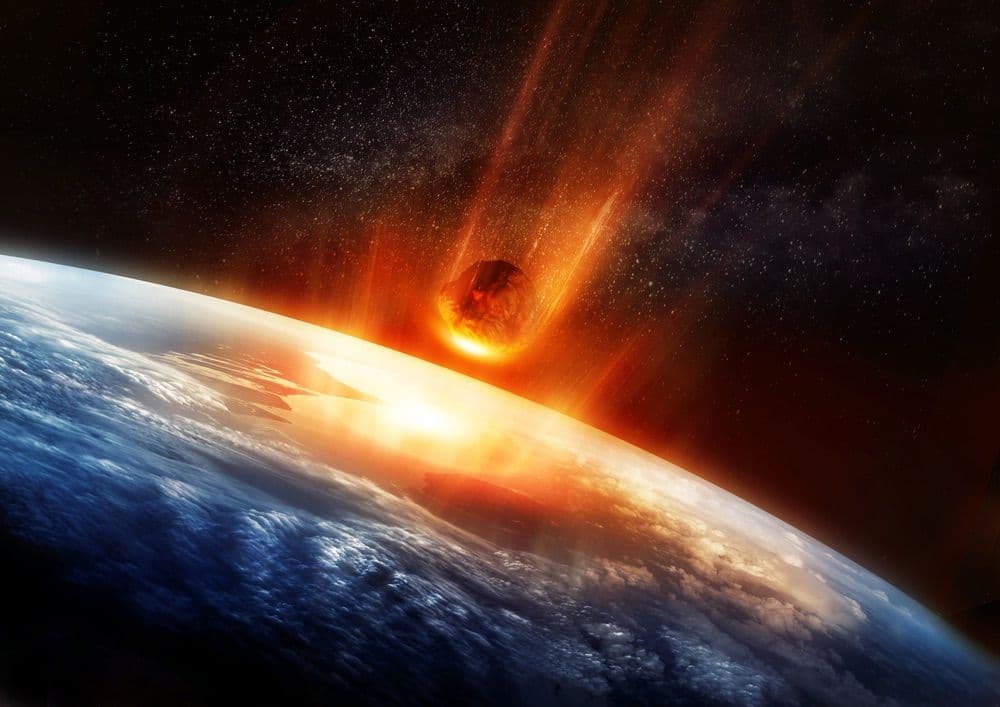
NASA’s Center for Near-Earth Object Studies reports no catalogued asteroids or comets on collision courses capable of generating a 5 kt airburst through December 2026, anchoring the 73.5 % market-implied probability for “No.” Small bolides releasing a few kilotons occur every several years on average, yet current detection networks and orbital surveys have identified none large enough or on track for an Earth impact this year. Ongoing monitoring shows all known near-Earth objects passing at safe distances, with no recent discoveries altering the risk profile. Traders therefore price in residual uncertainty only from undetected sub-10 m objects whose orbits remain poorly constrained, keeping the “Yes” side below one-in-four odds.
Ringkasan eksperimental yang dihasilkan AI dengan referensi data Polymarket. Ini bukan saran trading dan tidak berperan dalam bagaimana pasar ini diselesaikan. · Diperbarui5kt meteor strike in 2026?
5kt meteor strike in 2026?
27% peluang
$312,416 Vol.
$312,416 Vol.
Dec 30, 2026
27% peluang
$312,416 Vol.
$312,416 Vol.
Dec 30, 2026
This market will resolve to "Yes" if a natural meteoroid (bolide) explodes in Earth's atmosphere with a total impact energy greater than or equal to 5 kilotons of TNT equivalent between January 1 and December 31, 2026, 11:59 PM ET. Otherwise, this market will resolve to “No”.
The object must be classified as a natural meteoroid; events involving artificial objects or reentry vehicles do not qualify.
The primary resolution source will be the NASA JPL Fireball and Bolide Data repository: https://cneos.jpl.nasa.gov/fireballs/. The relevant field for determining impact energy is the “Impact Energy (kt)” column. If this dataset has not been updated to include all relevant dates by February 28, 2027, or if the NASA JPL Fireball and Bolide Data repository becomes permanently unavailable, this market may resolve based on a consensus of credible sources including the European Space Agency (ESA), the International Asteroid Warning Network (IAWN), the U.S. Department of Defense, or credible reporting of a scientific consensus, such as a NASA press release.NASA’s Center for Near-Earth Object Studies reports no catalogued asteroids or comets on collision courses capable of generating a 5 kt airburst through December 2026, anchoring the 73.5 % market-implied probability for “No.” Small bolides releasing a few kilotons occur every several years on average, yet current detection networks and orbital surveys have identified none large enough or on track for an Earth impact this year. Ongoing monitoring shows all known near-Earth objects passing at safe distances, with no recent discoveries altering the risk profile. Traders therefore price in residual uncertainty only from undetected sub-10 m objects whose orbits remain poorly constrained, keeping the “Yes” side below one-in-four odds.
This market will resolve to "Yes" if a natural meteoroid (bolide) explodes in Earth's atmosphere with a total impact energy greater than or equal to 5 kilotons of TNT equivalent between January 1 and December 31, 2026, 11:59 PM ET. Otherwise, this market will resolve to “No”.
The object must be classified as a natural meteoroid; events involving artificial objects or reentry vehicles do not qualify.
The primary resolution source will be the NASA JPL Fireball and Bolide Data repository: https://cneos.jpl.nasa.gov/fireballs/. The relevant field for determining impact energy is the “Impact Energy (kt)” column. If this dataset has not been updated to include all relevant dates by February 28, 2027, or if the NASA JPL Fireball and Bolide Data repository becomes permanently unavailable, this market may resolve based on a consensus of credible sources including the European Space Agency (ESA), the International Asteroid Warning Network (IAWN), the U.S. Department of Defense, or credible reporting of a scientific consensus, such as a NASA press release.
The object must be classified as a natural meteoroid; events involving artificial objects or reentry vehicles do not qualify.
The primary resolution source will be the NASA JPL Fireball and Bolide Data repository: https://cneos.jpl.nasa.gov/fireballs/. The relevant field for determining impact energy is the “Impact Energy (kt)” column. If this dataset has not been updated to include all relevant dates by February 28, 2027, or if the NASA JPL Fireball and Bolide Data repository becomes permanently unavailable, this market may resolve based on a consensus of credible sources including the European Space Agency (ESA), the International Asteroid Warning Network (IAWN), the U.S. Department of Defense, or credible reporting of a scientific consensus, such as a NASA press release.
Pasar Dibuka: Dec 31, 2025, 12:04 PM ET
Volume
$312,416Tanggal Berakhir
Dec 31, 2026Pasar Dibuka
Dec 31, 2025, 12:04 PM ETResolver
0x65070BE91...This market will resolve to "Yes" if a natural meteoroid (bolide) explodes in Earth's atmosphere with a total impact energy greater than or equal to 5 kilotons of TNT equivalent between January 1 and December 31, 2026, 11:59 PM ET. Otherwise, this market will resolve to “No”.
The object must be classified as a natural meteoroid; events involving artificial objects or reentry vehicles do not qualify.
The primary resolution source will be the NASA JPL Fireball and Bolide Data repository: https://cneos.jpl.nasa.gov/fireballs/. The relevant field for determining impact energy is the “Impact Energy (kt)” column. If this dataset has not been updated to include all relevant dates by February 28, 2027, or if the NASA JPL Fireball and Bolide Data repository becomes permanently unavailable, this market may resolve based on a consensus of credible sources including the European Space Agency (ESA), the International Asteroid Warning Network (IAWN), the U.S. Department of Defense, or credible reporting of a scientific consensus, such as a NASA press release.NASA’s Center for Near-Earth Object Studies reports no catalogued asteroids or comets on collision courses capable of generating a 5 kt airburst through December 2026, anchoring the 73.5 % market-implied probability for “No.” Small bolides releasing a few kilotons occur every several years on average, yet current detection networks and orbital surveys have identified none large enough or on track for an Earth impact this year. Ongoing monitoring shows all known near-Earth objects passing at safe distances, with no recent discoveries altering the risk profile. Traders therefore price in residual uncertainty only from undetected sub-10 m objects whose orbits remain poorly constrained, keeping the “Yes” side below one-in-four odds.
This market will resolve to "Yes" if a natural meteoroid (bolide) explodes in Earth's atmosphere with a total impact energy greater than or equal to 5 kilotons of TNT equivalent between January 1 and December 31, 2026, 11:59 PM ET. Otherwise, this market will resolve to “No”.
The object must be classified as a natural meteoroid; events involving artificial objects or reentry vehicles do not qualify.
The primary resolution source will be the NASA JPL Fireball and Bolide Data repository: https://cneos.jpl.nasa.gov/fireballs/. The relevant field for determining impact energy is the “Impact Energy (kt)” column. If this dataset has not been updated to include all relevant dates by February 28, 2027, or if the NASA JPL Fireball and Bolide Data repository becomes permanently unavailable, this market may resolve based on a consensus of credible sources including the European Space Agency (ESA), the International Asteroid Warning Network (IAWN), the U.S. Department of Defense, or credible reporting of a scientific consensus, such as a NASA press release.
The object must be classified as a natural meteoroid; events involving artificial objects or reentry vehicles do not qualify.
The primary resolution source will be the NASA JPL Fireball and Bolide Data repository: https://cneos.jpl.nasa.gov/fireballs/. The relevant field for determining impact energy is the “Impact Energy (kt)” column. If this dataset has not been updated to include all relevant dates by February 28, 2027, or if the NASA JPL Fireball and Bolide Data repository becomes permanently unavailable, this market may resolve based on a consensus of credible sources including the European Space Agency (ESA), the International Asteroid Warning Network (IAWN), the U.S. Department of Defense, or credible reporting of a scientific consensus, such as a NASA press release.
Volume
$312,416Tanggal Berakhir
Dec 31, 2026Pasar Dibuka
Dec 31, 2025, 12:04 PM ETResolver
0x65070BE91...NASA’s Center for Near-Earth Object Studies reports no catalogued asteroids or comets on collision courses capable of generating a 5 kt airburst through December 2026, anchoring the 73.5 % market-implied probability for “No.” Small bolides releasing a few kilotons occur every several years on average, yet current detection networks and orbital surveys have identified none large enough or on track for an Earth impact this year. Ongoing monitoring shows all known near-Earth objects passing at safe distances, with no recent discoveries altering the risk profile. Traders therefore price in residual uncertainty only from undetected sub-10 m objects whose orbits remain poorly constrained, keeping the “Yes” side below one-in-four odds.
Ringkasan eksperimental yang dihasilkan AI dengan referensi data Polymarket. Ini bukan saran trading dan tidak berperan dalam bagaimana pasar ini diselesaikan. · Diperbarui
Hati-hati dengan link eksternal.
Hati-hati dengan link eksternal.
Pertanyaan yang Sering Diajukan