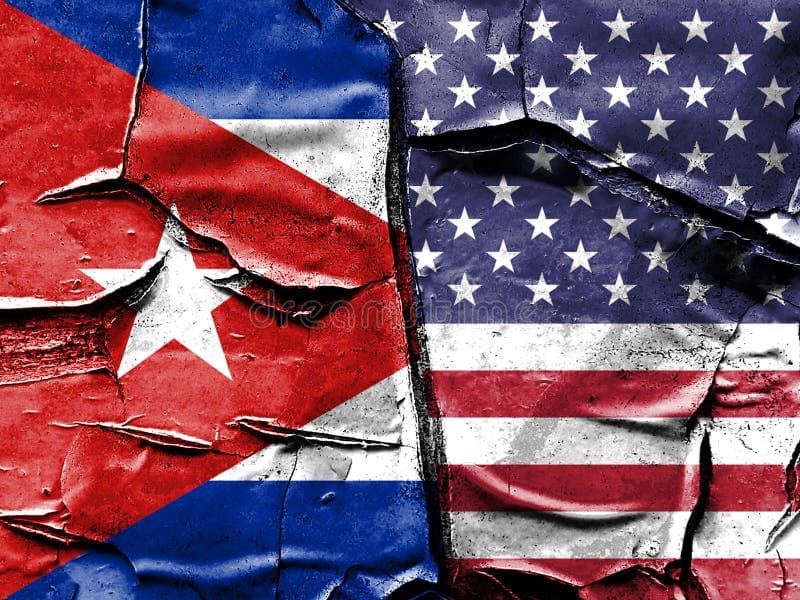
**Trader consensus favoring "No" at 92.5% reflects the Trump administration's pivot toward sustained economic sanctions and diplomatic pressure rather than military intervention in Cuba during 2026.** Intensified sanctions on GAESA-linked entities, fuel suppliers, and regime officials, combined with an oil blockade, have deepened Cuba's economic crisis and blackouts without prompting the mass unrest or reform concessions that might justify escalation. Earlier 2026 rhetoric about "taking Cuba" after the Venezuela operation and deployments such as the USS Nimitz have given way to stalled negotiations and explicit prioritization of non-kinetic measures amid the ongoing Iran conflict and pre-midterm constraints. Pentagon planning discussions and indictments of figures like Raúl Castro have not translated into action, with recent reporting confirming a sanctions-centric approach and limited appetite for ground forces or regime-change raids before year-end. Absent a major new trigger, these dynamics keep full-scale invasion probabilities low through December.
Riepilogo sperimentale generato dall'AI con riferimento ai dati di Polymarket. Questo non è un consiglio di trading e non ha alcun ruolo nella risoluzione di questo mercato. · AggiornatoSì
$3,264,274 Vol.
$3,264,274 Vol.
Sì
$3,264,274 Vol.
$3,264,274 Vol.
For the purposes of this market, land de facto controlled by Cuba or the United States as market creation, will be considered the sovereign territory of that country.
The resolution source for this market will be a consensus of credible sources.
Mercato aperto: Jan 4, 2026, 3:24 PM ET
Resolver
0x65070BE91...For the purposes of this market, land de facto controlled by Cuba or the United States as market creation, will be considered the sovereign territory of that country.
The resolution source for this market will be a consensus of credible sources.
Resolver
0x65070BE91...**Trader consensus favoring "No" at 92.5% reflects the Trump administration's pivot toward sustained economic sanctions and diplomatic pressure rather than military intervention in Cuba during 2026.** Intensified sanctions on GAESA-linked entities, fuel suppliers, and regime officials, combined with an oil blockade, have deepened Cuba's economic crisis and blackouts without prompting the mass unrest or reform concessions that might justify escalation. Earlier 2026 rhetoric about "taking Cuba" after the Venezuela operation and deployments such as the USS Nimitz have given way to stalled negotiations and explicit prioritization of non-kinetic measures amid the ongoing Iran conflict and pre-midterm constraints. Pentagon planning discussions and indictments of figures like Raúl Castro have not translated into action, with recent reporting confirming a sanctions-centric approach and limited appetite for ground forces or regime-change raids before year-end. Absent a major new trigger, these dynamics keep full-scale invasion probabilities low through December.
Riepilogo sperimentale generato dall'AI con riferimento ai dati di Polymarket. Questo non è un consiglio di trading e non ha alcun ruolo nella risoluzione di questo mercato. · Aggiornato


Fai attenzione ai link esterni.
Fai attenzione ai link esterni.
Domande frequenti